






A New Space Era Is Born
India's space program, long a source of national pride and driven by the state-run Indian Space Research Organisation (ISRO), is undergoing a monumental shift. Since the government initiated sweeping reforms in 2020 and followed up with the landmark Indian Space Policy
in 2023, the doors have been thrown open to private enterprise. The goal is to transform India from a government-led space power into a globally competitive space economy, fostering a vibrant ecosystem of private innovation. This strategic pivot has allowed non-government entities to participate in end-to-end space activities, from building launch vehicles and satellites to providing commercial services. As a result, India's space economy, valued at $8.4 billion in 2022, is projected to surge to over $44 billion by 2033.
The Private Trailblazers
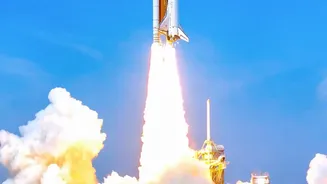
Leading this new charge are a handful of dynamic startups. Skyroot Aerospace made history on July 18, 2026, with the successful orbital launch of its Vikram-1 rocket, making India the third country, after the US and China, with a private orbital launch capability. The mission, named 'Aagaman' (Arrival), was a landmark achievement, deploying its payload successfully on its very first attempt. Another key player is Agnikul Cosmos, which also marked a major milestone with its Agnibaan SOrTeD (Suborbital Technological Demonstrator) launch on May 30, 2024. The mission was notable for several firsts, including being India's first launch from a private launchpad and featuring the world's first single-piece 3D-printed, semi-cryogenic engine. These companies are not just building rockets; they are pioneering new technologies and manufacturing methods to drastically change the economics of space access.
The Government's New Role: Facilitator
Rather than viewing private companies as competitors, the Indian government has positioned itself as a crucial enabler. The creation of the Indian National Space Promotion and Authorisation Centre (IN-SPACe) in 2020 established a single-window agency to promote, authorise, and supervise all private space activities. IN-SPACe facilitates access to ISRO’s world-class facilities, testing infrastructure, and expertise, which would be prohibitively expensive for startups to build from scratch. Furthermore, the government has liberalised Foreign Direct Investment (FDI) policies, allowing up to 49% automatic investment in launch vehicle manufacturing and up to 74% in satellite manufacturing, aiming to attract global capital and technology. This framework is designed to let ISRO focus on advanced research and development while private players drive the commercial launch market.
Driving Down Costs for Small Satellites
The primary business model for these new rocket companies is capturing a share of the booming global small satellite market. Traditionally, small satellite operators had to 'rideshare' on ISRO's larger Polar Satellite Launch Vehicle (PSLV), often facing long waits and compromises on their desired orbit. Private launchers like Vikram-1 and Agnibaan promise dedicated, on-demand launches, offering speed and flexibility that large government missions cannot match. While a recent study indicated that India's current launch costs per kilogram are higher than those in the US, private players are aiming to change that. Startups are targeting significantly lower launch costs, driven by innovations like 3D printing, lightweight composite materials, and eventual reusability. Success in this domain would position India as a highly attractive and competitive launch hub for customers worldwide.
Challenges on the Final Frontier
The path to a mature commercial space industry is filled with challenges. Rocket science remains incredibly difficult, demanding immense technical precision and significant capital investment. While recent successes have been monumental, startups must prove they can achieve a reliable and frequent launch cadence to win customer trust and secure long-term viability. They face stiff competition not only from established players like SpaceX but also from a growing number of international rocket startups. Furthermore, while the Indian Space Policy 2023 provides a strong framework, the industry is still awaiting a comprehensive Space Activities Act to provide greater legal and regulatory certainty for private operations. Sustaining funding, navigating a complex regulatory landscape, and proving commercial scalability are the next major hurdles for India's burgeoning space race.