







The Unseen Power of Seaweed
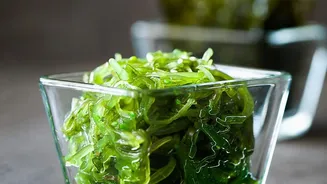
At first glance, seaweed seems like a simple marine plant. Yet, it holds immense potential as a raw material for our future. Unlike land-based crops used for other bioplastics, algae do not compete for arable land, fresh water, or fertilizers. In fact,
its cultivation is actively beneficial. Algae absorbs significant amounts of carbon dioxide during its rapid growth, helping to de-acidify oceans and combat climate change. It grows abundantly along India's vast 7,500-kilometre coastline, presenting a massive opportunity for a renewable resource that is both environmentally restorative and economically empowering for coastal communities. Best of all, when turned into packaging, it doesn’t linger for centuries. Most algae-based materials biodegrade naturally within weeks or months, breaking down without leaving behind harmful microplastics.
From Ocean Plant to Product
The transformation from seaweed to a plastic alternative is a marvel of green chemistry. The process typically begins with harvesting seaweed, which is then dried and ground into a fine powder. From this powder, scientists extract natural polymers—the essential building blocks of plastic—such as agar, carrageenan, or alginate. Each of these substances has unique properties, offering different levels of flexibility and strength. These extracted polymers are then mixed with natural plasticizers to improve their workability and are engineered into a variety of forms. The resulting material can be shaped into thin, flexible films for wrapping goods, molded into solid containers for food, or used to create grease-proof coatings for takeaway boxes. The end products can be designed to be home-compostable, water-soluble, or even safely edible for marine life.
Meet India’s Green Innovators
Several Indian startups are at the forefront of this sustainable revolution. Zerocircle, founded by former Google employee Neha Jain, is a prominent example. The company has developed a packaging material from seaweed that is not only biodegradable but also marine-degradable, meaning it can safely dissolve in the ocean. By partnering with seaweed farmers in states like Gujarat and Tamil Nadu, Zerocircle is building a supply chain that supports local livelihoods. Another key player is Bengaluru-based Sea6 Energy, which is focused on the commercial applications of seaweed. The startup has developed compostable coatings to make food packaging heat-resistant and is developing bioplastic films and straws. Meanwhile, Pune-based Go Do Good is taking a hybrid approach, combining seaweed with agricultural waste to create unique packaging solutions like eco-friendly bubble wrap.
Navigating the Hurdles to Scale
Despite the enormous promise, the path to replacing conventional plastic with algae is not without its challenges. The most significant barrier is cost. Currently, producing algae-based packaging is more expensive than its petroleum-based counterpart, which can be a deterrent for widespread adoption. Startups like Zerocircle acknowledge this premium but are working on innovations to drive prices down. Scalability is another hurdle; moving from successful lab pilots to mass production requires significant investment in technology and infrastructure. Furthermore, the material properties need continuous improvement. While perfect for many single-use applications, some algae-based materials may not yet match the durability, transparency, or shelf-life of traditional plastics for all products, especially liquids.