





Sonam Bajwa's incredible fitness is an inspiration, but the secret isn't just about lifting heavy. Her focus on deliberate, controlled movements during training is a game-changer for building strength safely and effectively.
The Philosophy: Quality Over Quantity
In the world of fitness, it's
easy to get caught up in chasing bigger numbers—more weight, more reps, more speed. But as fitness enthusiasts like Sonam Bajwa demonstrate, the real magic often lies in how you perform each movement. The focus is shifting from simply getting through a workout to maximizing its effectiveness. This is where the principle of controlled movement comes in. Instead of using momentum to lift and lower weights, this technique emphasizes deliberate, slower repetitions to ensure the target muscle is doing all the work. It's a mindset that prioritizes muscular engagement over ego, leading to better, more sustainable results.
What is Controlled Movement?
Controlled movement in weight training is often referred to as increasing 'Time Under Tension' (TUT). This is the total duration your muscles are actively working and held under strain during a set. For example, instead of performing a squat in two seconds, you might slow down the lowering (eccentric) phase to three or four seconds, pause briefly at the bottom, and then take two seconds for the lifting (concentric) phase. This approach eliminates momentum and forces your muscle fibers to work harder through the entire range of motion. Research shows that this increased TUT is a significant driver of muscle growth (hypertrophy) and strength development.
The Major Benefits of Going Slow
Slowing down your reps offers a host of benefits beyond just building muscle. One of the most critical advantages is injury prevention. Fast, jerky movements can place undue stress on joints and tendons, but controlled reps ensure your muscles—not your joints—absorb the load. This technique also significantly enhances the mind-muscle connection. By concentrating on the specific muscle you're training, you improve neural activation, leading to better muscle recruitment and more effective workouts. This focused engagement means every single rep becomes more productive, helping you achieve better results with potentially lighter weights.
Applying Control to Your Leg Day
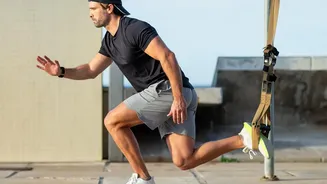
Sonam Bajwa’s workouts often feature foundational lower_body exercises like squats and lunges. To apply the principle of controlled movement to these exercises, you can make simple adjustments. For squats, focus on a slow, 3 to 4_second descent, keeping your core engaged and chest up. Feel the tension in your glutes and quads as you lower yourself. Pause for a second at the bottom before driving back up through your heels in a powerful but controlled motion. For lunges, concentrate on a stable and slow descent, ensuring your front knee stays aligned with your ankle. This prevents your knee from caving inward and reduces injury risk while maximizing glute and quad engagement.
How to Start Incorporating Controlled Reps
If you want to try this technique, start by reducing the weight you normally use by about 20–30%. The focus should be on perfect form, not lifting heavy. Use a timer or count in your head to maintain a consistent tempo for each phase of the lift. A good starting point for many exercises is a '4–1–2' tempo: four seconds to lower the weight, a one–second pause, and two seconds to lift it. Pay close attention to how your muscles feel. You should feel a deeper burn and fatigue in the target muscle, which is a sign of effective engagement. As you get stronger and more comfortable with the technique, you can gradually increase the weight while maintaining strict control.