






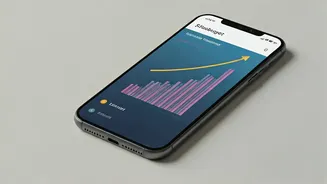


What Exactly is Micro-Investing?
Think of it as a digital piggy bank, but smarter. Micro-investing is the practice of investing very small sums of money regularly. The goal isn't to become a stock market guru overnight. Instead, it’s about breaking down the intimidating world of investing into
bite-sized, manageable pieces. For students who can't afford to invest thousands of rupees at a time, this approach removes the biggest barrier to entry: the need for a large lump sum of cash. It’s about starting your investment journey with the money you already have, or in this case, the change you don't even notice.
How 'Spare Change' Apps Work
The magic of these apps lies in their simplicity. Here’s the typical process: you link your bank account or UPI to the app. Then, you just go about your day. When you buy a coffee for ₹92, the app automatically 'rounds up' the transaction to the nearest ₹10 or ₹100 (you can usually set the rule). In this case, it would be ₹100. The spare change—the ₹8 difference—is set aside. Once your accumulated spare change hits a certain threshold, like ₹100, the app automatically invests it for you into an asset class, most commonly digital gold or a basket of mutual funds.
The Power of Painless Saving
The biggest advantage for a student is the 'set it and forget it' nature of these apps. It automates financial discipline. You don’t have to remember to set aside money or agonise over where to invest it. By making investing a byproduct of spending, it removes the psychological friction of parting with your money. Over time, these tiny, seemingly insignificant amounts start to add up. This is the power of compounding in action. Your small investments start generating their own earnings, creating a snowball effect that is most powerful when you start early—even during your college years.
Why This Fits the Student Lifestyle
Student life is defined by irregular income from internships, part-time jobs, or pocket money. It’s nearly impossible to commit to a fixed monthly SIP (Systematic Investment Plan). Micro-investing apps are flexible; they invest more when you spend more and less when you spend less. They don't demand a fixed commitment. More importantly, they build a habit. Learning to consistently put money aside, no matter how small the amount, is a financial muscle. Developing this muscle in college, when the stakes are low, prepares you for a lifetime of smart financial decisions when you start earning a full-time salary.
Choosing an App in India
The Indian market has several options, each with a slightly different model. Some popular apps focus on investing your spare change in 24K digital gold, which is easy to understand and track. Others offer to invest your round-ups in a curated portfolio of Exchange Traded Funds (ETFs) or mutual funds, providing diversification. When choosing an app, look beyond the slick interface. Check for three things: the fee structure (are there subscription fees or commissions?), the security protocols (is your data and money safe?), and the underlying investment (do you understand where your money is going?).
A Reality Check on the 'Protection'
The headline says these apps 'protect' your wallet, and in a way, they do. They protect you from inaction by making it easy to start. They protect you from the risk of making large, emotional investment mistakes because the amounts are small. However, 'protection' does not mean 'risk-free'. All investments, including digital gold and mutual funds, are subject to market risks. The value of your small holdings can go down as well as up. The key is to see this not as a get-rich-quick scheme, but as a long-term habit-building tool where the primary return is financial discipline itself.