





More Space, Less Mass
The single biggest challenge in building anything in space is overcoming Earth's gravity. Launching mass into orbit is expensive, and rocket fairings—the nose cones that shield payloads—have limited space. Inflatable habitats, also called expandable modules,
offer a groundbreaking solution. They are constructed from advanced, flexible, multi-layered fabrics that are far stronger than steel. These modules are launched in a compressed, folded state, allowing them to fit inside a standard rocket. Once in orbit, they are inflated, expanding to a volume many times larger than a conventional rigid module of the same mass could offer. This mass-to-volume efficiency is the critical business advantage that makes large-scale commercial space stations economically feasible. It means companies can launch more usable workspace, laboratories, and living quarters for a fraction of the cost.
The Pioneers of Inflatable Tech
The concept of inflatable space structures dates back to the 1960s, but it's now at the forefront of the private space race. Sierra Space is a major player with its Large Integrated Flexible Environment (LIFE) habitat. The LIFE module is designed to be a key component of Orbital Reef, a commercial space station being developed with Blue Origin. These habitats are substantial, envisioned as three-story structures capable of housing astronauts, laboratories, and even gardens. Another key company, Axiom Space, is building the world's first commercial space station, which will initially attach to the International Space Station (ISS) before becoming an independent platform. While its primary modules are rigid, Axiom is also contracted to build an inflatable module, the SEE-1, which will serve as a multipurpose entertainment and content studio. These efforts build on the success of the experimental Bigelow Expandable Activity Module (BEAM), which has been attached to the ISS since 2016, proving the technology's viability.
An Engine for a New Economy
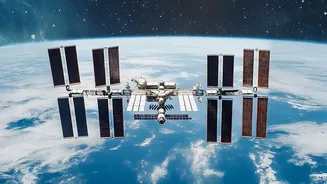
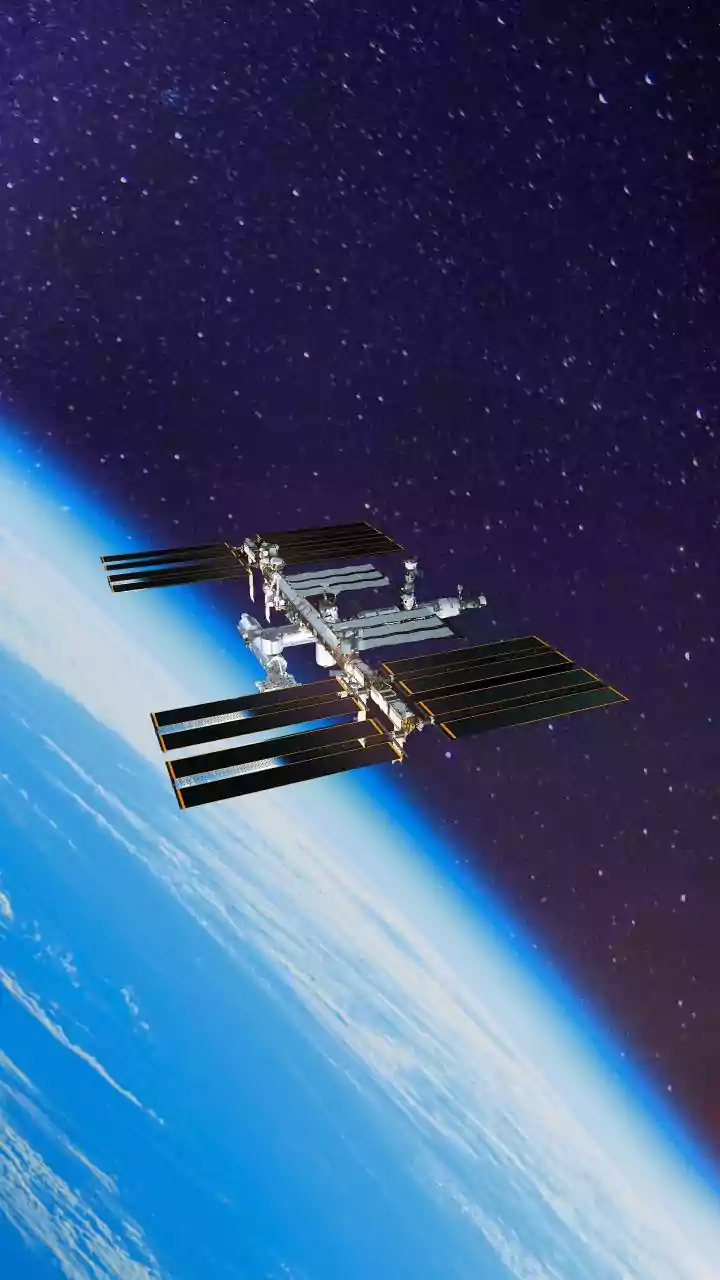
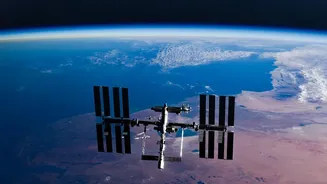
With the International Space Station scheduled for retirement around 2030, these private stations are essential for ensuring a continuous human presence in low-Earth orbit (LEO). Their primary purpose is to serve as platforms for a burgeoning LEO economy. The vast, affordable volume provided by inflatable modules is a game-changer for microgravity research and manufacturing. In the near-zero gravity environment, processes that are impossible on Earth become achievable. This includes developing purer crystals for pharmaceuticals, manufacturing flawless fiber optics, 3D-printing human organs, and creating novel metal alloys. The absence of gravity-driven convection, sedimentation, and hydrostatic pressure allows for breakthroughs in materials science and biotechnology. Inflatable stations provide the necessary lab space to scale these activities from small experiments to commercial production.
Durability and the Path Forward
A common question is whether a "fabric" habitat is safe from the hazards of space. These are not simple balloons; their multi-layered shells are made from materials like Vectran and are engineered to be highly resistant to impacts from micrometeoroids and orbital debris, in some cases offering superior protection to traditional aluminum hulls. Companies like Sierra Space and Lockheed Martin conduct rigorous ground tests, inflating prototypes to many times their operational pressure until they burst to validate their strength and safety. The successful long-term deployment of the BEAM module on the ISS has provided invaluable data on the durability of these structures against radiation and temperature extremes. As private companies continue to prove out their designs, inflatable habitats are solidifying their role as the foundational infrastructure for the future of work and life in orbit.