


Passing the Torch to Private Enterprise
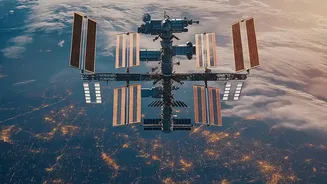
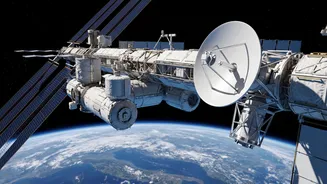
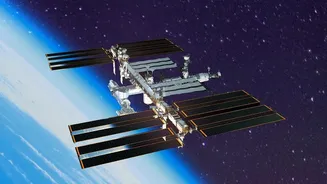
For over two decades, the International Space Station (ISS) has been humanity's lone outpost in low-Earth orbit (LEO). This football-field-sized laboratory has been crucial for scientific discovery, but its operational life is drawing to a close. Instead
of building a government-funded sequel, NASA is championing a new strategy: becoming a customer for a new generation of commercially owned and operated space stations. Through its Commercial Low-Earth Orbit Development (CLDP) program, NASA is investing seed money into several private companies, encouraging a competitive marketplace for orbital habitats. This public-private partnership model aims to lower costs for the government, open access for a wider range of users, and spark a vibrant LEO economy that extends far beyond pure research. The goal is to prevent a gap in American presence in orbit after the ISS is decommissioned.
The New Architects of Orbit
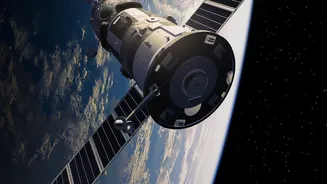
Several key players have emerged, each with a unique vision for the future of orbital habitats. Axiom Space is building the Axiom Station, with its first module once planned to attach to the ISS before the station eventually becomes a free-flying independent platform. Construction of the first hardware is already underway. Another major contender is Orbital Reef, a collaboration led by Blue Origin and Sierra Space, envisioned as a 'mixed-use business park' in space designed to host a variety of commercial, research, and tourism activities. Then there is Starlab, a joint venture between Voyager Space and Airbus, which is developing a station with a large inflatable habitat and a dedicated science park. These companies, and others like Vast with its Haven-1 station, are racing to have their platforms operational, with the first launches targeted before the ISS retires.
What Makes Them 'Next-Gen'?
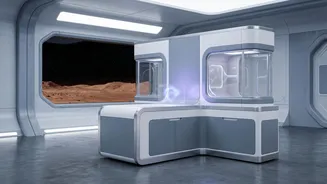
These new stations are more than just replacements; they are fundamental upgrades. One key innovation is the use of new module technologies, including both advanced metallic structures and large, expandable or inflatable habitats that can be launched in a compressed state and expand to full volume in orbit. This allows for larger and more comfortable living and working spaces. Beyond the structure, the focus is on user experience. These stations are being designed from the ground up for commercial utility, with features like advanced automation, scalable utilities, and dedicated facilities for in-space manufacturing, pharmaceutical development, and even hospitality. Companies like Hilton are even partnering on the interior design of crew quarters to improve comfort and psychological well-being on long-duration missions.
An Economy in the Sky
The purpose of these stations extends far beyond what the ISS was designed for. While NASA will remain a key customer, renting space for its astronauts and science experiments, the business models for these new outposts rely on a diverse client base. Potential customers include foreign space agencies, private companies looking to conduct research in microgravity, universities, and eventually, space tourists. The vision is to create a bustling ecosystem where everything from fibre optic cables and high-purity crystals to new medicines can be manufactured in the unique vacuum and microgravity of space. Orbital Reef, for example, aims to offer end-to-end services including transportation, logistics, and on-orbit operations for any paying customer. This shift represents the transition from space exploration to space industrialization, creating new markets and opportunities just a few hundred kilometres above Earth.