
The Main Events: What to Look For
August 2026 is a stellar month for sky-watchers. The headliner is the planet Venus, which will dominate the western evening sky right after sunset. It reaches its greatest elongation—its farthest distance from the sunset—around August 15, making it exceptionally
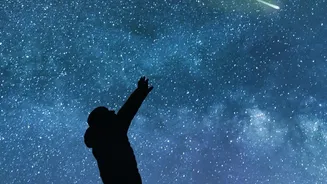
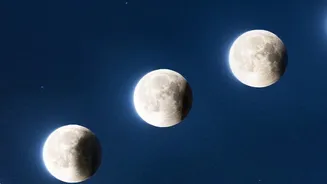
bright and easy to spot. On that same evening, a beautiful crescent Moon will appear nearby, creating a stunning pair. But the celestial fireworks don’t stop there. The annual Perseid meteor shower is the other must-see event. It will peak on the night of August 12-13. This year's shower is special because it coincides with a new Moon, meaning the sky will be perfectly dark, with no moonlight to wash out the shooting stars. Under ideal conditions, you could see 50 to 100 meteors per hour. Beyond these, look for a partial lunar eclipse on August 28, when part of the Moon will darken as it passes through Earth's shadow.
Choose the Perfect Night and Time
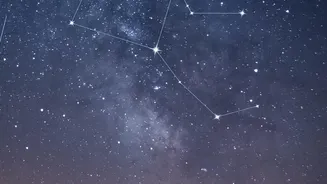
Timing is everything. For the Perseid meteor shower, the absolute best time to watch is the night of August 12 and into the pre-dawn hours of August 13. While you can see meteors on the nights before and after, the peak offers the highest concentration of activity. The show gets better after midnight, with the highest rates typically between 2 a.m. and dawn, as the shower's radiant point in the constellation Perseus rises higher in the sky. For Venus, any clear evening in August will do, but the nights around August 15 offer a great view, especially with the nearby crescent Moon. Throughout the month, you can also watch Venus draw closer to the bright star Spica in the constellation Virgo. While a major total solar eclipse also happens on August 12, it will not be visible from India, though you can watch it via live streams.
Find Your Ideal Stargazing Spot
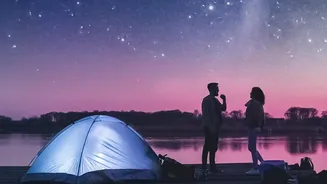
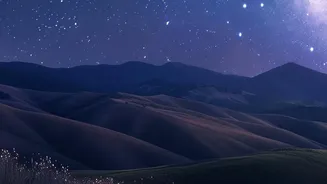
To truly appreciate the night sky, you need to escape the city. Light pollution from urban areas can obscure all but the brightest stars and planets. The goal is to find a location with a dark, unobstructed view of the sky. For residents of India, this could mean heading to designated dark sky reserves or remote areas known for clear skies. Hanle in Ladakh is home to India's first official Dark Sky Reserve and offers some of the best stargazing conditions in the world. Other excellent locations include the Spiti Valley in Himachal Pradesh, the Rann of Kutch in Gujarat, and the deserts around Jaisalmer in Rajasthan. Even if you can't travel that far, look for local parks, nature reserves, or even quiet rural roads that are a significant distance from city centres. The key is to get away from artificial lights for the best possible view.
Gather Your Stargazing Gear
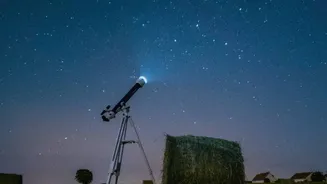
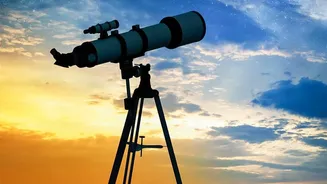
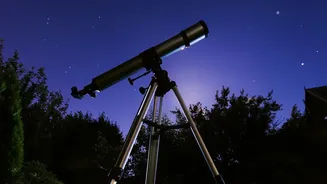
You don’t need expensive equipment to enjoy the show. In fact, for a meteor shower, your naked eyes are your best tool. The most essential items are a comfortable blanket or reclining chair, warm clothing (as even summer nights can get chilly), and some snacks and a warm drink. Binoculars can be a great addition, enhancing your view of the Moon's craters, the moons of Jupiter, and star clusters. While you don't need a telescope, it can offer breathtaking views of planets like Saturn. A red-light torch is highly recommended; it allows you to see your surroundings without ruining your night vision, which takes about 30 minutes to fully adjust to the darkness. You can also download a stargazing app on your phone to help you identify constellations, planets, and the radiant point of the Perseid shower.
Tips for the Best Viewing Experience
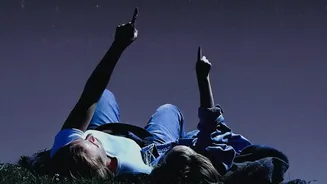
Once you're at your spot, give your eyes at least 20-30 minutes to fully adapt to the darkness. This is crucial for seeing fainter meteors and stars. Avoid looking at your phone or any other bright light source. When watching for Perseids, you don't need to look in one specific direction. While they radiate from the constellation Perseus, meteors can appear anywhere in the sky. Lie back, look up, and take in as much of the sky as possible. Patience is key. There will be lulls in activity followed by bursts of several meteors at once. Don’t get discouraged if you don’t see a meteor in the first few minutes. The longer you watch, the more you'll see. The goal is to relax and enjoy the cosmic display unfolding above you.