





A Famous Cosmic Laboratory
Imagine a young, bustling star system close enough for us to study in detail. That's Beta Pictoris for you. Located just 63 light-years from Earth, it’s a star only about 23 million years old—a mere toddler in cosmic terms. Because of its youth and proximity,
it serves as a perfect natural laboratory for watching a solar system in action. Astronomers have long been fascinated by it, especially its vast disk of dust and debris, which is the leftover raw material from which planets are built. For years, we knew of two massive planets, Beta Pictoris b and c, orbiting this star. Their presence confirmed that planets were actively shaping this dynamic environment.
The Unexpected New Planet
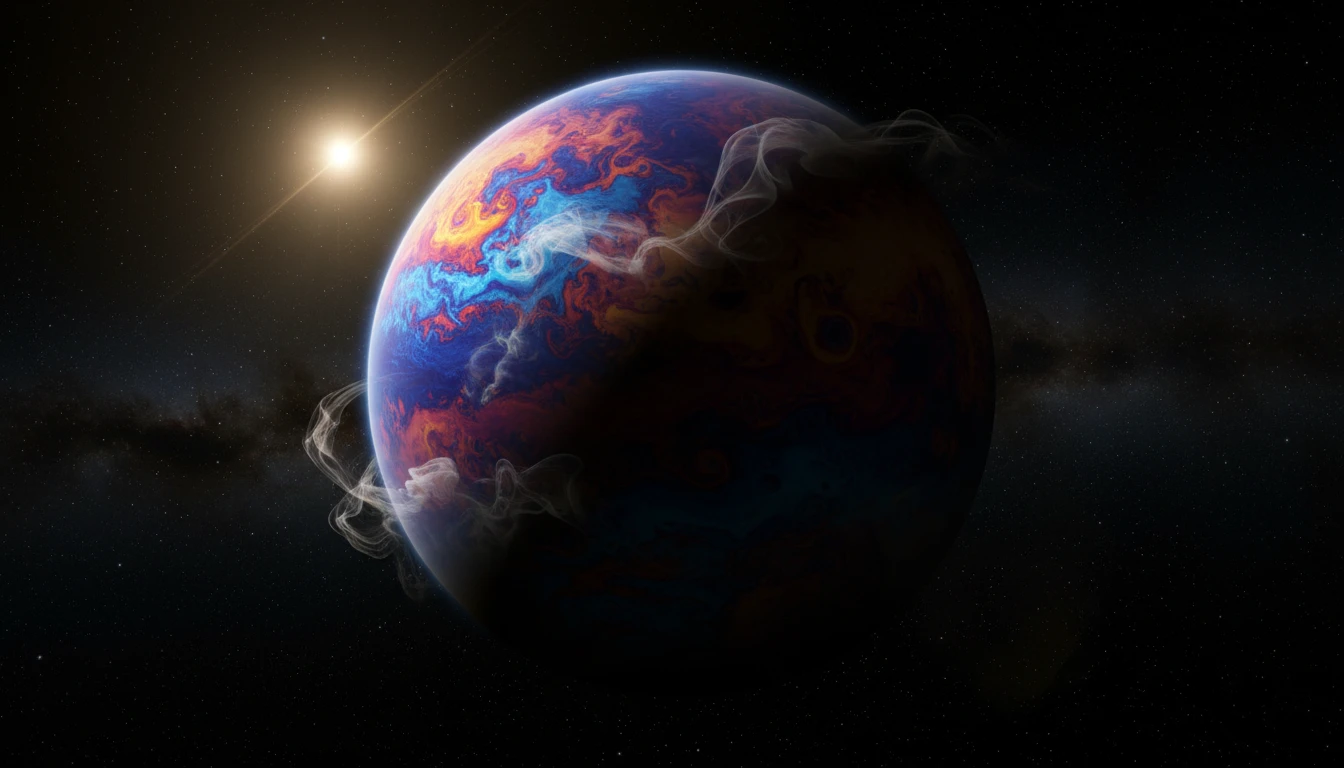
In a recent breakthrough, astronomers announced they had found a third planet, named Beta Pictoris d. This newfound world is a giant like its siblings, but smaller and fainter. In fact, it is among the lightest exoplanets ever to be imaged directly from the ground. The discovery, made using powerful instruments like NASA's James Webb Space Telescope and the European Southern Observatory's Very Large Telescope, was a surprise. In an exciting twist, after the initial find, scientists realized the planet had been hiding in archival data for more than a decade, its faint signal previously overlooked.
Solving a Dusty Mystery
The discovery of Beta Pictoris d isn't just about adding another planet to the tally. Its existence solves a key puzzle about the system. The shape and structure of the dusty debris disk around Beta Pictoris had long perplexed scientists. The presence of this new planet, with its specific mass and orbit, perfectly explains the peculiar form of the disk. It acts as the missing piece that makes the whole picture of the system make sense. This provides a direct link between a planet and the structure of its parent disk, offering a textbook example of how newly formed worlds interact with and sculpt their birthplace. It's a snapshot of the gravitational dance that creates order out of cosmic chaos.
A New Way of Seeing Worlds
What makes this discovery even more significant is how it was achieved. While direct imaging played a role, Beta Pictoris d was also confirmed using a transformative technique. Instead of just spotting a point of light, instruments on the James Webb Space Telescope detected the unique chemical fingerprint of the planet’s atmosphere. This method allows astronomers to find planets that might otherwise be too faint to see directly. By analysing the chemical composition from afar, scientists can not only prove a planet’s existence but also begin to understand its properties. This powerful new tool could revolutionize the search for worlds around other stars, uncovering planets that have so far remained hidden.