







Meet the New Lunar Architects
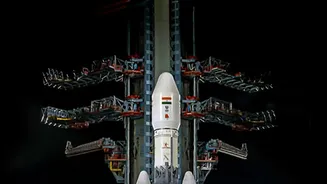
While the Indian Space Research Organisation (ISRO) has masterfully guided the nation’s space ambitions, a new constellation of private companies is now rising to meet the challenge of lunar exploration. Startups are stepping into the spotlight, designing
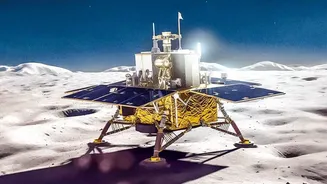
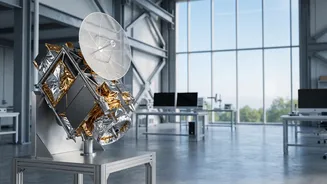
and building the next generation of hardware destined for the Moon. Companies like ORBITBeyond are establishing significant manufacturing and design centres in India, focusing explicitly on lunar landers and rovers. This signals a pivotal shift from a state-led space program to a vibrant public-private ecosystem. This new model allows ISRO to focus on large-scale research and deep-space missions, while delegating the crucial tasks of manufacturing and payload development to agile, commercially-driven firms. This move is fostering a burgeoning industry, with nearly 450 space startups now contributing to India's growing presence in the cosmos.
Cracking the Code on Cost
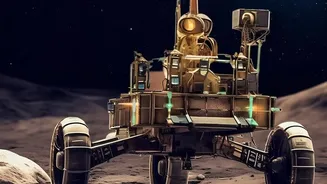
The phrase 'low-cost' is central to India's space story, and these startups are pushing the boundaries of affordability. Historically, lunar missions have been astronomically expensive. For comparison, America's Apollo program cost the equivalent of over $100 billion today. India’s Chandrayaan-3 mission, in stark contrast, was accomplished for an estimated $74 million. The new private rovers are being developed on this principle of 'frugal innovation'. Startups achieve this by simplifying complex systems, using readily available commercial off-the-shelf components where possible, and employing advanced manufacturing techniques like 3D printing. Furthermore, their lean operational structure, free from the large overheads of national agencies, allows them to develop, test, and iterate much faster and more cheaply. This approach doesn't just lower the price tag; it democratises access to space, making lunar missions a more attainable goal for a wider range of scientific and commercial ventures.
The ISRO Symbiosis
This private-sector boom isn't happening in a vacuum. It is being actively nurtured by ISRO, which has strategically opened its doors to collaboration. The national agency provides invaluable support, from sharing its deep reservoir of expertise to offering access to its world-class testing facilities and launch infrastructure. For instance, ISRO has supported private companies by helping select launch sites, establishing control centres, and providing crucial real-time tracking during missions. This hand-holding is a strategic masterstroke. It accelerates development for the startups while allowing ISRO to leverage a wider pool of national talent and industrial capacity. This symbiotic relationship is crucial for India’s ambitious future plans, which include establishing a space station by 2035 and landing an astronaut on the Moon by 2040.
India's Gateway to the Global Lunar Economy
The development of low-cost rovers is not just about national pride; it’s a powerful entry into the rapidly growing global lunar economy. With NASA's Artemis program aiming to establish a permanent human presence on the Moon, there is a massive demand for reliable and affordable ways to deliver payloads, conduct experiments, and build infrastructure. By signing the Artemis Accords, India has positioned itself as a key partner in this international endeavour. Indian startups are now poised to become global suppliers of lunar hardware. Their cost-effective rovers could be used by international space agencies, universities, and private companies looking to conduct research on the lunar surface without commissioning a multi-billion-dollar mission. This creates an enormous export opportunity and establishes India as a go-to destination for cost-effective space technology, transforming its space program into a powerful economic engine.