





When the sky turns a hazy grey and air quality alerts flash on your phone, the instinct is to retreat indoors. But is the air inside your home truly a safe haven? Here's a look at the evidence behind popular fixes for indoor air pollution.
The First Step: Seal Your Sanctuary
Before investing
in any technology, the most critical step is to stop polluted air from entering your home in the first place. During a severe smog event, outdoor air is the primary source of indoor particulate matter. Sealing your home is your first line of defence. This means ensuring windows and doors are shut tight, with no gaps in the frames. Weatherstripping around doors and caulking around window frames can make a significant difference in preventing pollutants from infiltrating. By creating a well-sealed environment, you reduce the overall load of pollutants that any air-cleaning device has to handle, making your indoor protection strategy much more effective.
Air Purifiers with HEPA Filters
Mechanical air purifiers equipped with High-Efficiency Particulate Air (HEPA) filters are widely considered the gold standard for cleaning indoor air. HEPA filters are designed to capture at least 99.97% of airborne particles that are 0.3 micrometres in size. This is crucial during smog, as the most dangerous pollutants are fine particulate matter (PM2.5), which are small enough to lodge deep in the lungs and enter the bloodstream. Multiple studies have demonstrated that using HEPA purifiers can significantly reduce indoor PM2.5 concentrations, with some showing reductions of 50% or more. For those with asthma or other respiratory conditions, this reduction in airborne particles can lead to improved symptoms. When choosing a purifier, look for its Clean Air Delivery Rate (CADR), which indicates how quickly it can clean a room of a certain size.
DIY Air Filters: A Cost-Effective Option
For a more budget-friendly but highly effective alternative, consider building a Corsi-Rosenthal box. This DIY air purifier is made from a simple box fan with several high-quality furnace filters (rated MERV-13 or higher) taped to its sides to form a cube. Research has shown this setup can be remarkably effective at removing fine particulate matter from the air, with some studies measuring a CADR comparable to expensive commercial units. The large surface area of the multiple filters allows for high airflow with low resistance, efficiently capturing smoke, dust, and other pollutants. The US Environmental Protection Agency (EPA) has highlighted these DIY cleaners as a cost-effective method for reducing smoke concentrations indoors, particularly when using newer, safety-certified box fans.
The Myth of Houseplants
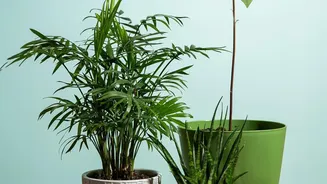
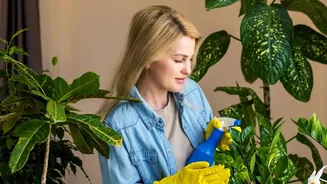
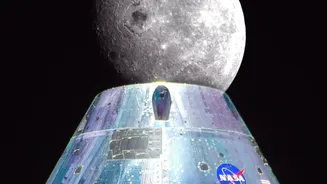
The idea that a few potted plants can purify the air in your home is a persistent and appealing myth, largely stemming from a 1989 NASA study. While that study did show plants could remove volatile organic compounds (VOCs) from the air in a small, sealed chamber, these results don't translate to a typical home environment. A 2019 review of decades of research concluded that you would need an unfeasibly large number of plants—between 10 and 1,000 per square metre—to match the air-cleaning capacity of a building's ventilation system or simply opening a window. During a severe smog event, the rate at which plants remove pollutants is far too slow to make a meaningful difference against the constant influx of outdoor pollution. While plants offer other benefits, they are not an effective tool for tackling heavy particulate pollution.
A Word of Caution on Ionizers
Air ionizers work by releasing charged ions that attach to airborne particles, causing them to fall out of the air and cling to surfaces. While some studies show they can reduce levels of PM2.5, this technology comes with a significant health concern: the production of ozone. Ozone is a known lung irritant that can cause coughing, chest tightness, and worsen conditions like asthma. The US EPA warns that ozone produced by these devices is no different from the harmful ozone found in outdoor smog. Some devices that use bipolar ionization may produce less ozone, but the evidence for their overall benefit beyond what a HEPA filter provides is thin. Given the risks, a mechanical HEPA filter remains a safer and more proven choice.
What About Air-Purifying Paints?
A newer category of products includes so called 'air purifying' paints. These typically contain additives like zeolite or use a photocatalytic process to capture or break down pollutants. Most of the available evidence focuses on their ability to reduce VOCs like formaldehyde and benzene, which are gases emitted from furniture, cleaning products, and building materials. While some tests in controlled settings show a reduction in these specific chemicals, there is little to no evidence that these paints are effective at removing the fine particulate matter (PM2.5) that constitutes the main threat during a smog event. Their primary function is to address chemical pollutants, not the particle heavy air from external sources.