

The Classic Rava Upma: A Tale of Two Textures
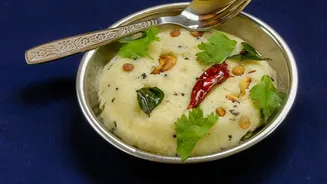
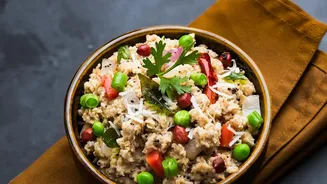
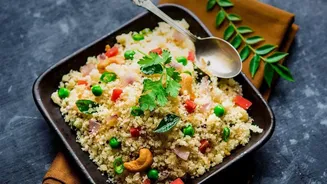
The most common form of upma is made from rava (semolina or suji). Yet, even with the same core ingredient, its texture can vary dramatically. The secret lies in two key steps: roasting the rava and the water-to-rava ratio. Properly roasting the semolina until
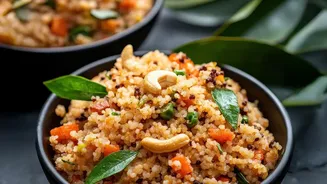
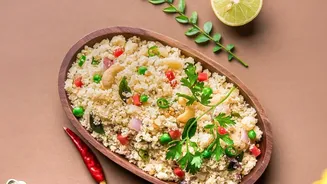
it's aromatic is crucial for preventing a sticky, lumpy outcome. A lower water ratio results in a more granular, 'upma-like' texture where each grain is distinct, a style often preferred in Tamil Nadu. In contrast, a higher water ratio produces a softer, more porridge-like consistency that is smooth and melts in the mouth. The choice between fine and coarse semolina also plays a part; finer grains yield a softer dish, while coarser ones provide more bite.
The Karnataka Special: Soft and Fluffy Khara Bath
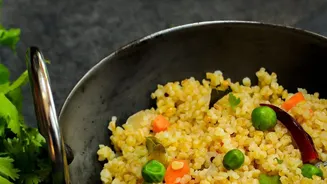
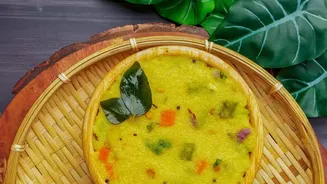
In Karnataka, rava upma is famously known as Khara Bath. It is celebrated for its incredibly soft, fluffy, and almost melt-in-the-mouth consistency. This texture is achieved by using a more generous water-to-rava ratio, often around 3 cups of water for every cup of rava. Unlike simpler upma recipes, Khara Bath is enriched with a special spice blend, typically a vangi bath or bisi bele bath powder, which gives it a unique aroma and flavour. It is also loaded with vegetables like carrots, beans, and capsicum, and gets an added richness from a final drizzle of ghee. The result is a savoury, pudding-like dish that is flavourful and distinct from its drier counterparts.
The Tamil Nadu Way: Distinct Grains of Arisi Upma
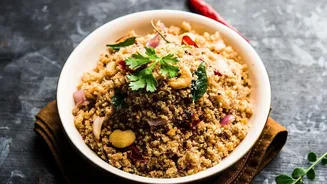
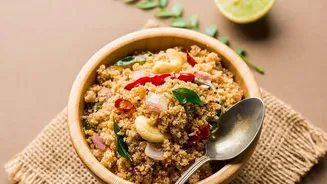
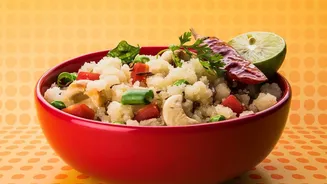
Moving away from semolina, Tamil Nadu offers Arisi Upma, made from coarse, broken raw rice, often ground together with toor dal (pigeon peas). This changes the texture entirely. Instead of the soft fluffiness of rava, arisi upma has a more substantial, granular, and slightly chewy feel. Each grain remains separate, offering a satisfying bite. The preparation involves tempering spices in oil, adding water, and then slowly incorporating the rice-dal mixture. This dish is comforting and filling, with mild flavours from cumin and black pepper, and a pleasant crunch from the tempering and fresh coconut.
The Maharashtrian Favourite: Chewy Sabudana Upma
Popular during fasting periods but enjoyed yearround,
Sabudana Upma (also called Sabudana Khichdi) from Maharashtra is texturally unique. It's made from sabudana,
or tapioca pearls,
which,
when cooked correctly,
become translucent,
soft,
and delightfully chewy.
The key to achieving the perfect nonsticky texture lies in the soaking process.
The pearls must be soaked for several hours until they are soft enough to be pressed easily but are not mushy.
Typically cooked with potatoes,
roasted peanuts,
green chillies,
and cumin,
the final dish consists of separate,
pearly globules with a slightly springy bite,
a world away from the grainbased upmas.
The Modern Adaptation:
Soft and Savoury Bread Upma
A more recent innovation found across India is Bread Upma,
a brilliant way to use leftover bread.
Here,
bread slices are cubed or crumbled and tossed in a flavourful masala of onions,
tomatoes,
and spices.
The texture is soft,
savoury,
and can range from slightly crisp (if the bread is toasted beforehand) to tender and almost mushy as the bread absorbs the moisture from the masala.
It's a quick,
convenient,
and delicious take on the traditional dish,
offering a completely different textural experience that is both comforting and satisfying.