

A Symbol of Valiant Resistance
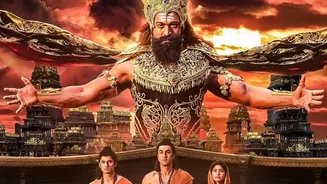
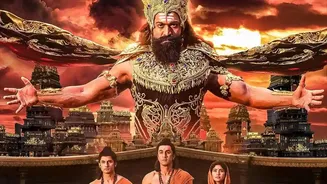
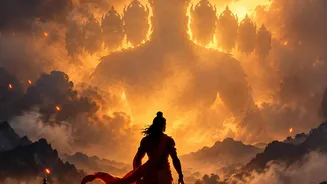
In the epic, Jatayu, the noble vulture king, was a friend of King Dasharatha. When he saw the demon king Ravana abducting Sita in his flying chariot, Jatayu did not hesitate. Despite his old age, he fought fiercely to rescue her, becoming a powerful symbol
of courage and the protection of a woman's honour. Ravana, with his powerful sword, eventually overpowered the great bird, clipping his wings and leaving him mortally wounded. But in his final moments, Jatayu lived long enough to inform Rama and Lakshmana of Sita's abduction and the direction Ravana had taken, playing a crucial role in the search for her. This heroic act is not just a story; it's a journey you can trace through several sacred sites across India.
Lepakshi: Where a Hero Fell
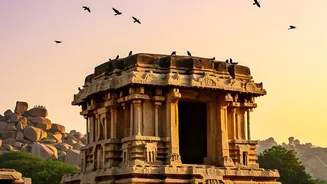
One of the most prominent places associated with Jatayu's fall is Lepakshi in Andhra Pradesh. Local tradition holds that this is where the wounded bird collapsed. The name 'Lepakshi' itself is believed to come from the words Lord Rama spoke to the dying bird: 'Le Pakshi', meaning 'Rise, bird' in Telugu. Today, the village is home to the magnificent Veerabhadra temple, known for its stunning Vijayanagara architecture, a massive Nandi statue, and a famous hanging pillar. A large, modern sculpture of Jatayu has also been installed, honouring the legend. For travellers, Lepakshi offers a powerful connection between mythology, history, and incredible craftsmanship.
Chadayamangalam: A Monumental Tribute
In Kerala, the legend takes a spectacular, modern form. At Chadayamangalam in Kollam district, local lore states that Jatayu fell upon a rocky hill, which came to be known as Jatayupara, or Jatayu Rock. This site is now home to the Jatayu Earth's Center, a tourism project that features the world's largest bird sculpture. Designed by filmmaker and sculptor Rajiv Anchal, the colossal statue depicts Jatayu lying on his back, wings broken, capturing the poignant moment of his fall. The sculpture itself is 200 feet long, 150 feet wide, and 70 feet high. Visitors can reach the summit via a cable car and explore a museum inside the sculpture. The centre is a tribute not just to the myth but also to women's safety and honour.
The Final Rites: Sites of Moksha
The story doesn't end with Jatayu's fall. Several other places are revered as the site where Lord Rama performed Jatayu's final rites, granting him moksha, or salvation. In Tamil Nadu, the Vijayaraghava Perumal Temple in Thiruputkuli, near Kanchipuram, is one such sacred spot. The name itself is said to mean 'the sacred pit of the bird'. The temple's sacred water body is named Jatayu Theertham. Another site is the Thirupullabhoothangudi Temple near Thanjavur, also revered as a 'Jatayu Moksha Sthalam'. Even Maharashtra has a claim, with the Sarvatirtha Jatayu Mandir near Nashik, an area closely associated with Rama's exile. Local belief here holds that Rama created a spring to quench the thirst of the dying Jatayu.