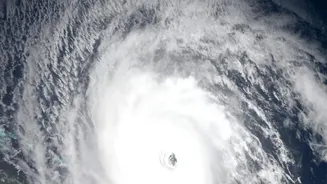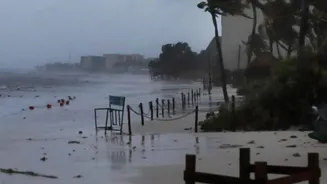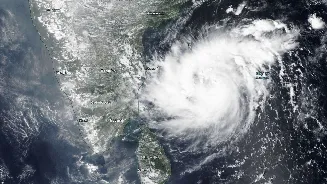








A cyclonic storm, named Akvan, has intensified over the Bay of Bengal and is moving towards India’s east coast. The India Meteorological Department (IMD) has issued warnings for Andhra Pradesh and Yanam, urging residents to prepare for impact.
Latest Forecast and Intensity
According
to the latest bulletin from the India Meteorological Department (IMD) on November 18, Cyclonic Storm Akvan has now intensified into a Severe Cyclonic Storm. The system is currently located over the west-central Bay of Bengal, approximately 610 km southeast of Machilipatnam and 610 km south-southeast of Visakhapatnam. It is forecast to strengthen further into a Very Severe Cyclonic Storm by the evening of November 19. The storm is moving slowly in a north-northwestward direction, and current projections indicate it will make landfall around noon on November 20. The name 'Akvan' was contributed by Iran as part of the regional naming convention for cyclones.
Areas on High Alert
The IMD has issued specific warnings for the coastal districts of Andhra Pradesh and the adjoining Yanam region. An orange alert is currently in place. The cyclone is expected to cross the coast between Nellore and Visakhapatnam. Districts likely to face the most significant impact include Kakinada, Dr. B.R. Ambedkar Konaseema, East Godavari, West Godavari, Eluru, Krishna, and Bapatla. These areas are on alert for extremely heavy rainfall and destructive winds from November 19 onwards. Authorities have also warned of potential impacts in parts of north Tamil Nadu, Puducherry, and south Odisha, which may see heavy rainfall and strong winds as the storm system approaches.
Expected Impact: Winds, Rain and Storm Surge
The primary threats from Cyclone Akvan are destructive winds, torrential rainfall, and a dangerous storm surge. At landfall, the storm is predicted to have maximum sustained wind speeds of 120-130 kmph, with gusts reaching up to 145 kmph. Such wind speeds can cause widespread damage to homes, uproot trees, and bring down power and communication lines. In addition, the IMD has forecast extremely heavy rainfall, with some isolated locations potentially receiving over 21 cm of rain on November 19 and 20. This level of precipitation poses a high risk of widespread flooding in low-lying areas and cities. A storm surge of up to two metres above the astronomical tide is also possible, which could inundate coastal communities.
Official Advisories and Preparations
State and district authorities are on high alert. The Andhra Pradesh government has directed officials to take all necessary precautionary measures. Fishing operations have been completely suspended in the affected parts of the Bay of Bengal, and fishermen have been strongly advised not to venture into the sea. Rescue teams have been deployed in southern Odisha as a precautionary measure. Residents in vulnerable and low-lying coastal areas are advised to pay close attention to official announcements, as evacuation orders may be issued. It is crucial to follow the guidance of local disaster management authorities without delay.
A Checklist for Your Safety
Personal preparedness is critical in minimising the risk to life and property. Residents in the storm's path should take the following steps immediately: 1. Assemble an emergency kit with non-perishable food, drinking water, a first-aid kit, essential medicines, a torch, and extra batteries. 2. Fully charge all mobile phones, power banks, and other essential electronic devices before the storm hits. 3. Secure your home by boarding up glass windows and bringing loose objects like outdoor furniture and flower pots inside. 4. Keep important documents like identification and property papers in a waterproof bag. 5. Know the location of your nearest designated cyclone shelter and the safest route to get there.
Stay Informed, Stay Safe
During a cyclone, information is your most valuable asset. Rely only on official sources for updates, such as bulletins from the IMD, announcements from the National Disaster Management Authority (NDMA), and local government channels. Avoid spreading rumours or unverified information shared on social media, as this can cause unnecessary panic. If you are advised to evacuate, do so immediately. For those staying indoors, move to the strongest part of the house, away from windows and doors, and do not go outside until officials declare it is safe. Be aware that even after the storm passes, dangers like fallen power lines, damaged structures, and flooded roads will persist.