




Meet the Celestial Trio
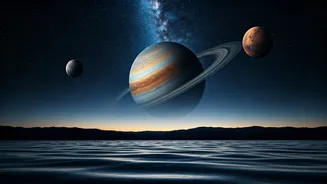
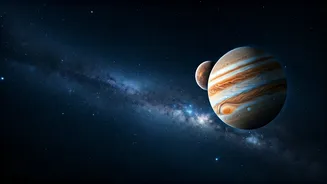
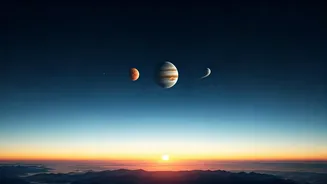
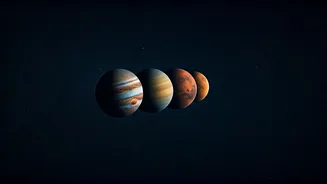
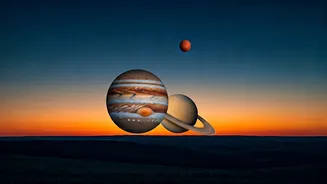
The celestial show tonight features three major planets: Jupiter, Mars, and Saturn. Jupiter, the largest planet in our solar system, will be the brightest of the three, shining like a brilliant, steady star. You can’t miss it. A little fainter, you’ll
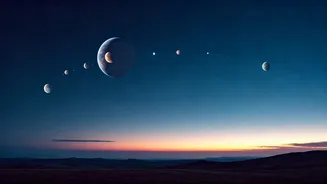
spot Mars, identifiable by its distinct reddish-orange hue. The final member of the trio is Saturn, the ringed giant, which will appear as a yellowish-white point of light. Unlike twinkling stars, planets shine with a constant, unwavering light, which is a great way to distinguish them in the night sky. The three will appear to form a relatively straight line, a beautiful cosmic coincidence from our vantage point on Earth.
Your Viewing Guide: When and Where
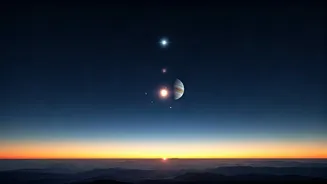
Timing and location are everything for successful stargazing. The best time to view this planetary lineup is shortly after sunset. Look towards the western horizon, the same direction where the sun went down. As the sky darkens from deep blue to black, the planets will begin to emerge. For most locations in India, the optimal viewing window will start about 45 to 60 minutes after sunset and last for about an hour or two before the planets themselves dip below the horizon. You don't need a specific, to-the-minute time. Just find a comfortable spot with a clear view of the west as twilight settles in. The lineup will be low in the sky, so a clear horizon without tall buildings or trees is ideal.
Gear Up (Or Don't!)
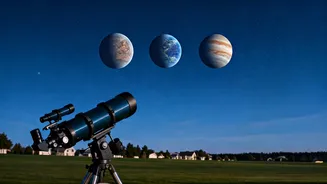
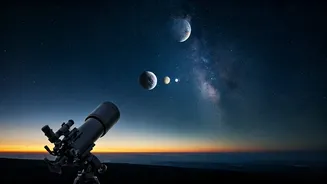
One of the best things about this astronomical event is its accessibility. You do not need a telescope to see these three planets. Their combined brightness makes them easily visible to the naked eye, even from areas with some light pollution. However, if you have a pair of binoculars, bring them along! Binoculars will enhance the view significantly. Through them, Jupiter might reveal its four largest moons—the Galilean moons—appearing as tiny pinpricks of light flanking the planet. You might also appreciate the colours of Mars and Saturn more vividly. A telescope would, of course, show more detail, like Saturn’s famous rings, but it's absolutely not a requirement to enjoy the simple beauty of the alignment itself.
Tips for City Dwellers
Living in a brightly lit city can be a challenge for stargazing, but don't let that discourage you. This planetary trio is bright enough to cut through a good amount of urban skyglow. The key is to find the best possible viewing spot. Look for a park, a rooftop terrace, or even an open field on the outskirts of town that offers an unobstructed view of the western horizon. Another pro tip: give your eyes time to adapt to the dark. Once you’re in position, avoid looking at your phone screen for at least 10-15 minutes. This allows your pupils to dilate, making you much more sensitive to fainter objects in the sky, including the planets.
What Makes This Alignment Special?
While planetary lineups, or conjunctions, are not exceedingly rare, they are always a fascinating spectacle. They occur because all the planets in our solar system orbit the Sun on roughly the same plane, called the ecliptic. From our perspective on Earth, this means they often appear to follow a similar path across our sky. When several planets happen to be in the same part of the sky at the same time, they form these beautiful visual groupings. It’s a wonderful reminder of the dynamic, three-dimensional nature of our solar system. Tonight's event isn't a sign of cosmic doom; it's a beautiful, orderly display of orbital mechanics, a quiet dance of worlds that we are lucky enough to witness.