





The Brain's 'Pacemaker'
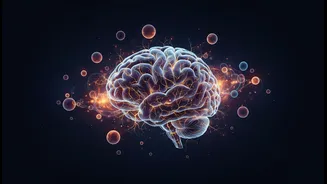
Deep Brain Stimulation, or DBS, is often called a “pacemaker for the brain.” For decades, it has been a life-changing therapy for people with movement disorders like Parkinson's disease and essential tremor. The procedure involves implanting tiny electrodes
into specific areas of the brain. These electrodes are connected to a small device, similar to a heart pacemaker, which sends electrical impulses to modulate and correct abnormal brain activity. For many, DBS dramatically reduces symptoms like tremors, rigidity, and slowness, offering a new lease on life when medications are no longer enough. However, traditional DBS has its limits. It typically delivers a constant, steady stream of stimulation, which doesn't account for the brain's changing needs throughout the day. This one-size-fits-all approach can also struggle to treat certain symptoms, like walking difficulties or freezing of gait, and can sometimes cause unintended side effects.
The Underrated Cerebellum
For over a century, the cerebellum—a densely folded structure at the back of the brain—was known primarily as the brain's motor control command center. Its role was thought to be confined to coordinating movement, balance, and posture. If you can touch your finger to your nose smoothly, you have your cerebellum to thank. However, recent research has shattered this limited view. Scientists have discovered that the cerebellum is a critical hub involved in a much wider range of functions, including cognition, emotion, and social processing. This new understanding reveals that the cerebellum communicates with and influences many other parts of the brain, acting as a master fine-tuner not just for movement, but for complex thought and behavior. This revelation has opened up exciting new possibilities for treating brain disorders.
The Crucial Discovery
The key breakthrough lies in mapping the intricate circuits connecting the cerebellum to other brain regions. Researchers have identified specific pathways linking parts of the cerebellum, like the dentate nucleus, to the cerebral cortex—the brain's center for higher thought. One crucial discovery showed that stimulating tracts connected to both the primary motor cortex and the cerebellum could specifically improve tremors. This is a significant step forward because it moves beyond targeting a single, general area. Instead, neurologists can now focus on the precise neural highway responsible for a specific symptom. Early-stage clinical trials have already begun testing DBS applied directly to the cerebellum for conditions like recovery after a stroke, with promising results for improving motor function. This circuit-based understanding is the foundation for a much more nuanced and targeted approach to brain stimulation.
A New Era of Precision
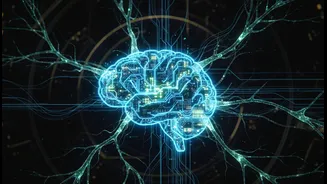
So how does knowing more about the cerebellum make DBS better? The answer is precision. By understanding the cerebellum's role as a major communication hub, scientists can now use it as a gateway to modulate activity across widespread brain networks. Instead of only stimulating traditional targets in the basal ganglia, doctors can now consider the cerebellum as a new and powerful target to address symptoms that were previously hard to treat, such as ataxia and certain types of tremor. Furthermore, this new knowledge is fueling the development of 'adaptive' or 'smart' DBS systems. These next-generation devices don't just provide constant stimulation; they can also listen to the brain's own signals in real time. By identifying the neural biomarkers associated with different symptoms or activities—like walking versus standing—the device can automatically adjust the stimulation to provide exactly what the brain needs at that moment, improving effectiveness and reducing side effects.
What This Means for Patients
This wave of innovation promises a future where DBS is not a blunt instrument but a highly personalized and intelligent therapy. For a person with Parkinson's, this could mean a system that automatically adjusts to help them walk more smoothly without falling. For someone recovering from a stroke, cerebellar DBS could help rewire the brain and restore limb function more effectively. Trials have shown that these advanced approaches can lead to significant improvements. Some patients in studies have experienced better walking, fewer falls, and greater overall motor control. While much of this research is still in clinical trials, the findings are incredibly encouraging. By combining a deeper understanding of brain circuits, particularly the cerebellum's role, with smarter technology, we are moving toward treatments that are safer, more effective, and tailored to the individual needs of every patient.