



India's Next Interplanetary Frontier
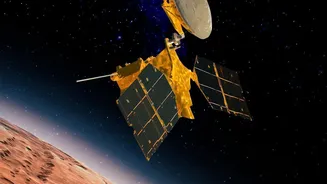
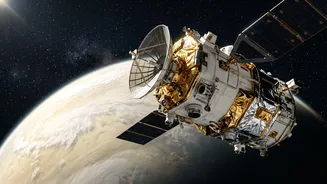
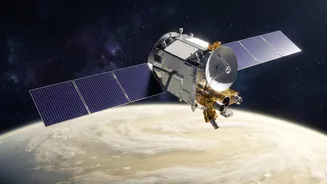
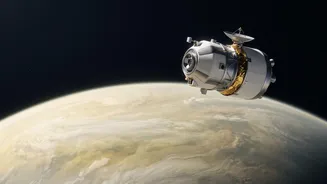
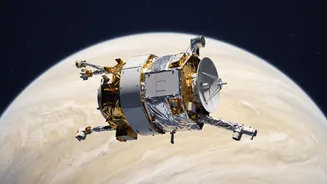
Building on the monumental successes of the Chandrayaan and Mangalyaan missions, the Indian Space Research Organisation (ISRO) is venturing to Earth’s 'twin sister' with its Venus Orbiter Mission, unofficially known as Shukrayaan. Formally approved by
the government in September 2024, this mission marks India's next great leap in planetary exploration. Scheduled for a potential launch in March 2028 aboard the powerful LVM-3 rocket, Shukrayaan aims to place a sophisticated orbiter around Venus for a four-year-long study. The mission underscores India's growing capabilities and ambitions as a major player in global space science, transitioning from a participant to a leader in exploring our cosmic neighbourhood.
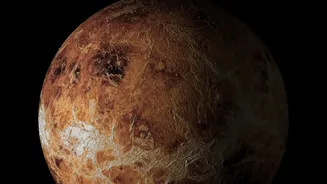
Why Venus? Unraveling Earth's 'Evil Twin'
Venus is often called Earth's twin due to its similar size, mass, and density, but the comparison ends there. It is a scorching hellscape with surface temperatures hot enough to melt lead, a crushing atmosphere 90 times thicker than Earth's, and clouds made of corrosive sulphuric acid. Scientists believe Venus may have once been habitable, possibly with liquid water oceans, much like a young Earth. Understanding what caused its dramatic transformation into a runaway greenhouse inferno is a key objective. Studying Venus provides a natural laboratory for climate change, offering invaluable insights into how planetary climates evolve and what factors can lead to such drastic environmental shifts—a cautionary tale that could help us better model and protect Earth's own climate.
A Toolkit for a Toxic Atmosphere
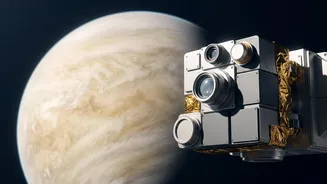
To peer through the planet's thick veil of clouds, ISRO is equipping Shukrayaan with a payload of around 100 kg, comprising at least 16 indigenous instruments and several international collaborations. The focus of the headline—the atmospheric instruments—is crucial. One key instrument is the Venus Thermal Camera (VTC), which will map thermal emissions to understand the cloud top's dynamics. Another, the Solar occultation photometry for vertical profiling of Aerosols (SPAV), will analyse how sunlight filters through the atmosphere to profile the aerosol layers. The Lightning Instrument for VEnus (LIVE) will hunt for electrical discharges, a key clue to atmospheric activity. A mass spectrometer will directly sample and analyse the chemical composition of the upper atmosphere, helping to solve mysteries about its unique chemistry.
Probing Beyond the Clouds
While studying the atmosphere is a primary goal, Shukrayaan will also map the planet's hidden surface. The flagship instrument for this is a high-resolution Synthetic Aperture Radar (SAR), which can pierce the dense clouds to create detailed topographical maps of the volcanic plains and mountains below. This radar will be an order of magnitude more powerful than the one on NASA's Magellan mission from the 1990s and will search for signs of active volcanism. Other instruments will investigate how the solar wind interacts with the Venusian ionosphere, helping scientists understand how the planet lost its water and evolved into its current state.
A Global Effort with an Indian Heart
The Shukrayaan mission is a testament to India's rising prominence in international space collaboration. While ISRO leads the project, it has solicited and incorporated payloads from across the globe. Confirmed partners include Sweden, which is contributing the Venusian Neutrals Analyser (VNA) to study solar wind interactions. Russia's space agency is providing the Venus InfraRed Atmospheric Gases Linker (VIRAL) instrument, and there is also a collaborative payload with German involvement. This international cooperation not only enhances the mission's scientific output but also solidifies India’s reputation as a reliable and cost-effective partner for deep-space exploration, a status cemented by the success of Mangalyaan and Chandrayaan-3.