







The Science Behind the Dance
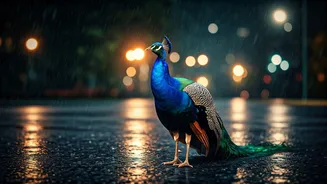
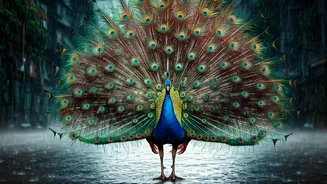
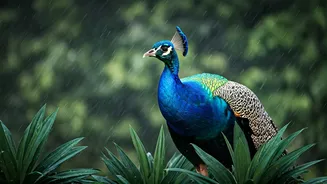
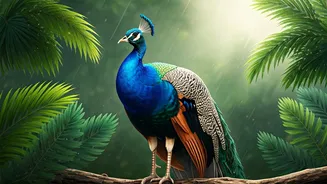
The belief that peacocks dance to celebrate the rain is a cherished part of Indian folklore. The truth, however, is a beautiful coincidence of biology and meteorology. The monsoon season, which brings relief from the summer heat, also happens to be the peacock's
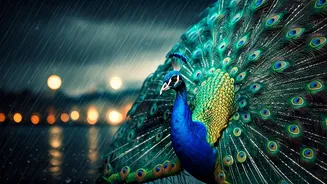
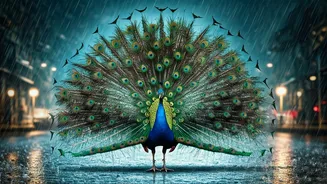
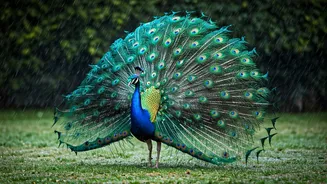
breeding season. The iconic display of the male fanning his elaborate train—the collection of up to 175 long, decorated feathers—is a courtship ritual designed to attract a mate, the peahen. The overcast skies and cooler temperatures of the monsoon provide the ideal conditions for this energy-intensive performance. So, while it may not be a dance for the rain itself, it is a spectacle intrinsically linked to the rhythms of the season, a primal ballet heralding new life.
A Symbol Steeped in Story
The peacock's connection to Indian culture is ancient and profound, weaving through mythology, religion, and royalty. Declared the National Bird of India in 1963, its significance was already cemented for centuries. In Hinduism, the bird is the chosen vehicle, or *vahana*, of Kartikeya, the god of war, and is also closely associated with goddesses of wisdom and wealth like Saraswati and Lakshmi. Perhaps its most famous divine connection is with Lord Krishna, who is almost always depicted with a peacock feather in his crown. Legend holds that peacocks would dance in ecstasy to the sound of his flute. This deep-rooted symbolism extends to royalty, most famously with the Mughal emperor Shah Jahan’s legendary Peacock Throne, an opulent seat of power adorned with precious gems that featured two peacocks.
From Forests to Flyovers
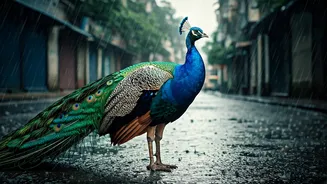
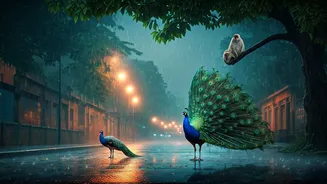
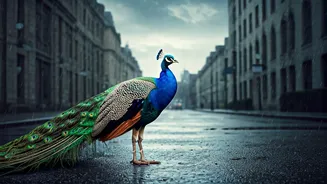
Once a shy bird of open forests and grasslands, the Indian peafowl is increasingly becoming a common sight in urban and semi-urban landscapes. From the gardens of Rashtrapati Bhavan to the bustling streets of Mumbai and Bengaluru, these adaptable birds are finding new homes. Recent reports from June 2026 noted peacocks strolling along Mumbai's busy Pedder Road shortly after the monsoon's arrival, delighting residents and sparking widespread social media attention. This trend is partly due to their protected status under the Wildlife (Protection) Act of 1972, which has helped their numbers grow. Their ability to thrive on a varied diet, from grains and berries to insects and even small snakes, allows them to adapt to life alongside human settlements. While their growing presence sometimes leads to human-wildlife friction, for many city dwellers, hearing a peacock's call over the sound of traffic is a welcome reminder of a parallel, wilder world.
A Moment of Grace in the Chaos
The monsoon is a season of dualities. It brings life-giving water that turns the landscape lush and green, but it also brings flooded streets, traffic jams, and widespread disruption. In the midst of this seasonal chaos, the sight of a peacock offers a moment of pure, uncomplicated beauty. It’s a visual pause, a splash of impossible colour against a grey, rain-swept sky. Whether it’s a male fanning its tail on a rooftop or a family of peafowl picking its way through a neighbourhood park, the encounter feels auspicious and reassuring. It represents the resilient beauty of nature, a spectacle that persists and even thrives amidst the concrete expansion of our cities. This is the softer side of the monsoon—not just the relief from the heat, but the sudden, unexpected flashes of wild grace that remind us of the magic embedded in the season.