



Know Before You Go: Check Official Forecasts
Spontaneity is great, but not when it comes to monsoon weather. Before you even pack your bags, make checking the weather your top priority. The India Meteorological Department (IMD) is your most reliable source. Look for their 5-day and 7-day district-wise
forecasts. Pay close attention to colour-coded alerts. Recent IMD bulletins, for instance, have issued warnings for extremely heavy rainfall in Northeast India, Sub-Himalayan West Bengal, Sikkim, and heavy showers in southern states like Kerala and Karnataka. Understanding these warnings can help you decide whether to proceed, delay, or choose an alternate destination.
Vehicle Prep: Your First Line of Defence
Your car is your travel companion; make sure it’s ready for the challenge. Begin with the essentials: tyres, wipers, and brakes. Your tyres need adequate tread (at least 2-3 mm) to grip slippery roads and prevent hydroplaning. Replace worn-out wiper blades for clear visibility. Brakes are non-negotiable; ensure they are in top condition, as braking distances are significantly longer on wet surfaces. Also, check that your headlights, taillights, and fog lamps are working perfectly. Finally, pack an emergency kit containing a first-aid box, a torch, extra batteries or a power bank, and some dry snacks.
Smarter Route Planning: Avoid High-Risk Zones
The shortest route isn't always the safest during the monsoon. Hilly and mountainous regions are particularly vulnerable to landslides, a recurring hazard in India. Areas like the Himalayas in Uttarakhand and Himachal Pradesh, and the Western Ghats in Kerala, Karnataka, and Maharashtra, are known hotspots. News of landslides frequently comes from places like Wayanad in Kerala or the Char Dham routes in Uttarakhand. Use real-time traffic apps to look for road closures and waterlogging. Opt for national highways over remote, poorly maintained roads, and avoid routes that pass through low-lying areas or cross small, rain-fed rivers.
On The Road: Driving in a Downpour
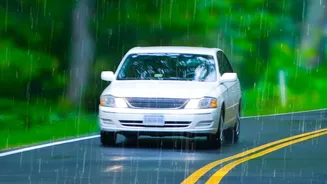
Once you're on your way, adjust your driving style. The number one rule is to slow down. Speeding on wet roads is a recipe for disaster. Double the distance between your vehicle and the one in front of you. Keep your headlights on low beam for better visibility for both yourself and other drivers. If you approach a waterlogged street, assess the depth. As a rule of thumb, if the water is higher than the centre of your wheels, do not attempt to cross it. If you must proceed, stay in a low gear and keep the engine revs high to prevent water from entering the exhaust. After clearing the water, tap your brakes gently a few times to dry them out.
Rethink Your Destination: Safer Alternatives
Sometimes, the smartest choice is to change the plan. If your heart was set on a high-altitude hill station known for landslides, like Manali or Munnar during peak rains, consider a safer alternative. Destinations in rain-shadow regions or those with better infrastructure can offer a similar monsoon charm with fewer risks. Instead of a remote trek, a resort on the outskirts of your city could provide a relaxing break. Instead of the steep slopes of Darjeeling, the backwaters of Kerala (in less flood-prone zones) can be atmospheric and accessible. The key is to match your destination to the season's realities.
What If You Get Stuck? Essential Safety Steps
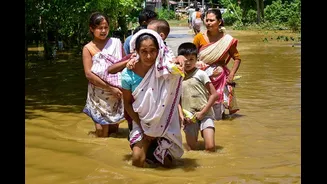
Even with the best planning, things can go wrong. If your car gets stuck in rising floodwater, do not panic. Turn on your hazard lights. If the water is stationary, it's often safer to abandon the vehicle and move to higher ground. Do not attempt to restart an engine that has stalled in water, as this can cause severe damage. If you are inside the vehicle as water rises, unbuckle your seatbelt and try to roll down a window to escape. Electrical windows should work for a short time. If the window is jammed, you may need to wait for the pressure inside and outside to equalize before you can open a door.