

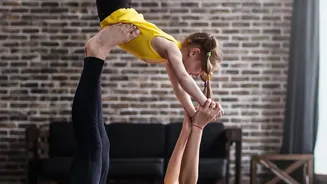
Your Brain on Yoga
It’s not just about flexibility; yoga has a real, measurable impact on your brain and body. When you practice yoga, you're not just stretching your muscles, you're actively promoting relaxation. This helps lower the levels of cortisol, your body's primary
stress hormone. For teenagers, whose brains are still developing, this is particularly beneficial. Practices that combine mindful movement and focused breathing have been shown to improve self-regulation skills, helping you manage your emotions and attention more effectively. Think of it as a reset button for your nervous system, allowing you to step back from academic and social pressures and find a moment of calm. Regular practice builds your ability to focus, balance, and relax, skills that are useful both in and out of the classroom.
Cat-Cow Pose for a Flexible Spine
Hours spent hunched over a desk or phone can lead to a stiff neck and back. The Cat-Cow pose is a gentle flow that warms up the spine, improves flexibility, and helps release tension in your shoulders and neck. It also encourages a connection between your movement and your breath, which helps to calm a busy mind.How to do it: Start on your hands and knees, with your wrists directly under your shoulders and knees under your hips. As you inhale, drop your belly towards the mat and lift your chest and tailbone, looking slightly forward (Cow Pose). As you exhale, round your spine toward the ceiling, tucking your chin to your chest and pressing into your hands (Cat Pose). Flow between these two poses for about a minute.
Child's Pose to Calm an Anxious Mind
Child's Pose, or Balasana, is a restorative posture that signals safety and rest to your nervous system. It’s a perfect reset when you feel overwhelmed, anxious, or mentally tired. By resting your forehead on the floor, you apply gentle pressure that can have a soothing effect on the brain. This pose gently stretches your lower back, hips, and shoulders, areas that often hold a lot of stress.How to do it: Kneel on the floor, touching your big toes together and sitting back on your heels. Separate your knees about as wide as your hips. Exhale and lay your torso down between your thighs. Let your forehead rest on the floor and allow your shoulders to relax. You can extend your arms out in front of you or rest them alongside your body with palms facing up. Hold for at least 30 to 60 seconds, focusing on deep, slow breaths.
Tree Pose to Sharpen Your Focus
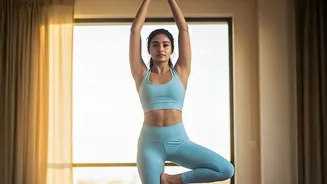
If you struggle with staying focused during a long study session, Tree Pose (Vrksasana) is your friend. This balancing posture requires you to find a single point of focus, known as a drishti, which trains your brain to ignore distractions and stay present. It not only improves concentration but also strengthens your legs, ankles, and core while promoting better posture.How to do it: Start by standing tall. Shift your weight onto your left foot. Place the sole of your right foot on your inner left ankle, calf, or thigh—avoid pressing directly on the knee. Bring your hands together in front of your chest. Find a spot in front of you that isn't moving and fix your gaze on it to help you balance. Hold for 5-10 breaths, then switch sides. Remember, wobbling is part of the practice!
Seated Forward Bend for Full-Body Release
This pose provides a deep stretch for the entire back of your body, from your heels to your neck. A Seated Forward Bend is fantastic for calming the nervous system and stretching out tight hamstrings, which can become tense from sitting in class all day. It's known to help relieve mild stress and anxiety by encouraging you to turn inward.How to do it: Sit on the floor with your legs extended straight out in front of you. You can sit on the edge of a folded blanket to help tilt your pelvis forward. Inhale and lengthen your spine. As you exhale, hinge at your hips and begin to fold forward over your legs. Don't worry about touching your toes; just let your hands rest on your shins, ankles, or feet. Keep your neck as a natural extension of your spine. Hold for 5-10 deep breaths, feeling the release in your back and legs.
Downward-Facing Dog for an Energy Boost
An iconic yoga pose for a reason, Downward-Facing Dog is a full-body stretch that can both calm the mind and energize the body. It strengthens your arms and shoulders, lengthens your spine, and stretches your hamstrings and calves. By bringing extra circulation to the head, it can help relieve tension and fatigue, making it a great pose to do when you hit an afternoon slump.How to do it: From your hands and knees, tuck your toes and lift your hips up and back, forming an inverted 'V' shape with your body. Spread your fingers wide and press firmly into your hands. Keep your head between your upper arms and your gaze toward your legs. It's okay to keep a generous bend in your knees, especially if your hamstrings are tight. Hold for 5-8 breaths.