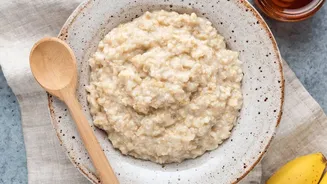








The humble bowl of oats is a breakfast champion, but how you prepare it matters. Preparing oats cold, as in overnight oats, is not just a time-saver for busy mornings; it may also make them easier to digest and more nutritious.
The Science of a Simple Soak
At the heart of the digestive
benefits of cold-soaked oats is the breakdown of certain natural compounds. Grains, seeds, and nuts contain phytic acid, which can bind to minerals like iron, zinc, and magnesium, making it harder for your body to absorb them. The process of soaking oats overnight helps to reduce this phytic acid. This simple, no-heat 'cooking' process breaks down the starches and acid, which may allow your body to utilize the oats' nutrients much more efficiently and lead to easier digestion for some people, especially those with sensitive stomachs.
A Boost in Resistant Starch
One of the most significant differences between cold-soaked and cooked oats lies in their starch content. Raw or soaked oats are high in a specific type of carbohydrate called resistant starch. Unlike other starches, this type resists digestion in the small intestine. Instead, it travels to the large intestine where it acts as a prebiotic, feeding the beneficial bacteria in your gut. This process of fermentation can lead to several benefits, including improved gut health, better blood sugar stability, and an increased feeling of fullness that can last all morning. Cooking, on the other hand, converts much of this resistant starch into more readily digestible starch, which reduces these specific prebiotic benefits.
Hot vs. Cold: It’s Not a Competition
While overnight oats have unique digestive advantages, this doesn't mean a warm bowl of cooked porridge is a bad choice. In fact, for some, cooked oats can be easier to digest. The heating process breaks down fibres, which can be beneficial for those who find raw grains heavy. Cooked oatmeal also excels at releasing beta-glucan, a soluble fibre famous for its ability to help lower cholesterol. Ultimately, neither method is universally 'better'; they simply offer different benefits. Soaked oats provide more resistant starch for gut health, while cooked oats can be comforting and offer more available beta-glucan. The best choice often comes down to personal preference and how your own digestive system responds.
How to Master Overnight Oats
Getting started with overnight oats is incredibly simple and requires no culinary skill. The basic principle is to soak rolled oats in a liquid overnight in the refrigerator. A good starting ratio is 1:1, for example, a half-cup of oats to a half-cup of liquid. You can use milk, a non-dairy alternative like almond or soy milk, or even yogurt. Using an acidic liquid like yogurt or adding a splash of lemon juice may help reduce phytic acid even further. From there, you can customize your creation. In the morning, stir in your favourite toppings like fresh fruit, nuts, seeds, or a drizzle of honey for a perfectly balanced, ready-to-eat meal that streamlines your morning routine.