


Cosmic Clouds of Creation
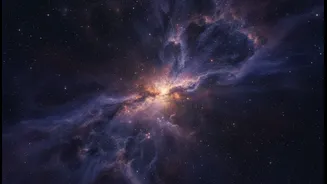
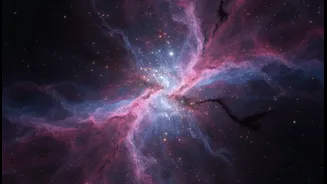
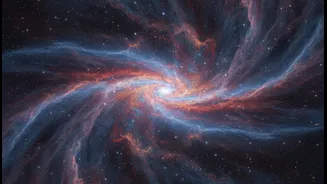
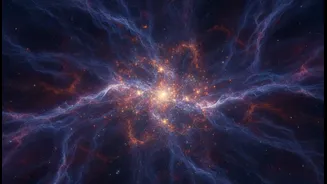
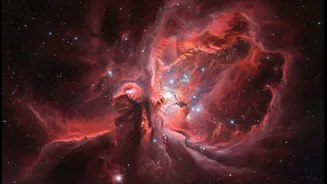
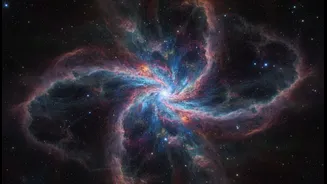
A nebula is a giant cloud of dust and gas floating in the space between stars. Primarily made of hydrogen and helium, these clouds are the fundamental building blocks for new stars and planetary systems. They come in various forms; some are the scattered
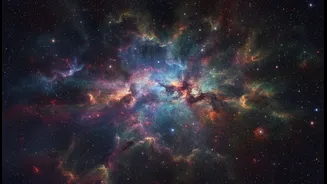
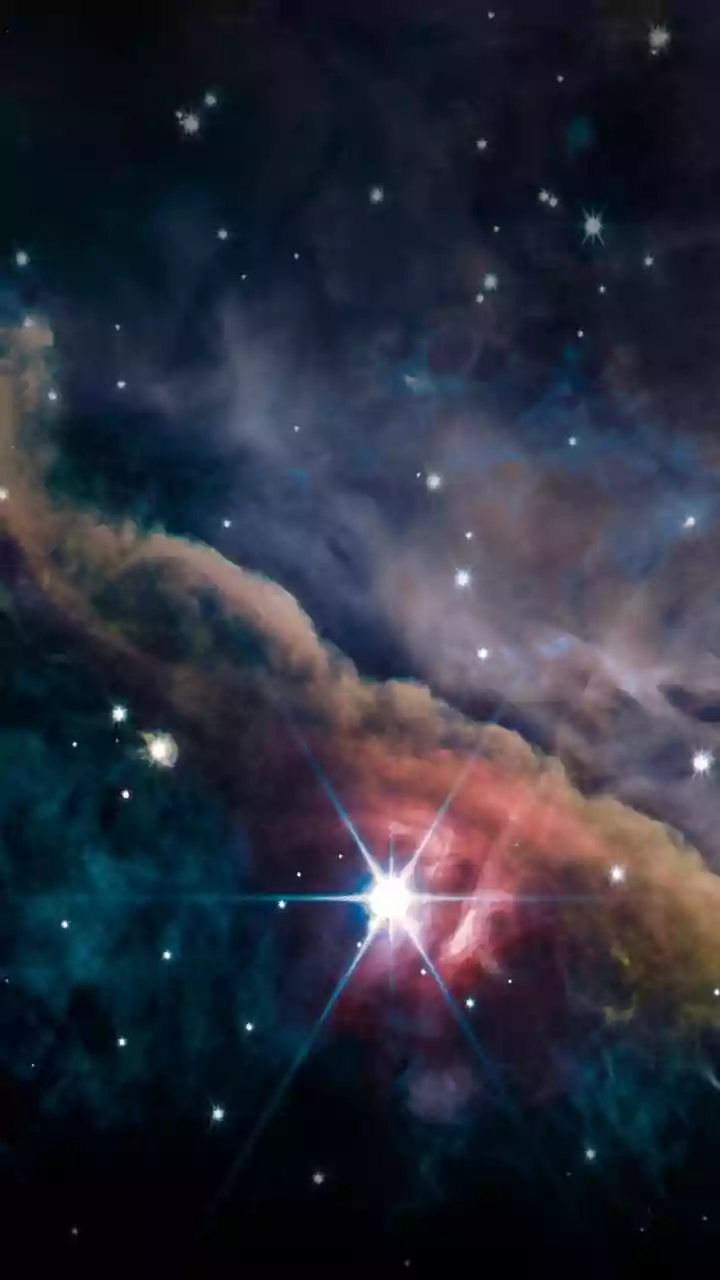
remnants of a dying star, like a supernova, while others are vast, cold regions just waiting for the right trigger to begin forming stars. These star-forming regions, often called 'stellar nurseries,' can span hundreds of light-years across, containing enough raw material to create thousands or even millions of stars like our sun. Famous examples include the Orion Nebula, visible to the naked eye, and the sprawling Carina Nebula.
The First Steps to Stardom
The process of star formation begins when a section of a nebula starts to collapse under its own gravity. This can be triggered by a disturbance, such as a shockwave from a nearby exploding star or the gravitational pull of a passing celestial body. As the cloud of gas and dust contracts, it breaks into smaller, denser clumps or cores. Gravity continues to pull material inward, causing these cores to spin and flatten into a rotating disk. At the center of this disk, the material becomes incredibly dense and hot, forming a 'protostar'—the embryonic stage of a star. A protostar is not yet a true star because it doesn't generate energy through nuclear fusion; its heat comes from the friction and pressure of gravitational collapse.
Ignition and the Birth of a Star
The protostar phase can last for hundreds of thousands of years for a sun-sized star as it continues to gather mass from the surrounding disk. The intense pressure at its core builds until the temperature reaches a staggering 15 million degrees Celsius. At this critical point, nuclear fusion ignites. Hydrogen atoms begin to fuse together to form helium, releasing an immense amount of energy in the form of light and heat. This outward pressure from fusion pushes against the inward pull of gravity, creating a stable, shining star that enters the main sequence of its life. The new star’s powerful stellar winds and radiation then blow away the remaining gas and dust, revealing the newborn star to the universe.
Seeing the Process Unfold
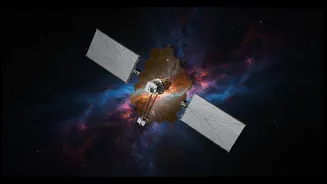
For a long time, this process was largely theoretical, hidden behind impenetrable veils of dust. But modern telescopes have changed everything, making star birth feel incredibly real. The Hubble Space Telescope gave us the iconic 1995 image of the 'Pillars of Creation' within the Eagle Nebula—towering columns of gas and dust where new stars are actively forming at the tips. More recently, the James Webb Space Telescope (JWST) has allowed us to see even deeper. With its infrared vision, the JWST can peer through the obscuring dust to witness protostars and stellar jets that were previously invisible. Images of regions like the Carina Nebula reveal previously unseen areas of star birth, showing us the intricate details of how young stars shape their cosmic environment.
A Never-Ending Cycle
The birth of stars in nebulae is part of a grand cosmic cycle. The same massive stars born in these nurseries will live out their lives and eventually die in spectacular supernova explosions. These explosions blast heavy elements—forged in the stars' cores—back out into space, enriching the interstellar medium. This material then mixes with existing nebulae or forms new ones, providing the raw ingredients for the next generation of stars and planets. In this way, nebulae are both the cemeteries of old stars and the cradles of new ones. It’s this continuous cycle of destruction and creation, witnessed through the lenses of our most powerful telescopes, that connects us directly to the cosmos.