


What is Cold-Pressing?
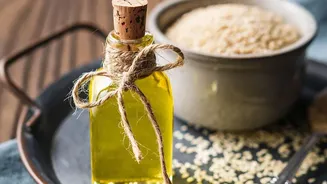
At its heart, cold-pressing is a mechanical method of extracting oil from seeds without using high heat. In India, this traditional process is often done using a 'ghani' or 'chekku', a large mortar and pestle setup. Historically, these were powered by
bullocks, rotating the pestle at a very low speed. This slow, gentle crushing of sesame seeds releases the oil without generating significant friction heat, keeping the temperature below 40-49°C. The result is an unrefined oil that retains much of its natural colour, aroma, and, most importantly, its nutritional integrity, unlike modern methods that use high heat and chemical solvents to maximise yield.
The Nutrient Powerhouses: Vitamin E and Antioxidants
Sesame oil is naturally rich in beneficial compounds. It's a significant source of Vitamin E, particularly a form called gamma-tocopherol, which is a powerful antioxidant. Beyond Vitamin E, sesame oil contains unique antioxidants known as lignans, specifically sesamol, sesamin, and sesamolin. These compounds are responsible for many of the oil's health-promoting properties and also contribute to its remarkable stability, preventing it from going rancid quickly. These nutrients work together to protect the body's cells from damage caused by free radicals, which can lead to inflammation and disease.
How Heat Diminishes Nutritional Value
In contrast to cold-pressing, modern commercial oil extraction often involves high temperatures and chemical solvents like hexane to get the most oil out of every seed. This process, known as hot-pressing or refining, can expose the oil to temperatures of 80-120°C or even higher. Such intense heat is the enemy of delicate nutrients. It can cause heat-sensitive compounds like Vitamin E and the powerful lignans (sesamol and sesamin) to degrade or be removed during the deodorising and bleaching stages. While hot-pressing is more efficient and results in a cheaper product with a longer shelf life, this comes at the cost of a reduced nutritional profile.
The Cold-Press Advantage for Nutrient Preservation
The low-temperature nature of cold-pressing is the key to preserving the goodness of sesame oil. By avoiding high heat, the process keeps the natural Vitamin E and the antioxidant lignans like sesamol and sesamin intact. Research shows that cold-pressed oils consistently retain higher levels of these beneficial compounds compared to their hot-pressed counterparts. Sesamol, in particular, is very effective at protecting the oil's healthy fats from breaking down, even at cooking temperatures. This means that when you use cold-pressed sesame oil, you are not only getting a more flavourful product but also one with its natural protective systems fully functional.
A Culinary Tradition Rooted in Wisdom
The use of cold-pressed sesame oil, known as 'nallennai' or 'gingelly oil', is deeply woven into the fabric of South Indian cuisine. It's the soul of the 'tadka' or tempering for dishes like sambar and rasam, where it carries the flavour of spices. It's mixed with 'podi' to create a delicious dip for idlis and dosas, and it forms the base for countless pickles and tangy curries like Vatha Kuzhambu. This long-standing culinary tradition is no accident; it reflects an inherent understanding of the oil's properties. For generations, cooks have relied on its distinctive flavour and stability, benefits that science now attributes to the nutrient-preserving power of the cold-press method.