



More Than Just a Spell Check
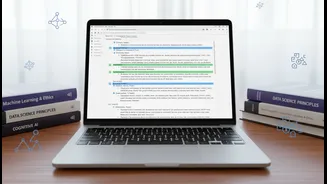
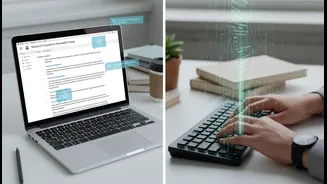
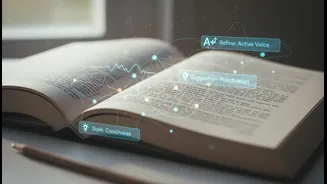
Forget the simple red underline for a typo. Modern AI writing assistants are far more sophisticated. Tools like Grammarly, QuillBot, and Paperpal are designed to act as a first reader, offering suggestions that go beyond basic grammar and spelling. They
can help rephrase confusing sentences for clarity, suggest a more academic tone, check for consistency, and even provide a reverse outline to help you analyze your own structure. These platforms use advanced algorithms, trained on vast databases of text, to identify patterns and suggest improvements that can make writing more coherent and polished. For students, especially those for whom English is a second language, these tools can be invaluable for enhancing the quality and readability of their work.
The Promise: A Personal Writing Tutor
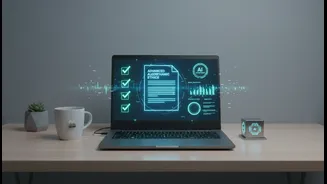
The biggest advantage of these AI draft checkers is their immediacy. Instead of waiting for a professor or peer to provide feedback, students can get real-time suggestions 24/7. This instant loop can be a powerful learning opportunity, helping students identify recurring errors and understand the principles of strong sentence construction. Some platforms even provide explanations for their suggestions, allowing users to learn from the feedback actively. When used thoughtfully, these tools can serve as a supportive assistant, helping to brainstorm ideas, structure arguments, and refine prose. This can reduce the frustration often associated with academic writing and free up students to focus on the more demanding cognitive tasks of research and critical analysis.
The Risks: Over-Reliance and Academic Integrity
Despite the benefits, the rise of AI writing assistants brings significant risks. The primary concern is over-reliance. If a student uses AI to generate or heavily rewrite their work, they risk not developing their own critical thinking and writing skills. The goal of academic writing is to demonstrate original thought, and using AI as a crutch rather than a tool undermines this process. Furthermore, there is a serious risk of accidental plagiarism. AI models can sometimes generate text that is too close to their training data, and some tools can even invent, or 'hallucinate,' sources and facts. Students are ultimately responsible for the accuracy and originality of their work, and submitting AI-generated content as their own is a serious breach of academic integrity.
Navigating University Policies in India
Indian universities are actively developing policies to address the use of AI. As of 2026, while many institutions may not have a formal, standalone AI policy, they apply existing academic integrity rules. Guidelines from the University Grants Commission (UGC) suggest that AI tools can be used for assistance, but not to replace a scholar's intellectual contribution. Critically, any use of AI should be disclosed. Institutions like the National Law University Delhi and Chitkara University have already established policies that mandate the disclosure of AI tool usage in submitted work. The core message is clear: students bear full responsibility for everything they submit, regardless of how it was generated. It is crucial for students to check their specific university and even course-level guidelines, as rules can vary.
A Smart Student's Guide to Using AI
The key to leveraging AI draft checkers is to use them as a partner, not a ghostwriter. Treat them as a final step in your writing process. First, complete your research, form your arguments, and write your draft. Then, use the AI tool to polish and refine what you have already created. When the tool suggests a change, don't just blindly accept it. Ask yourself why the suggestion is being made. Is it improving clarity? Is it strengthening your tone? This critical engagement is what turns a simple check into a learning experience. Always fact-check any information provided by an AI and ensure the final submission is written in your authentic voice. The goal is to use AI to become a better writer, not to let it do the writing for you.