






Beyond Total Averages
For generations, the health of the monsoon was measured in total rainfall. But climate change is forcing us to look at a more complex metric: variability. It’s no longer just about how much rain falls over the four-month season, but how it arrives. Increasingly,
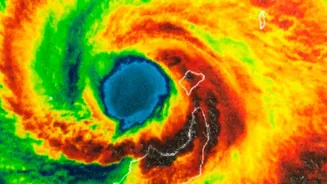
this means long, unexpected dry spells punctuated by sudden, intense downpours. Studies show that while overall precipitation might not change dramatically, its pattern is becoming more chaotic. For every degree of global warming, monsoon rainfall is predicted to increase by about 5%, but in a more volatile and unpredictable manner. This feast-or-famine cycle creates a profound shock to ecosystems that have evolved over millennia to thrive on a predictable seasonal rhythm.
An Unwelcome Feast or Famine
Different forests respond to this variability in different ways. During intense downpours, the soil in many forests cannot absorb the deluge fast enough. This leads to massive surface runoff, stripping away the fertile topsoil essential for regeneration. In hilly regions like the Western Ghats and the Himalayas, this can trigger devastating landslides. Conversely, extended dry spells put immense stress on trees. They are forced to shed leaves and can suffer from hydraulic failure, essentially dying of thirst. Research in central India's Panchmarhi Biosphere Reserve found that shifting rainfall and rising temperatures were key drivers behind a 13% loss of forest cover over five decades. Dry deciduous forests, which operate closer to moisture-stress thresholds, are particularly vulnerable.
The Knock-On Effects on Ecosystems
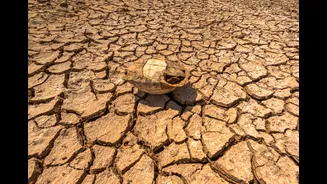
The impacts of rainfall variability extend far beyond individual trees. A healthy forest canopy intercepts rain, allowing it to drip slowly to the ground and recharge groundwater. When the canopy thins due to drought stress, more sunlight hits the forest floor, drying it out and increasing the risk of forest fires. The combination of heat and drought creates a dangerous feedback loop, where stressed forests become tinderboxes. This 'double whammy' of drought and heat has been shown to cause significant reductions in forest growth and even large-scale die-offs. Furthermore, this erratic weather disrupts the phenology—or life cycles—of the forest, affecting everything from when trees flower and fruit to the breeding patterns of the animals that depend on them.
A Cycle of Disruption
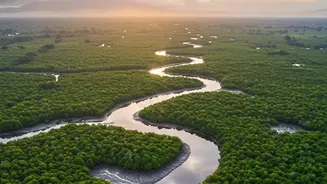
Forests are not just passive victims of rainfall patterns; they are active participants in creating them. Through a process called evapotranspiration, large, healthy forests release moisture into the atmosphere, which contributes to cloud formation and subsequent rainfall. Deforestation has already been shown to weaken the monsoon. As rainfall variability degrades forest health, this vital function is compromised. A stressed, thinning forest releases less moisture, potentially exacerbating local and regional droughts and further disrupting the delicate balance of the monsoon system. This creates a vicious cycle where degraded forests contribute to the very climate instability that threatens their survival.
Rethinking India's Conservation Playbook
For decades, forest conservation in India has focused on preventing illegal logging and increasing tree cover through afforestation programs. While these efforts remain crucial, they are no longer sufficient. The challenge has evolved. Conservation must now become climate-adaptive. This means prioritising the resilience of our forest ecosystems. Strategies need to focus on protecting biodiversity, as diverse forests are better able to withstand shocks. It also involves implementing sustainable land-use practices around forested areas and promoting the restoration of contiguous forest patches. Projections show that without adaptation, nearly half of India's forested areas could undergo significant change by 2085, with irreversible socio-economic consequences for forest-dependent communities.