






The Problem with One Big Jacket
For many travellers, the default solution for a cold-weather trip is to pack one massive, heavy winter coat. While seemingly logical, this approach is the enemy of light travel. A single bulky jacket can consume half your baggage allowance, both in terms
of space and weight. It’s also surprisingly inflexible; a heavy parka that’s perfect for a snowy afternoon can become an inconvenient burden during a sunny but crisp morning or a heated indoor tour. The key to overcoming the 7kg challenge is to abandon the 'one big coat' mindset and instead embrace a more versatile and intelligent system: strategic layering. This isn't just a packing trick; it's a fundamental shift in how you think about staying warm.
The Science of Smart Layering
The principle behind layering is simple but effective. Instead of relying on a single thick layer for insulation, you use multiple thinner layers. The real magic happens in the air trapped between these layers, which your body heats up, creating a powerful barrier against the cold. A proper layering system consists of three distinct parts: a base layer, a mid-layer, and an outer shell. The base layer, worn next to the skin, should be made of a moisture-wicking fabric like merino wool or a synthetic blend to pull sweat away from your body. The mid-layer provides insulation; think fleece, a down vest, or a thin cashmere sweater. Finally, the outer shell is your protection against wind and rain, ideally a lightweight, waterproof, and packable jacket. Together, these three components offer more warmth and adaptability than one bulky coat.
Choosing Your Compressible Armoury
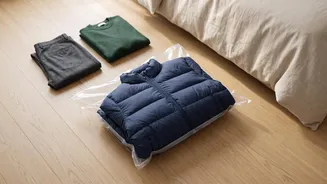
The success of this strategy depends entirely on choosing the right fabrics. Your goal is maximum warmth for minimum weight and bulk. For the base layer, merino wool is a traveller's favourite because it regulates temperature and naturally resists odour, allowing for multiple wears. For the insulating mid-layer, look for materials that are highly compressible. A packable down or synthetic-fill puffer jacket or vest is an excellent choice, as it can be squished down to a fraction of its size. Similarly, modern fleece jackets offer significant warmth but are lightweight and less bulky than traditional wool sweaters. For the outer shell, a thin, unlined waterproof jacket is perfect. It can be rolled tightly and takes up barely any space, but provides crucial protection from the elements when worn over your other layers. Avoid heavy, stiff materials like denim and thick cotton, which are bulky and slow to dry.
The Art of the Strategic Pack
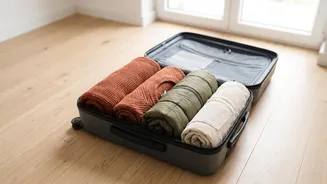
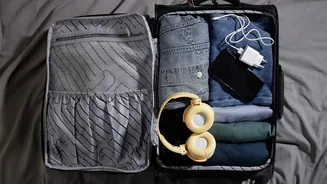
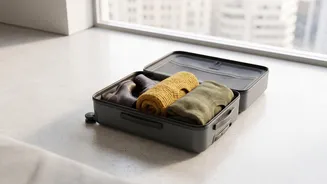
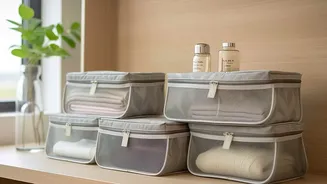
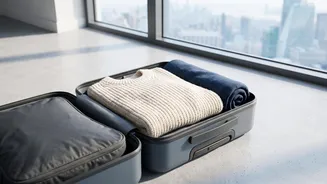
With your layers selected, packing becomes a game of Tetris. Rolling clothes instead of folding is a proven space-saver, as it compresses the fabric and minimises wrinkles. For even greater efficiency, invest in packing cubes. These zippered pouches not only keep your bag organised but also help compress clothing. Compression packing cubes, which feature a second zipper to squeeze out excess air, are particularly effective for bulky items like fleece jackets and sweaters. You can group items by category—tops in one cube, layers in another—making it easy to find what you need without disturbing your entire bag. Place heavier cubes at the bottom of your suitcase near the wheels for better stability. The goal is to create dense, organised blocks of clothing that maximise every square centimetre of your carry-on.
Your On-Board and Arrival Strategy
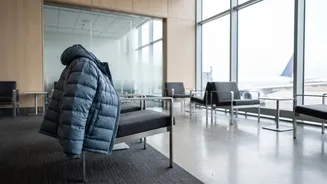
The final hack is the most important: wear your bulkiest items on the plane. This doesn't mean sweating in a full winter ensemble at the gate. Instead, wear your mid-layer (the fleece or light puffer) and your heaviest pair of shoes, like boots. Your thin outer shell can be easily carried or stuffed into a personal item. Once on board, you can remove the mid-layer and use it as a pillow or blanket. By deconstructing your 'winter jacket' into wearable components, you effectively remove its weight and bulk from your carry-on bag entirely. When you arrive at your destination, you have a complete, adaptable system ready. You can wear the base and mid-layer for cool days, add the shell if it rains, or combine all three for serious cold, ensuring you're comfortable no matter what the weather brings.