






Start Planning Early
Spontaneity is not an option when flying with a pet. The process demands planning, with most experts recommending you start preparing at least two to four weeks before your intended travel date. This window gives you enough time to complete the necessary
steps without a last-minute rush. First, book your own ticket, as you will need your PNR to book your pet's spot. Pet bookings must be made directly with the airline, as online travel agencies cannot process them. Call the airline's customer service at least 48-72 hours in advance, as the number of pets allowed on each flight is limited. Air India and Akasa Air, for instance, allow a maximum of two pets in the cabin per flight. This lead time is also crucial for veterinary appointments and arranging mandatory paperwork.
Essential Documents and Health Checks
Every airline in India requires a specific set of documents to ensure your pet is fit to fly. The most critical is a health certificate from a registered veterinarian, issued within 7 to 10 days of your flight, confirming your pet is healthy and free from infectious diseases. You will also need an up-to-date vaccination record, with special emphasis on the rabies vaccine. For travel within India, a No Objection Certificate (NOC) from the Animal Welfare Board of India (AWBI) is sometimes required, which can be applied for online and takes 3-7 working days to process. Always double-check with your specific airline about their exact documentation needs to avoid being denied boarding. Sedating pets before a flight is strictly prohibited by all major carriers.
Know Your Airline's Pet Policy
In India, pet travel rules vary significantly from one airline to another. As of 2026, Air India and Akasa Air are considered the most pet-friendly, allowing small pets to travel in the cabin. Air India generally permits pets up to 10 kg (including the carrier) in the cabin. Akasa Air allows pets up to 7 kg in the cabin. IndiGo offers limited in-cabin services for pets under 7 kg, while SpiceJet only accepts pets in the cargo hold. Animals that exceed the in-cabin weight limit, typically from 10 kg to 32 kg, travel as checked baggage in a temperature-controlled, pressurised compartment in the aircraft's hold. It's vital to check the airline's website or call them directly for the most current rules, especially concerning breed restrictions. Many airlines restrict brachycephalic (flat-faced) breeds like Pugs, Bulldogs, and Persian cats due to respiratory risks.
Choosing the Right Carrier
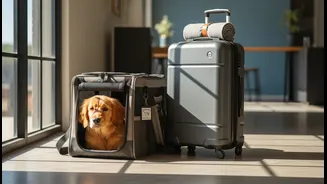
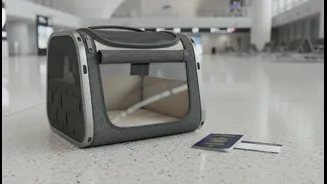
The carrier is your pet’s home for the duration of the journey, so its specifications are non-negotiable. For in-cabin travel, a soft-sided carrier is generally required and must fit under the seat in front of you. Common dimensions are around 17x10x9 inches, but you must verify the exact size with your airline. For pets travelling in the cargo hold, a hard-sided, IATA-compliant crate is mandatory. These crates must be made of rigid plastic, secured with metal nuts and bolts, and have ventilation on at least three sides. The fundamental rule for any carrier is that the pet must be able to stand up, turn around, and lie down in a natural position. To reduce your pet’s anxiety, purchase the carrier several weeks before the flight and help your pet acclimatise to it by placing treats, toys, or familiar bedding inside.
On the Day of Travel
Arrive at the airport early, at least three hours before your flight, especially if your pet is travelling in the cargo hold. This gives you ample time for the check-in process. Tell every airline employee you interact with that you are travelling with a pet. Before leaving for the airport, give your pet a light meal about four hours before the flight and ensure they have a chance to relieve themselves. Pack a small travel kit for your pet containing food, water, bowls, waste bags, and copies of all their documents. Ensure the carrier is properly labelled with “Live Animal” stickers, your contact information, and your destination address. Freezing water in a dish inside the crate the night before can provide hydration once it melts, without spilling during loading.