


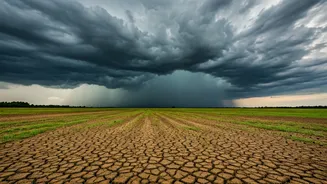


A Drier and Warmer July Ahead
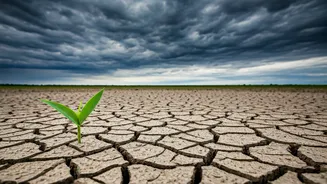
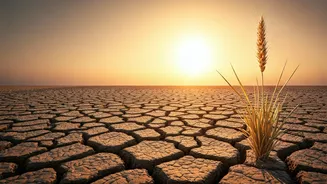
The India Meteorological Department (IMD) has forecast that rainfall across the country in July 2026 is likely to be below normal. Specifically, precipitation is expected to be less than 94% of the Long Period Average (LPA). The LPA for July, which is historically
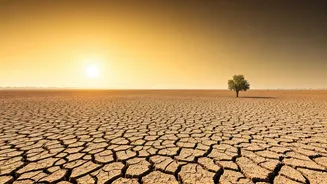
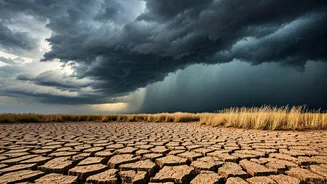
the wettest month of the monsoon season, is 280.4 mm. This follows one of the driest Junes on record, which ended with a rainfall deficit of about 40%. Alongside the reduced rainfall, most of the country is also expected to experience above-normal maximum and minimum temperatures throughout the month. This dual trend of less rain and more heat is the critical pattern that experts are monitoring closely.
The Culprit: A Strengthening El Niño
The primary driver behind this forecast is the influence of El Niño. This climate phenomenon involves the unusual warming of sea surface temperatures in the equatorial Pacific Ocean, which disrupts global weather patterns. For India, El Niño typically weakens the southwest monsoon, leading to suppressed rainfall. Current forecasts indicate that the weak El Niño conditions are expected to strengthen over the monsoon season. This is compounded by an unfavourable phase of the Madden-Julian Oscillation (MJO) and a lack of low-pressure systems in June, which are crucial for pulling moisture-laden winds inland. While a neutral Indian Ocean Dipole (IOD) is currently being observed, it is not expected to be strong enough to counteract the effects of El Niño.
Impact on Agriculture and Rural India
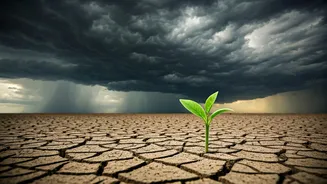
July is a make-or-break month for India's kharif (summer) crops, as it's the peak time for sowing rice, cotton, and oilseeds. A rainfall deficit during this period can severely impact agricultural output, as nearly half of India's farmland is rain-fed and lacks irrigation. The prospect of below-normal rains has raised concerns about crop yields and the livelihoods of millions of farmers. Following a significant rainfall deficit in June, sowing for the kharif season was already lagging. Authorities have advised farmers to adopt water conservation measures and prepare contingency plans, with states like Odisha, Chhattisgarh, and Uttar Pradesh identified as particularly vulnerable due to their reliance on rain-fed agriculture.
What This Means for Cities and Water Security
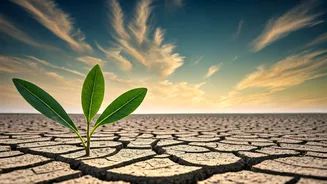
The impact extends beyond the fields. A weaker monsoon affects the replenishment of reservoirs and groundwater, which are vital for urban water supply and electricity generation. While reservoir levels were reported to be above the ten-year average at the start of the season, a prolonged dry spell could quickly change that. For city dwellers, the combination of high temperatures and humidity will lead to uncomfortable living conditions. While some regions in Northwest and Northeast India may receive normal to above-normal rain, most of the country faces a month of heat and water stress.
A Glimmer of Hope?
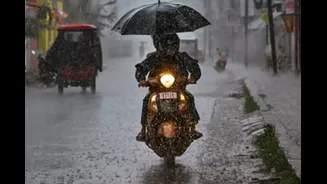
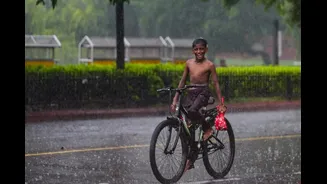
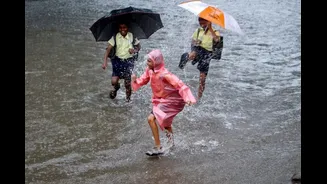
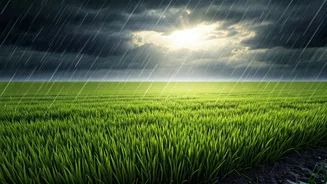
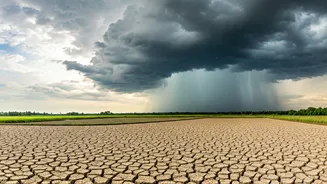
Despite the overall gloomy monthly forecast, the IMD has noted that the first week of July could see good rainfall activity due to a low-pressure system forming over the Bay of Bengal. This could provide a temporary boost to sowing activities and offer some relief from the heat. The monsoon has also been advancing into northern states like Uttar Pradesh and Uttarakhand, albeit with some delay. However, the concern remains that this initial wet spell might give way to a drier second half of the month, as the broader influence of El Niño takes hold.