






Meet India’s New Eye in the Sky
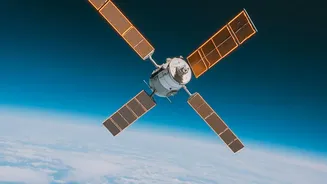
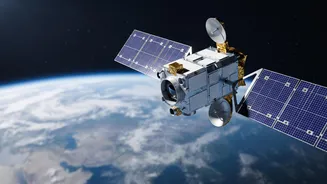
EOS-05, also known as GISAT-1A, is one of India's most advanced Earth observation satellites. Developed by the Indian Space Research Organisation (ISRO), it's designed to be a constant watcher from high above. Think of it as a super-powered camera in space,
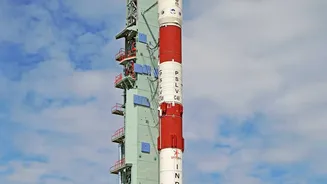
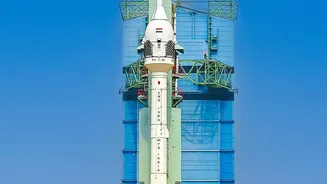
built to give us a bird's-eye view of the Indian subcontinent like never before. Launched aboard the formidable GSLV-F17 rocket, its main job is to send back frequent, high-quality images of our home planet, helping us understand and react to changes on the ground in almost real-time.
A Very Special Parking Spot in Space
What makes EOS-05 truly special is its destination: a geosynchronous orbit, approximately 36,000 kilometres away from Earth. Most Earth-imaging satellites are in Low Earth Orbit, meaning they zip around the planet and can only see a specific location for a short time before they move on. EOS-05 is different. In its high orbit, it will move at the same speed as the Earth's rotation. This allows it to stay parked over the same broad region, essentially hovering above the Indian subcontinent. This constant gaze is the satellite’s superpower.
The Power of a Constant Watch
Because it can stare at one area continuously, EOS-05 can do things other satellites can't. It's designed to image the entire Indian landmass roughly every 30 minutes and can be directed to focus on a specific area of interest, like a developing cyclone, for a new picture every five minutes. This rapid revisit capability is a game-changer. It means that for the first time, India will have a dedicated satellite that doesn't just pass over a story, but can stay with it as it unfolds.
A Guardian Against Disasters
The most important benefit of this constant watch is for disaster management. When a cyclone is forming in the Bay of Bengal, or when flash floods threaten a region, every minute counts. EOS-05 can track these fast-moving events continuously, providing a steady stream of images to disaster management agencies. This near-real-time information can help authorities predict a cyclone's path more accurately, issue timely warnings, and evacuate people to safety. It will also be a vital tool in monitoring and combating large-scale forest fires.
More Than Just Tracking Storms
While disaster management is its key role, EOS-05 is a multi-talented satellite. Its powerful cameras will also be used to monitor agriculture, helping to assess crop health over large areas. It will keep an eye on our forests, track changes in our environment, and monitor water resources. Furthermore, its ability to provide persistent surveillance over land and sea makes it a crucial asset for national security, helping to keep our borders safe.
A Story of Skill and Persistence
The launch of EOS-05 is also a powerful comeback story for ISRO. A similar mission, named EOS-03, was attempted in August 2021 but was unsuccessful due to a technical issue with the rocket's upper stage. Instead of giving up, ISRO's scientists and engineers worked tirelessly to understand the problem, correct it, and build a new satellite. The successful launch of EOS-05 today is a testament to their dedication, skill, and the resilient spirit of India's space program.