





The Unforgiving Lunar Night
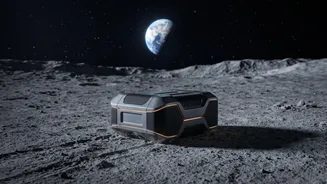
Exploring the Moon isn't just about dodging craters; it's a battle against the elements. The lunar day and night cycle is punishing. Each one lasts for about 14 Earth days. During the long day, temperatures can soar to 127°C (260°F). But it’s the night that
poses the greatest threat. With no atmosphere to trap heat, temperatures plummet to a bone-chilling -173°C (-280°F), and can get even colder in permanently shadowed regions. This extreme cold can freeze batteries, shatter components, and end a mission prematurely. For solar-powered rovers, the two-week darkness also means no way to recharge, forcing them into a low-power hibernation and hoping their heaters and insulation are enough to survive.
The Old Ways of Staying Warm
Historically, mission planners have relied on a few key strategies to combat the cold. The most robust solution has been the Radioisotope Heater Unit, or RHU. These devices use the natural decay of a small pellet of plutonium to generate a steady supply of heat, keeping critical components from freezing. However, RHUs are expensive, and their availability is limited. The other primary method is brute force: pack the rover with large, heavy batteries to power electric heaters throughout the night. But this comes with a massive weight penalty. It's been estimated that for every watt of power needed to survive the night, an additional five kilograms of battery mass must be launched from Earth. This trade-off significantly limits the science instruments a rover can carry.
A Clever Thermal Switch
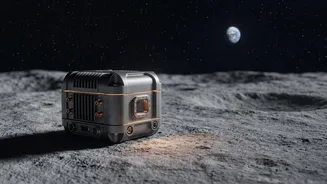
Recent innovations are moving beyond simple heating to smarter thermal management. One of the most promising is a new 'heat-switch' device developed by a team from Nagoya University in Japan, in collaboration with the Japan Aerospace Exploration Agency (JAXA). This technology doesn't just generate heat; it intelligently controls the flow of it. The system is designed to perform two opposite functions: efficiently radiate heat away from the electronics during the hot lunar day, and then completely insulate those same electronics during the frigid lunar night. This dual-purpose system is essential for long-term exploration, ensuring the rover doesn't overheat while active and doesn't freeze while dormant.
How the Switch Works
The Japanese team's device brilliantly combines two pieces of hardware: a Loop Heat Pipe (LHP) and an Electrohydrodynamic (EHD) pump. Think of the LHP as the rover's radiator system. During the hot day, a refrigerant inside the pipe turns to vapor, absorbing heat from the electronics and carrying it to a radiator, where it's released into space. The refrigerant then condenses back to a liquid and cycles back to do it again. The magic happens at night. The tiny, low-power EHD pump is turned on. It generates an electric field that essentially stops the refrigerant from moving. This effectively turns the radiator 'off,' creating a thermal barrier that insulates the rover's electronics from the lethal cold outside, all while using a minuscule amount of power.
More Than Just Survival
This kind of smart thermal control is a game-changer. By drastically reducing the power needed for overnight heating, it frees up valuable mass and energy. Rovers can be lighter, carry more scientific instruments, and have more power reserved for their mission. It also increases reliability by reducing the extreme temperature swings that stress materials and electronics. Technologies like this, along with other advanced thermal management systems being developed by companies like Advanced Cooling Technologies for NASA, are critical for enabling sustained missions. It opens the door to longer-duration exploration, allowing rovers to operate for months or even years, instead of being limited by the next sunset.
The Future of Lunar Exploration
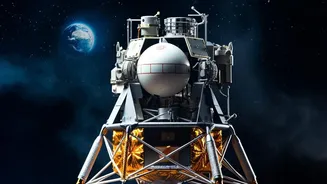
Solving the lunar night problem is a key goal for NASA and other space agencies as they plan for a long-term presence on the Moon under programs like Artemis. This isn't just about rovers. The same principles apply to landers, habitats, and any other hardware that needs to endure the Moon's harsh environment. By creating highly efficient systems that can intelligently insulate and manage heat, engineers are paving the way for a new era of lunar science and commerce. These innovations will allow us to explore further, stay longer, and unlock the secrets of the Moon's most challenging regions, turning the deadly lunar night from a mission-killer into just another operational phase.