




Your Pre-Monsoon Vehicle Checklist
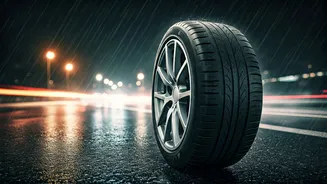
Before you even turn the key, ensuring your vehicle is ready for the rains is the first line of defence. Tyres are your car's only connection to the road, so their condition is critical. [6] Check that the tread depth is at least 3mm to effectively channel
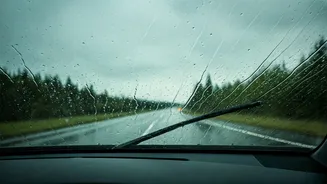
water and prevent hydroplaning—a dangerous situation where your car loses traction and skids on a layer of water. [8, 12] Equally important are your brakes; wet conditions can reduce their efficiency, so get them inspected for wear. [3, 14] Don’t forget your wipers and lights. Worn-out wiper blades that leave streaks can severely impair vision and should be replaced. [6, 22] Finally, ensure all lights—headlights, taillights, and indicators—are clean and functional. In heavy rain, being seen is just as important as seeing. [8, 14]
Mastering the Drive: Techniques for Wet Roads
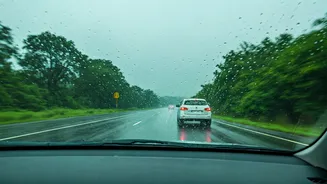
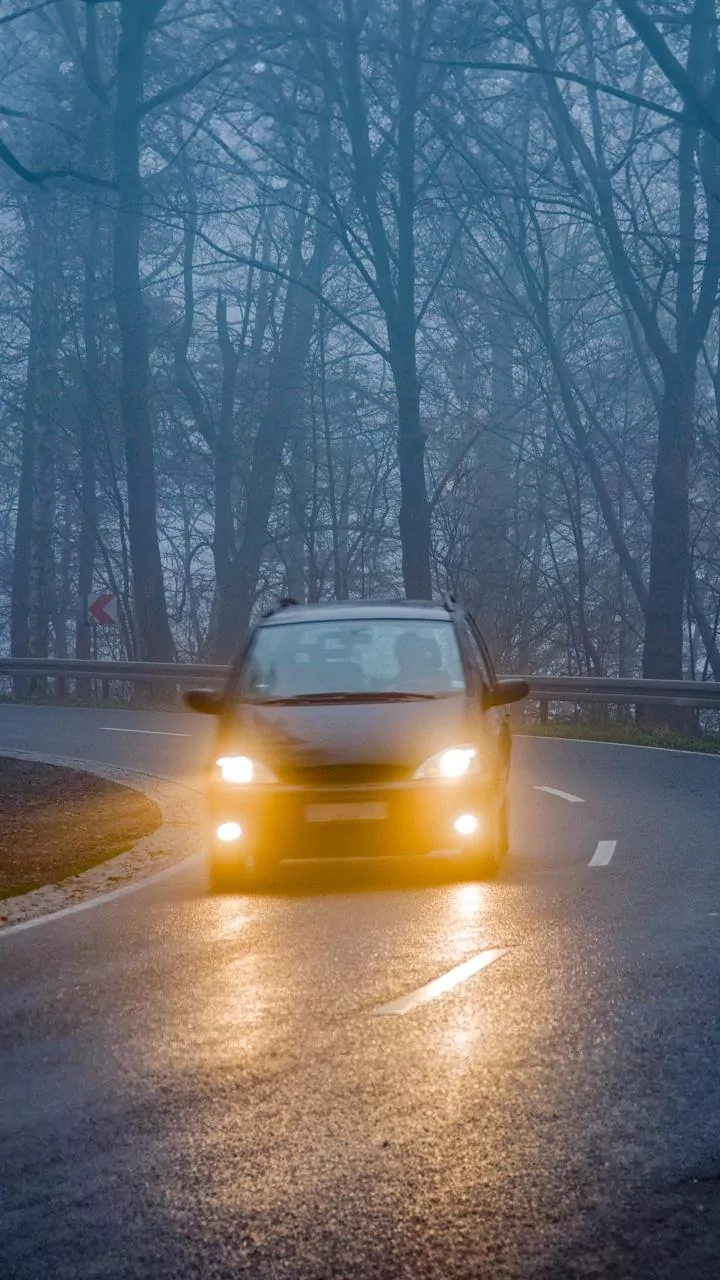
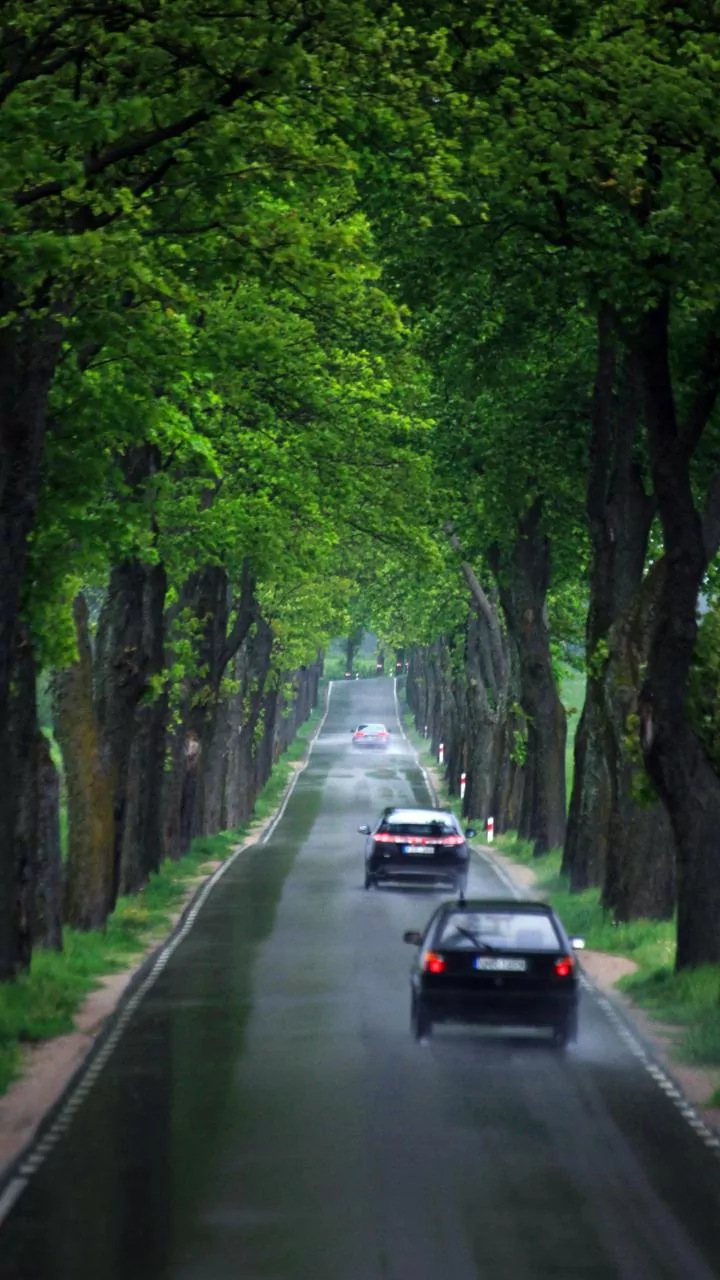
Driving habits must adapt when the roads are wet. The single most important adjustment is to reduce your speed. [2] Slower speeds give you more time to react and significantly reduce the risk of hydroplaning. [12, 13] Maintain a much larger following distance from the vehicle in front—at least double what you would keep in dry conditions—as braking distances increase dramatically on wet surfaces. [10, 17] Avoid sudden manoeuvres like sharp turns or abrupt braking, which can easily lead to a skid. [22] When you do need to brake, do so gently and progressively. [19] It's also wise to use your low-beam headlights even during the day to increase your visibility to other drivers. [2, 12]
The Hidden Dangers: Potholes and Waterlogging
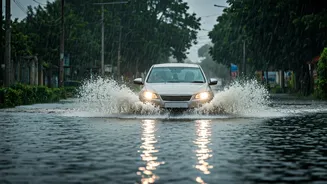
Monsoon rains can wreak havoc on road surfaces, creating potholes and causing waterlogging that conceals serious hazards. [2, 18] A puddle might hide a deep pothole that can damage your tyres or suspension. [19] Never drive into water if you cannot gauge its depth; as a general rule, avoid driving through water that is deeper than the bottom of your car doors or more than 10-15 centimetres. [4, 9, 13] If you must navigate a waterlogged street, drive slowly and steadily in a low gear, keeping the engine revs high to prevent water from entering the exhaust. [5, 19] Try to stay in the centre of the road, where the water is often shallowest. [5, 15] If your car stalls in water, do not attempt to restart the engine, as this can cause severe and permanent damage. [12, 15]
Hydroplaning: When Your Car Skates on Water
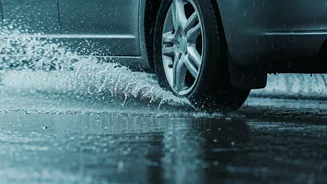
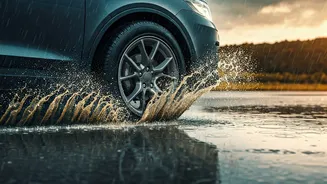
One of the most frightening experiences in monsoon driving is hydroplaning. This occurs when a layer of water builds up between your tyres and the road surface, leading to a complete loss of steering and braking control. [7, 12] The first rains after a dry spell are often the most dangerous, as oil and dirt on the road mix with water to create an exceptionally slippery film. [7, 10, 21] To avoid it, ensure your tyres have good tread and are properly inflated, and most importantly, drive slowly. [3, 14] If you feel the steering become light and the car start to hydroplane, do not panic or brake suddenly. [13] Instead, ease your foot off the accelerator and steer gently in the direction you want to go until you feel the tyres regain their grip on the road. [13, 19]
Smart Journey Planning
Sometimes, the safest decision is made before you leave home. If the forecast predicts extremely heavy rain, consider postponing your journey if possible. [10, 13] Traffic jams are more frequent and severe during the monsoon, so it's a good idea to have a full tank of fuel. [2, 17] Packing an emergency kit with a first-aid box, a tow rope, a torch, and some dry snacks and water is also a prudent measure. [2, 17] For longer trips, especially in hilly areas prone to landslides, check local conditions and advisories before you set out. [16] Always try to plan your travel to reach your destination during daylight hours, as visibility drops significantly after dark. [10]