






A Strategic Shift in the Indian Cosmos
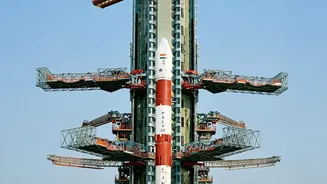
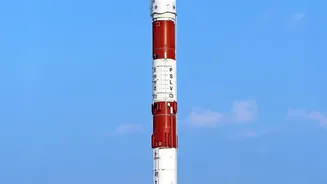
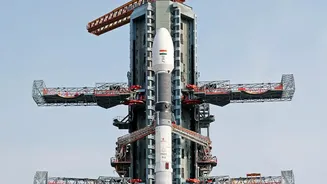
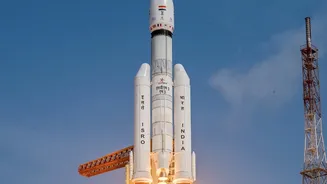
For decades, ISRO was the beginning and end of India's space story, earning global respect with cost-effective missions to the Moon and Mars. However, the global space economy, projected to grow significantly, is now driven by commercial enterprise. Recognizing
this, India initiated landmark policy reforms in 2020, opening the doors for private companies to not just participate but to build, own, and operate space assets. This strategic pivot is designed to move India from a government-led programme to a comprehensive ecosystem where public institutions and private innovators collaborate. The goal is to capture a larger share of the global space market, which is currently estimated to be worth hundreds of billions of dollars.
Meet the New Enablers: IN-SPACe and NSIL
At the heart of this transformation are two key entities: IN-SPACe (Indian National Space Promotion and Authorisation Centre) and NSIL (NewSpace India Limited). Think of IN-SPACe as the single-window agency that facilitates, authorises, and supervises the activities of private space companies. It's the gateway for startups to get involved. NSIL, on the other hand, is ISRO's primary commercial arm. Its job is to market space-based products and services, manage satellite launch contracts with foreign and domestic customers, and facilitate the transfer of ISRO-developed technologies to the private sector. Together, they provide the regulatory clarity and commercial framework that was previously missing, encouraging investment and innovation.
What 'Support' Actually Looks Like
The support from ISRO's expanded commercial framework is concrete and multi-faceted. One of the most significant elements is technology transfer. ISRO has transferred dozens of technologies, from adhesives for solar panels to advanced electronics, to private firms, often at subsidised rates. This allows startups to build on decades of research instead of starting from scratch. Furthermore, the government has established financial initiatives, including a ₹1,000 crore Venture Capital Fund and a ₹500 crore Technology Adoption Fund, to back promising startups. Most recently, in August 2026, the Department of Space announced incentive schemes offering up to 100% financial support for launch services and access to ISRO facilities, drastically lowering the entry barriers for new companies.
The Startups Leading the Charge
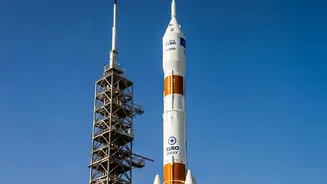
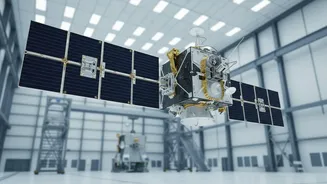
This supportive environment has fueled a surge in space-tech startups, which now number over 400. Hyderabad-based Skyroot Aerospace made history with the successful orbital launch of its Vikram-1 rocket, demonstrating India's private launch capability. This milestone has dramatically boosted investor confidence, with Indian space startups having raised over $871 million as of July 2026. Another key player, Agnikul Cosmos, has pioneered 3D-printed rocket engines and established India's first private launchpad. In the satellite domain, companies like Pixxel are building constellations for Earth observation, while GalaxEye has partnered with NSIL to sell its high-resolution satellite imagery, showcasing a complete commercial loop from manufacturing to data sales.
The Road Ahead: Challenges and Liftoff
The trajectory is promising, with projections suggesting India’s space economy could reach $44 billion by 2033. The combination of ISRO's deep expertise and the agility of private startups creates a powerful formula for success. The recent successes have moved the industry from an experimental phase to a commercial growth phase. Challenges, however, remain. These include securing sustained long-term funding beyond the early stages and navigating the complexities of a highly regulated sector. But the momentum is undeniable. By allowing ISRO to focus on frontier research and complex scientific missions while private players drive commercialisation, India is not just joining the private space race—it is positioning itself to be a formidable leader in the new global space economy.