

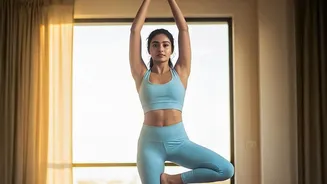

Forget endless crunches. Building a strong, stable core can be a gentle and mindful process. Yoga offers a powerful alternative, using held postures to cultivate deep abdominal strength that supports your spine and improves overall stability.
Understanding Deep Core Stability
When we talk
about the 'core', it's easy to picture the superficial 'six-pack' muscles, or rectus abdominis. While these are part of the system, true core strength comes from a deeper place. It involves a complex group of muscles including the transverse abdominis, which acts like a natural corset for your torso, along with muscles in your back, hips, and pelvic floor. Deep core stability is the ability of these muscles to work together to support your spine and pelvis, providing a solid foundation for all movement. This stability is crucial for good posture, balance, and preventing lower back pain.
The Power of Holding Poses
Unlike dynamic exercises, holding a yoga pose—an isometric contraction—challenges your muscles in a unique way. When you hold a position like a plank, your core muscles are engaged without changing their length. This sustained effort builds muscular endurance and stamina. It also gives you time to focus on proper alignment and breathe deeply, which helps to further engage and strengthen the deep stabilizing muscles around your spine. This gentle, sustained approach builds functional strength that translates into better body control in your daily activities.
Plank Pose (Phalakasana)
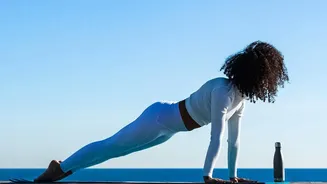
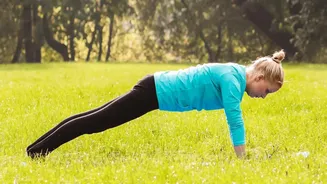
Plank is a fundamental pose for total-body strength, especially for the core. It teaches your body to create one long, stable line from head to heels. To perform it, start on your hands and knees, then step your feet back until your body is straight. Your wrists should be under your shoulders. Engage your abdomen by drawing your navel toward your spine to prevent your hips from sagging. Press back through your heels and lengthen your tailbone. Gaze slightly forward to keep your neck aligned. For a modification, you can perform the pose on your forearms or with your knees on the ground. Hold for 20-30 seconds, focusing on steady breaths.
Boat Pose (Navasana)
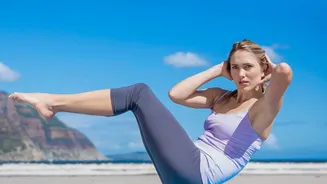
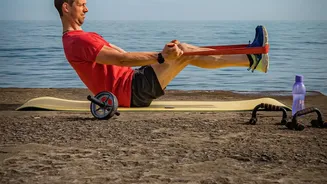
Boat Pose is a seated balancing posture that directly targets the deep abdominal muscles and hip flexors. Start seated with your knees bent and feet flat on the floor. Keeping your spine long, lean back slightly until you feel your core engage. Lift your feet off the floor, bringing your shins parallel to the ground. You can keep your hands behind your thighs for support or extend your arms forward, parallel to the floor. For a greater challenge, straighten your legs into a 'V' shape. The key is to avoid rounding your back; lift through your chest. Hold for five deep breaths.
Bridge Pose (Setu Bandhasana)
While often seen as a backbend, Bridge Pose is excellent for strengthening the entire posterior chain—glutes, hamstrings, and lower back—which are all crucial components of your core. Lie on your back with your knees bent, feet flat on the floor hip-width apart, and heels close enough to touch with your fingertips. Press into your feet and lift your hips off the ground. To ensure you are using your core, engage your abdominal muscles to keep your lower ribs from flaring out. Squeeze your glutes and think about keeping your inner thighs active. Hold for several breaths before lowering down slowly.
Bird-Dog Pose (Parsva Balasana)
This pose is fantastic for training your core to resist rotation and maintain balance, a key function of your stabilising muscles. Start on all fours in a tabletop position, with a flat back and engaged core. Extend your right arm straight forward and your left leg straight back, keeping both at hip height. The goal is to keep your torso perfectly still, without letting your hip drop or your back arch. Hold the position for a few seconds, focusing on length, then return to the start with control. Repeat on the other side, alternating for 8-10 repetitions per side.