




A Deep Freeze in Orbit
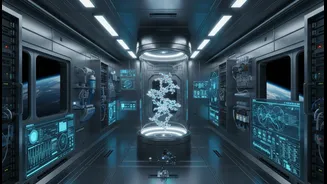
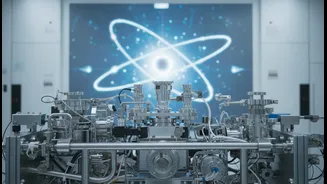
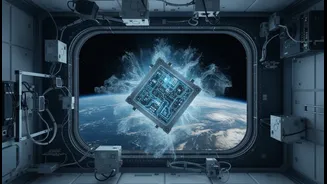
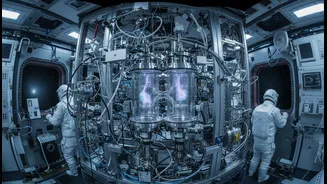
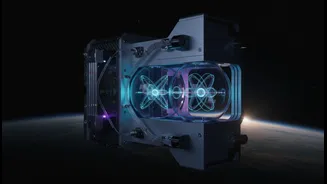
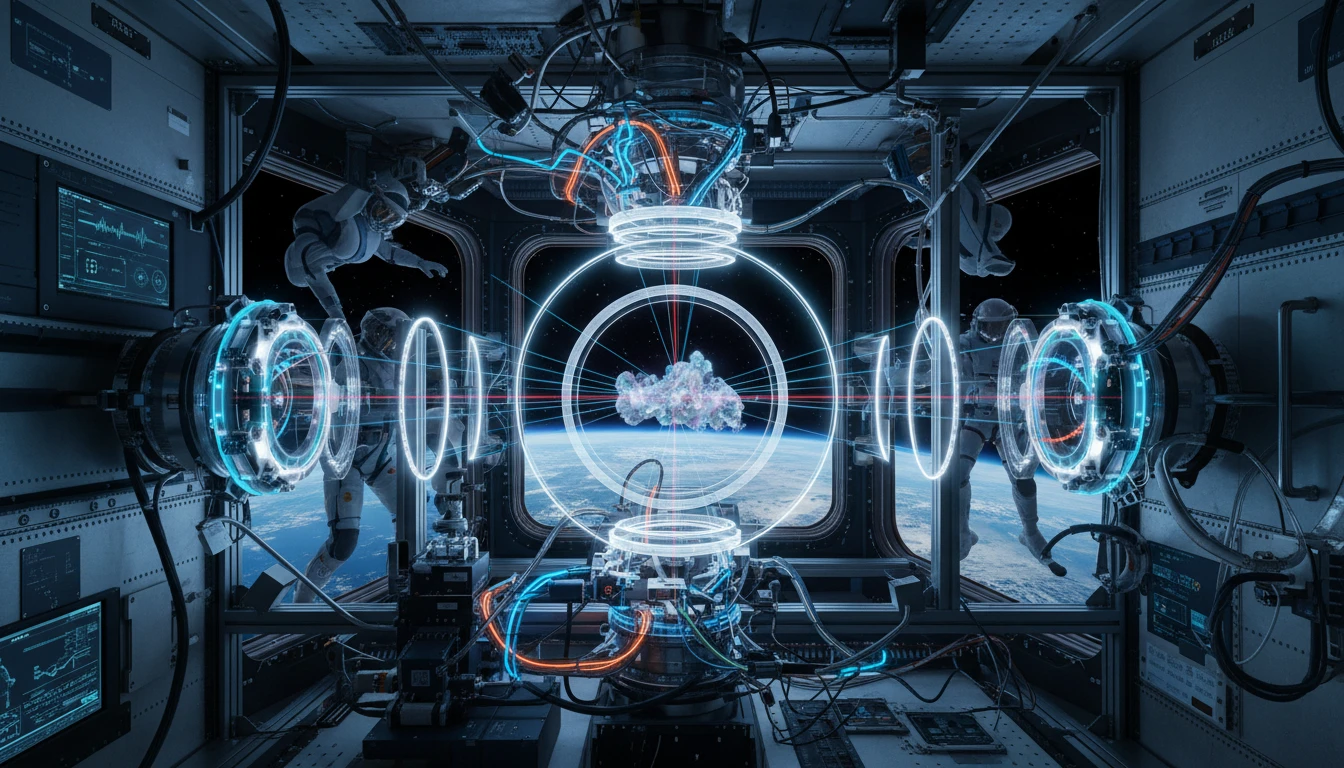
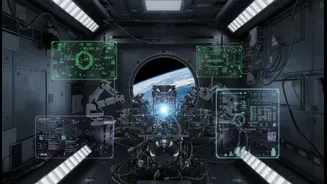
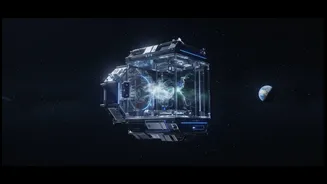
The experiment is called the Cold Atom Laboratory (CAL), a facility about the size of a mini-fridge that has been operating on the ISS since 2018. Its mission is to study atoms at temperatures just a fraction of a degree above absolute zero, which is -273.15
degrees Celsius. At these extreme temperatures, atoms slow down dramatically and can enter a unique state of matter known as a Bose-Einstein Condensate (BEC), sometimes called the fifth state of matter. In a BEC, thousands of individual atoms lose their identity and behave like a single, massive quantum wave, allowing scientists to observe strange quantum phenomena on a macroscopic scale.
A Quantum Leap Forward
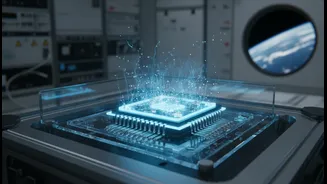
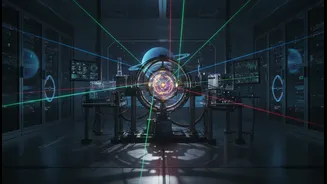
The latest upgrade, installed by astronauts in the spring of 2026, marks the fourth major enhancement to the CAL. This new package includes a redesigned magnetic trap to confine and manipulate the atom clouds, along with improved laser systems and measurement tools. These enhancements give scientists unprecedented control over the shape and behaviour of the quantum gas. The upgrades were launched to the station in April 2026 and have already begun delivering state-of-the-art measurements, pushing the frontiers of what we can learn from these exotic materials.
Why Space is the Ultimate Laboratory
While scientists can create BECs on Earth, gravity poses a major problem. As soon as the atoms are released from their magnetic traps for observation, they fall, limiting study time to mere milliseconds. In the microgravity environment of the ISS, these atom clouds can float, allowing for observation times of over a second. This extended duration enables scientists to cool the atoms to even lower temperatures than on Earth and observe their subtle quantum behaviours for longer, revealing phenomena that would otherwise be masked by gravity. It provides a pristine environment for fundamental physics experiments.
From Fundamental Physics to Future Tech
This research may seem esoteric, but its potential applications are profound. The principles being tested could lead to the development of next-generation quantum sensors far more precise than anything we have today. These could be used for ultra-precise navigation in deep space without relying on GPS, for creating more accurate atomic clocks, or for mapping Earth's gravitational fields to monitor climate change and water resources. According to Jason Williams, project scientist for the Cold Atom Lab at NASA's Jet Propulsion Laboratory, the unique behaviour of ultracold matter enables extremely precise measurements of time, gravity, and motion.
The Global Effort Behind the Science
The Cold Atom Lab is a testament to international collaboration. Designed and built by NASA's Jet Propulsion Laboratory, the facility is operated remotely from the ground and serves multiple international teams of scientists conducting experiments. This global partnership allows for a diverse range of investigations into fundamental physics, from testing the nature of dark energy to exploring the properties of quantum chemistry by creating BECs with two different types of atoms. The ISS provides a unique platform not just for science, but for a worldwide effort to expand human knowledge.