
Sortelha: A Medieval Time Capsule
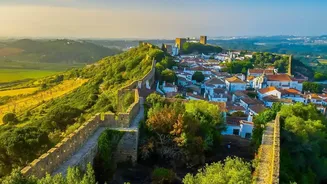
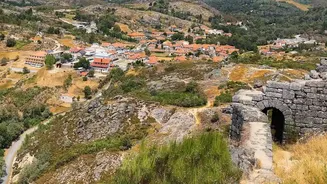
Perched at an altitude of 760 meters, Sortelha is one of the best-preserved medieval villages in the country. Entering through its 13th-century walls feels like stepping onto a film set. The village is a maze of granite houses and winding alleys, all watched
over by a formidable castle built under King Sancho II in 1228. Visitors can walk the ancient ramparts, discover medieval tombs, and admire the Manueline pillory, a symbol of past judicial authority. The authenticity here is remarkable; modern buildings are almost entirely absent, which helped the village earn recognition as a 'Best Tourism Village' by the World Tourism Organisation. A balanced view means acknowledging the terrain. The cobblestones are uneven and the paths are steep, so sensible walking shoes are non-negotiable. While its preservation is a triumph, the quietness can feel profound, especially outside the peak tourist season or the annual medieval fair in September.
Monsanto: The Village Built Among Boulders
Monsanto is famous for a truly unique architectural style where enormous granite boulders are integrated into the houses themselves—serving as walls, floors, or even roofs. Once voted the 'most Portuguese village in Portugal', its dramatic landscape is a photographer's dream. The main attraction is wandering the steep, narrow lanes to see how residents have ingeniously adapted to the geology. The climb to the ruined Templar castle at the summit offers breathtaking panoramic views that stretch for miles, sometimes as far as the Spanish border. However, this unique setting comes with challenges. Accessibility is limited; cars cannot navigate the historic core, and reaching the castle requires a significant uphill walk on uneven surfaces. Its fame also means it can be busy with day-trippers. For a more atmospheric experience, consider staying overnight to see the village in the quiet glow of lamplight after the crowds have departed.
Piódão: The Secluded Schist Village
Deep in the Serra do Açor mountains, Piódão appears like a mirage. Often called the 'nativity scene village', its houses are built almost entirely from schist, a dark, slate-like rock, creating a striking contrast with the bright blue painted on doors and windows. The village is laid out in a natural amphitheater on a steep hillside. Its isolation was once its defining feature; until the 1970s, it was only accessible by foot or horseback, which helped preserve its unique character. The pleasure here is in the wandering, with very little 'to do' in a commercial sense. The reality of this seclusion is that getting there requires a confident driver and a journey along winding mountain roads. With a permanent population of fewer than a hundred residents, the village can feel both melancholic and intensely beautiful, a living museum of a fading way of life.
The Broader Reality of Rural Portugal
These historic villages are part of a network of twelve 'Aldeias Históricas' that Portugal has worked to preserve since the 1990s. This program has been vital in restoring crumbling architecture and providing infrastructure. Yet, the story of rural Portugal is also one of challenges. Many interior regions face significant depopulation as younger generations move to cities for opportunities. This leaves an aging population to maintain traditions. While tourism brings welcome economic activity, it must be balanced against the risk of over-commercialization that can dilute the very authenticity visitors seek. Issues like bureaucracy for new businesses and the ever-present risk of forest fires in these natural landscapes add further complexity to the region's future.