








Indore's International Ascent
Central India is rejoining the global air map directly. Starting July 15, 2026, Air India Express is launching a direct flight from Indore to Abu Dhabi, restoring international services from the city after a brief suspension. This is more than just a new
route; it's a gateway. The service connects Madhya Pradesh not only with the UAE but also offers seamless access to over 80 destinations worldwide via Abu Dhabi's hub. For travellers in the region, this eliminates the time-consuming and often costly need to fly via Mumbai or Delhi first. The move reflects the growing demand for international travel from central India and underscores Indore’s rising prominence in the national aviation network. The airport is steadily expanding, with plans to handle 100 daily flights by 2025 and new terminals in the works to accommodate rising passenger numbers.
Navi Mumbai: A New Hub is Born
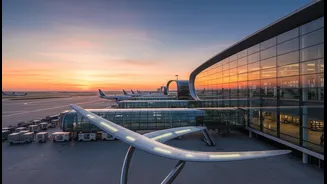
The long-awaited Navi Mumbai International Airport (NMIA) is set to begin international passenger operations on July 15, 2026. The first route will also be to Abu Dhabi, with carriers like Air India Express and IndiGo expected to commence services. This marks a historic moment for the Mumbai Metropolitan Region (MMR). Developed to ease the immense pressure on the existing Chhatrapati Shivaji Maharaj International Airport (CSMIA), NMIA is designed for the future. After its initial phase, the airport is projected to handle 20 million passengers annually, with ambitious plans for expansion that could eventually see it accommodate up to 90 million passengers. The new airport is not just an alternative but a world-class hub intended to drive economic growth, tourism, and real estate development across the region.
The Squeeze on Metro Airports
The rise of airports like Indore and Navi Mumbai is not just a story of regional ambition, but also one of metropolitan necessity. India's busiest hubs, Delhi and Mumbai, are hitting their capacity limits. Both airports face significant congestion, leading to slot restrictions and even forced flight reductions to maintain on-time performance. Passenger growth at Delhi's airport is expected to slow in the coming years as it nears peak capacity, with some traffic expected to be diverted to the new Noida International Airport. While Mumbai's existing airport is undergoing renovations, its capacity is fundamentally constrained, making NMIA's launch critical for the region's growth. This saturation at the top makes the development of Tier-2 airports and secondary metro airports essential for the continued growth of Indian aviation.
A New Blueprint for Indian Aviation
The developments in Indore and Navi Mumbai are part of a larger national strategy to decentralize aviation and foster equitable growth. The number of operational airports in India has more than doubled over the last decade, with a focus on enhancing connectivity to Tier-2 and Tier-3 cities through schemes like UDAN. This expansion goes beyond passenger convenience. By enabling direct international access, these regional airports are becoming strategic hubs for trade and logistics, empowering local economies in sectors from manufacturing to pharmaceuticals. Cities like Coimbatore, Surat, and Ranchi have already seen significant economic benefits from improved air connectivity. This shift creates new investment corridors and reduces the logistics bottlenecks that have long hampered exporters outside the traditional metro centres.