




A New Paradigm for Exploration
For decades, our robotic exploration of other worlds has been a story of stationary landers and slow-moving rovers. While missions like the Mars rovers have been transformative, they are limited to exploring a small patch of planetary real estate. NASA's
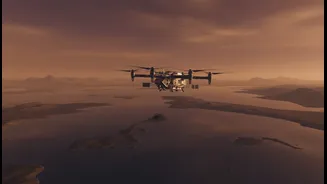
Dragonfly mission shatters this limitation. Dragonfly is a car-sized, nuclear-powered octocopter designed to fly through Titan's skies. This isn't a small reconnaissance drone; it is a full-scale science laboratory on wings. Taking advantage of Titan's thick atmosphere and low gravity, which make it an ideal place for flight, Dragonfly will be able to travel dozens of miles in a single trip. Over its multi-year mission, it will hop between dozens of geologically diverse locations, from organic sand dunes to the floor of an impact crater where liquid water may have once mixed with surface materials. This represents a fundamental shift in how we explore, allowing for a planet-wide perspective that was previously impossible.
Engineering for an Alien World
Operating a flying machine on a world half a billion miles away is a monumental engineering challenge. Titan is unimaginably cold, with average surface temperatures around -179°C. Furthermore, the entire craft must survive a high-speed entry through Titan's dense atmosphere before it can even begin its aerial journey. The resilience of the Dragonfly design is a testament to incredible ingenuity. Its heat shield has undergone extreme testing, using concentrated solar power to simulate the intense heat of atmospheric entry. The dual-quadcopter, or octocopter, design provides crucial redundancy, allowing the mission to continue even if a rotor or motor fails. The craft must be highly autonomous, making its own decisions during flight and landing due to the hours-long communication delay with Earth. Power comes not from solar panels, which would be useless under Titan’s thick haze, but from a Multi-Mission Radioisotope Thermoelectric Generator (MMRTG), the same reliable nuclear power source that has kept Mars rovers operating for years. These solutions showcase an extraordinary level of engineering resilience required for such a pioneering mission.
The Quest for Prebiotic Chemistry
At its heart, Dragonfly is an astrobiology mission. Titan is considered a prime target in the search for life's origins because it is a fantastic analogue for early Earth. Its atmosphere is rich in nitrogen and methane, and its surface is covered in complex organic compounds. Essentially, Titan is a giant laboratory for prebiotic chemistry—the chemical steps that occurred on Earth before life began. Dragonfly is not necessarily looking for existing life, but for the chemical signatures that could be a precursor to it. Its main science instrument, the Dragonfly Mass Spectrometer (DraMS), will drill into the surface to collect and analyze samples, searching for specific organic molecules and evidence of how far this prebiotic chemistry has progressed. Scientists are keen to see if liquid water from an impact melt or cryovolcanic flow might have interacted with Titan's abundant organic materials, creating a primordial soup similar to the one that may have sparked life on our own planet.
The Long Journey Ahead
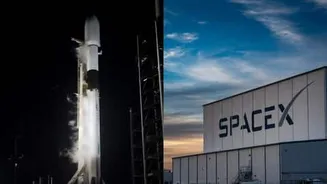
Patience is a virtue in deep space exploration. After years of development and testing, Dragonfly is currently scheduled to launch aboard a SpaceX Falcon Heavy rocket in July 2028. But its journey is just beginning then. The rotorcraft will travel through space for about six years, with a planned arrival at Titan in late 2034. Once there, it will embark on a primary science mission lasting more than three years, spending about 16 Earth days at each landing site to conduct experiments and recharge its batteries before flying to the next point of interest. While the timeline is long, the assembly and testing of the spacecraft are already hitting major milestones, moving the mission from concept to reality. The data it sends back promises to rewrite our understanding of this strange, Earth-like moon and the potential for life to arise elsewhere in the cosmos.