






The Age of Identikit Interiors
Remember the beige-and-grey wave? For a time, aspirational interiors were defined by a minimalist, Scandinavian-inspired aesthetic sourced from global chain stores. It was clean, functional, and easily achievable. But in its uniformity, something was lost.
Homes in Delhi began to look indistinguishable from those in Dubai or Toronto. This globalisation of taste created a landscape of safe but sterile living spaces, devoid of personal history or cultural identity. The unique, the quirky, and the handmade were relegated to niche corners, seen as 'ethnic' or 'traditional' rather than modern and chic. This era of homogenisation, while convenient, ultimately left many feeling disconnected from their own surroundings, living in spaces that looked good on Pinterest but lacked a deeper resonance.
Why the Comeback, and Why Now?
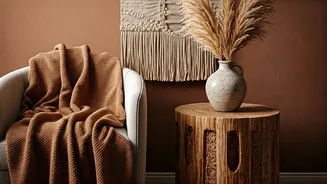
The return to craft is not simple nostalgia; it’s a conscious choice driven by modern values. Post-pandemic, our relationship with our homes has changed forever. We seek comfort, authenticity, and spaces that tell our story. This has coincided with a growing awareness of sustainability and the desire to support local economies. Why buy a factory-made cushion when you can have one block-printed by an artisan in Rajasthan? This movement is about conscious consumption—choosing items with a lineage, a maker, and a minimal carbon footprint. It’s a rebellion against the throwaway culture of fast furniture, favouring pieces that are made to last, both in material and in style. Each handcrafted item brings a human touch, an imperfection that is a mark of its authenticity, making our homes feel truly unique and lived-in.
From Textiles to Tabletops
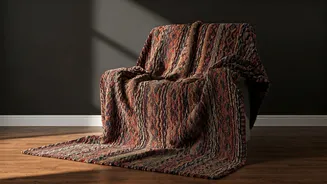
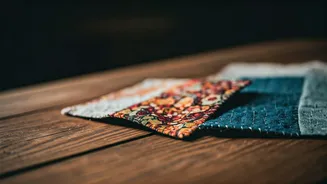
This comeback is visible across every facet of decor. Handloom textiles are leading the charge. Ikat weaves from Odisha and Pochampally, once reserved for sarees, now appear on striking accent chairs and duvet covers. The delicate floral motifs of Chikankari from Lucknow are being embroidered onto sheer curtains that filter light beautifully. On walls, a large Kalamkari or Bandhani panel is replacing generic prints, serving as a powerful piece of narrative art. It’s not just fabrics. Metalwork like Dhokra from West Bengal and Chhattisgarh, with its lost-wax casting technique, is being fashioned into contemporary sculptures and drawer pulls. Bidriware from Karnataka, the dramatic art of silver inlay on a blackened metal alloy, is finding new life in coasters, decorative boxes, and even tabletops. Rattan and cane furniture, once seen as outdoor-only, is now celebrated for its lightweight, airy aesthetic, forming the backbone of chic, tropical-modern living rooms.
The Modern Way to Be Traditional
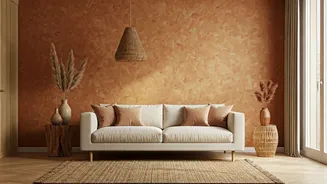
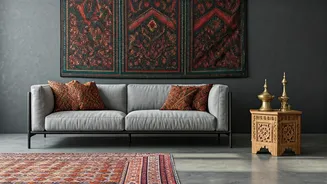
The key to this revival is its contemporary interpretation. This isn't about creating a museum of Indian crafts in your living room. Instead, it’s about strategic, thoughtful integration. Today’s top interior designers are masters of this balance. They might use a single, exquisite piece of zardozi embroidery framed as the focal point in a minimalist room. Or they might pair a sleek, modern sofa with vibrant cushions made from Ajrakh-printed fabric. A cluster of blue pottery vases from Jaipur can add a pop of colour to a neutral shelf, while hand-carved wooden panels can serve as a stunning, textural headboard. The principle is 'less is more'. By using crafts as accents rather than overwhelming a space, their beauty and intricacy are highlighted, allowing them to coexist beautifully with modern design sensibilities.
More Than an Aesthetic Choice
Embracing craft-led interiors is ultimately about more than just aesthetics; it is a statement of identity and values. It’s a way of participating in the preservation of centuries-old skills that are at risk of disappearing. Every hand-knotted rug, painted tile, or terracotta lamp purchased contributes to the livelihood of an artisan and their community. It helps ensure these traditions are passed down to the next generation. By choosing craft, we are curating homes that are not just beautiful, but are also repositories of culture, story, and soul. It’s a powerful acknowledgment that the most luxurious thing you can own is something made with time, skill, and human hands.