





The Daily Damage of Your Desk Job
Spending eight hours a day in a chair might seem harmless, but it places significant stress on your body. When you sit for prolonged periods, your hip flexors shorten and tighten, while your glute muscles can weaken from lack of use. This common muscular
imbalance often leads to lower back pain. Meanwhile, hunching over a keyboard encourages a forward-slumped posture, rounding the upper back and shoulders. This poor posture can cause persistent soreness between your shoulder blades and tension in your neck. A sedentary lifestyle also reduces blood circulation, which can impair how efficiently nutrients are delivered to your tissues and waste products are removed.
What Is Self-Myofascial Release?
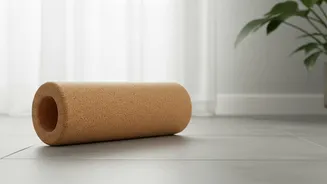
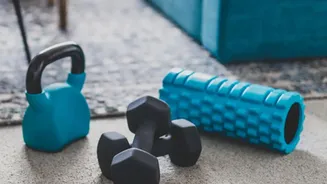
Foam rolling is a form of self-myofascial release (SMR), which is essentially a self-massage technique used to relieve tension in your muscles and the connective tissues that surround them, known as fascia. Over time, due to factors like repetitive movements, poor posture, or even a lack of movement, this fascia can develop adhesions or "knots." These tight spots can restrict your movement and cause pain. By applying sustained pressure to these areas with a foam roller, you send signals to your nervous system to relax the muscle, which can help break up these adhesions, reduce muscle stiffness, and improve flexibility.
Hack 1: Release Your Hips and Glutes
The hips and glutes take a major hit from constant sitting. Releasing the tension here can provide significant relief for your lower back. To target your glutes, sit on the foam roller with your knees bent and feet flat on the floor. Place your hands behind you for support. Cross your right ankle over your left knee and gently lean your weight onto your right hip, rolling slowly back and forth over the muscle. When you find a tender spot, pause and hold for about 30 seconds while breathing deeply. Then, switch sides. This helps to lengthen the muscles that become short and tight from being in a seated position.
Hack 2: Unwind Your Upper and Mid-Back
Counteracting the dreaded desk slouch starts with mobilizing your upper and mid-back (thoracic spine). Avoid foam rolling your lower back, as this can put too much pressure on the spine without the support of the rib cage. To begin, lie on the floor with the foam roller positioned horizontally under your shoulder blades. Bend your knees with your feet flat on the floor and place your hands behind your head to support your neck. Gently lift your hips off the floor and use your legs to slowly roll up and down your mid-to-upper back. Pause on any particularly stiff areas to allow the muscles to release. This movement helps to improve spinal alignment and relieve tightness caused by hunching forward.
Hack 3: Open Up Your Lats and Shoulders
The muscles on the sides of your back, the latissimus dorsi (or "lats"), can also become tight and contribute to poor shoulder posture. To roll them out, lie on your right side with the foam roller placed under your armpit. Your right arm should be extended out along the floor. You can bend your top leg for support. Gently roll a few inches down toward your waist and back up toward your armpit. This movement doesn't need to be large; you're just looking to loosen the muscle fibers and ease the tension that comes from reaching forward for a mouse and keyboard all day.
Make It a Habit for Lasting Results
While a single foam rolling session can provide immediate relief, the real benefits come from consistency. Think of it not as a one-time fix but as essential maintenance for your body. Try incorporating 5 to 10 minutes of foam rolling into your daily routine, perhaps as you wind down after work or before a workout. Using a foam roller helps boost circulation, which delivers more oxygen to your muscles and helps flush out metabolic waste. Over time, this simple practice can lead to better posture, reduced pain, and an improved range of motion, helping to effectively mitigate the daily damage from your desk.