

The Eyes on the Cosmos
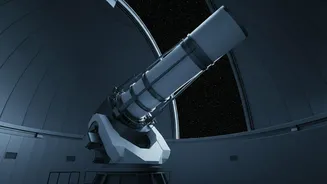
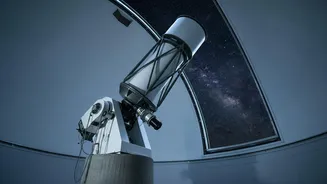
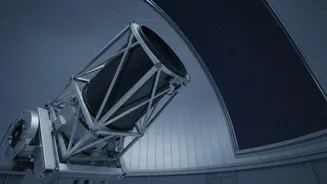
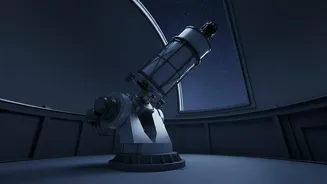
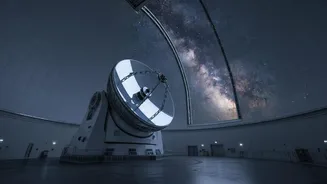
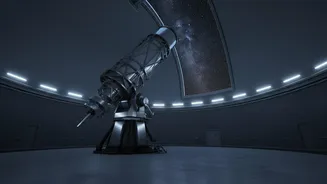
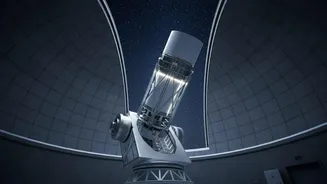
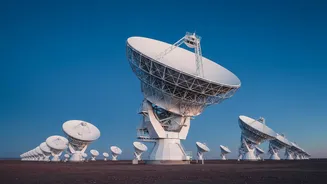
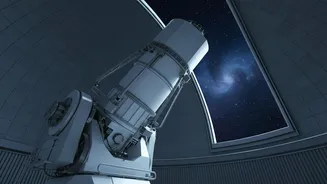
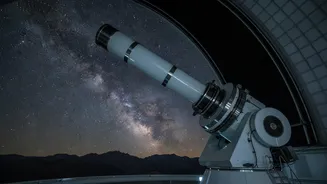
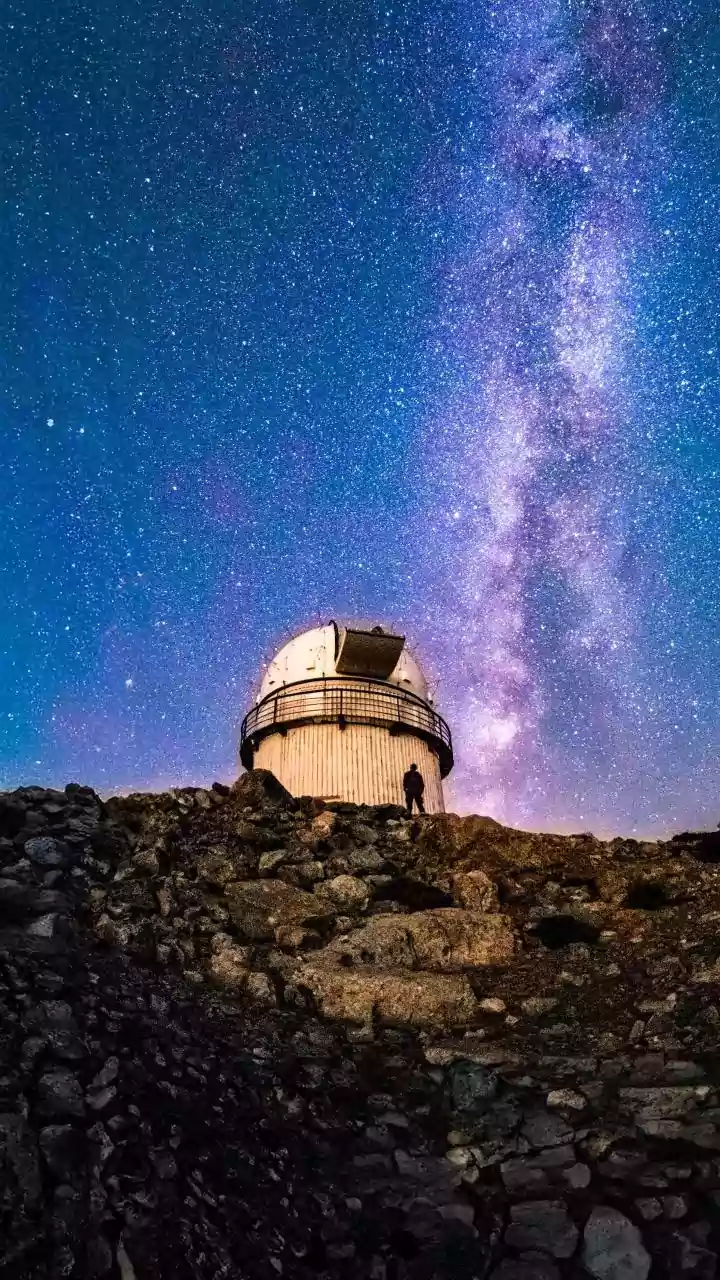
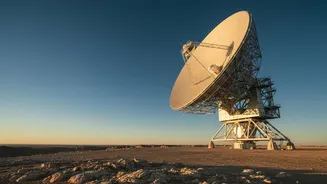
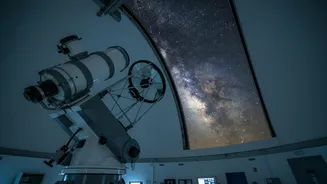
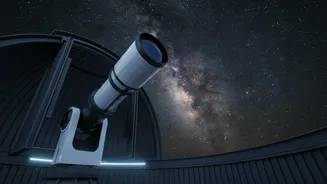
The first line of planetary defense is detection. This immense task falls to a network of ground-based survey telescopes. Projects like the Catalina Sky Survey in Arizona and the Pan-STARRS telescopes in Hawaii systematically scan the night sky. These
are not your average backyard telescopes; they are equipped with massive digital cameras, some with over a billion pixels, capable of imaging huge swathes of the sky. Each night, they take multiple pictures of the same celestial region several minutes apart. By comparing these images, astronomers can spot the faint pinpricks of light that move against the fixed backdrop of stars and galaxies. That moving dot could be a newly discovered Near-Earth Object (NEO).
Connecting the Dots to Chart an Orbit
Finding a moving dot is just the beginning. To determine if it poses a threat, scientists need to calculate its orbit. This requires multiple observations over hours and days to trace the object's path. Once a potential NEO is flagged by a survey telescope, the information is sent to the Minor Planet Center (MPC). Operating under the International Astronomical Union, the MPC is the world's official clearinghouse for all observations of small bodies in our solar system. It collects data from observatories worldwide to refine the object's trajectory. This global collaboration allows scientists to predict where the asteroid will be weeks, months, and even years into the future.
From Data to Defense Coordination
Once an orbit is confirmed, the data flows to organizations like NASA's Planetary Defense Coordination Office (PDCO) and the Center for Near-Earth Object Studies (CNEOS). Established in 2016, the PDCO is tasked with tracking and characterizing potentially hazardous objects—defined as those larger than about 30-50 meters that come within 8 million kilometers of Earth's orbit. CNEOS computes high-precision orbit paths and continually analyzes impact risks for the next century. This is where the true threat assessment happens. If a credible impact hazard is identified, it is the PDCO's job to provide timely and accurate warnings to the government and the public.
The Challenge of Hidden Asteroids
Ground-based optical telescopes are excellent, but they have limitations. They can only operate at night and can be hampered by weather. More importantly, they struggle to find asteroids approaching from the direction of the Sun, as they are lost in the glare. They also have a harder time spotting "dark" asteroids that don’t reflect much sunlight. This is where space-based infrared telescopes become crucial. Because they detect the heat emitted by an object rather than reflected sunlight, they can spot these darker asteroids and those hidden by daylight. Missions like NEOWISE have already demonstrated the effectiveness of this technology, discovering hundreds of NEOs.
The Next Generation of Sky Scanners
To address the gaps in our current detection capabilities, NASA is developing the NEO Surveyor space telescope, planned for launch no earlier than 2027. This infrared telescope will be positioned at a stable point between the Earth and the Sun, giving it an ideal vantage point to spot objects in Earth's orbital vicinity. Its primary goal is to help fulfill the U.S. Congressional mandate for NASA to find over 90 percent of all NEOs larger than 140 meters in diameter—big enough to cause severe regional devastation. NEO Surveyor is designed to dramatically speed up our discovery rate and find the threatening asteroids that currently lurk unseen.