




First, What Is Actually Changing?
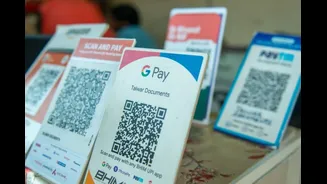
Starting October 15, 2026, a fee known as the Merchant Discount Rate (MDR) will be applied to certain Unified Payments Interface (UPI) transactions. The key thing to know is that this does not affect all UPI payments. Person-to-person (P2P) transfers,
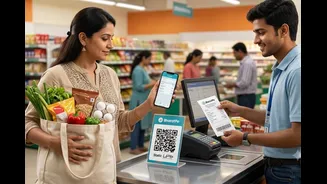
like sending money to friends or family, remain completely free, regardless of the amount. The new charge specifically targets some person-to-merchant (P2M) payments, meaning money you pay to businesses for goods and services. However, even here, there are crucial limits: the MDR only applies to transactions above ₹2,000. According to the government, this means approximately 96% of all merchant transactions will remain unaffected.
Decoding the Merchant Discount Rate (MDR)
MDR is not a new concept; it's the standard fee merchants pay to banks and payment processors for handling digital transactions via credit or debit cards. For years, UPI operated in a zero-MDR environment to encourage widespread adoption. The new structure introduces a 0.4% MDR for most merchant transactions over ₹2,000. For example, on a ₹3,000 purchase, a merchant would incur a ₹12 fee. To prevent excessive costs on large purchases, this fee is capped at ₹300 for any transaction of ₹75,000 or more. It's crucial to understand that this fee is levied on the merchant, not the customer. The Finance Ministry has advised banks to ensure businesses do not pass this cost on to consumers.
Why Introduce a Fee Now?
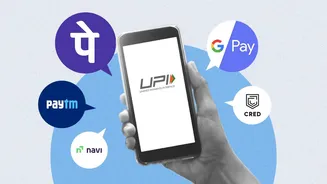
The primary driver behind introducing MDR is the long-term sustainability of the UPI ecosystem. With billions of transactions processed monthly, maintaining and upgrading the infrastructure, ensuring cybersecurity, and providing customer service comes at a significant cost. Until now, the government has been subsidising these costs. The introduction of a nominal MDR on higher-value commercial transactions creates a revenue model for the ecosystem's participants, including banks and payment service providers. This revenue is intended to fund further investment into the system's resilience and innovation, ensuring UPI remains a robust and secure platform for the future. Officials note that this move helps UPI become self-sustaining.
Who Is Exempt from the New Charge?
The framework has been designed to protect small businesses and everyday users. All P2P transactions are exempt. For merchants, all transactions up to ₹2,000 are free of MDR. Furthermore, small merchants—including street vendors—who receive up to ₹1 lakh per month via UPI QR codes will not have to pay any MDR, regardless of the transaction amount. Automated payments set up via UPI AutoPay for things like utility bills or OTT subscriptions are also exempt from these charges.
Are There Special Rates for Certain Sectors?
Yes, recognising that a one-size-fits-all approach doesn't work, the National Payments Corporation of India (NPCI) has set different rates for specific industries. Payments for essential services and low-margin sectors like railways, telecommunications, insurance, and fuel will attract a flat MDR of just ₹5 for transactions over ₹2,000, instead of the 0.4% rate. To encourage participation in financial markets, transactions related to mutual funds, securities, and stockbrokers will have a much lower MDR of 0.02%, also capped at ₹300.
Potential Impact on Businesses and Consumers
While the government has stated consumers should not be charged, some industry bodies like the Retailers Association of India (RAI) have expressed concern. They worry that merchants operating on thin margins might be incentivised to prefer cash over UPI for larger transactions to avoid the fee. However, the new 0.4% UPI MDR remains significantly lower than the typical MDR for debit cards (up to 0.9%) and credit cards (often 1.5% to 2.5%), keeping it the most affordable digital payment option for merchants. For larger businesses, the cost is expected to be absorbed as an operational overhead, similar to how card fees are handled. The move is ultimately seen as a balancing act: protecting small users while ensuring the digital payments revolution has a sustainable financial future.