


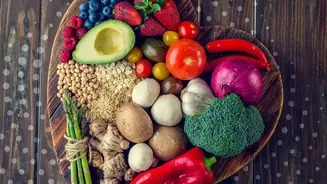

The Allure of 'Natural'
Walk down any supermarket aisle in India, and you'll be greeted by a sea of products proclaiming their 'natural' origins. From biscuits and juices to shampoos and face creams, the word 'natural' has become powerful marketing shorthand for 'good for you'.
Brands use it to create a 'health halo' around their products, tapping into a growing consumer desire for items that are perceived as pure, wholesome, and free from synthetic chemicals. This appeal is so strong that many shoppers are willing to pay a premium for products bearing these claims, associating them with better health and overall wellness. The problem is, the warm, fuzzy feeling the word 'natural' evokes often has little to do with what's actually inside the package.
What 'Natural' Actually Means (Legally)
In India, the Food Safety and Standards Authority of India (FSSAI) has specific rules for using the term 'natural'. According to FSSAI regulations, the claim can be used for a single-ingredient food derived from a plant, animal, or mineral source, as long as nothing has been added and it has only undergone minimal processing (like washing, peeling, or freezing) that doesn't fundamentally alter it. For a product with multiple ingredients, the label cannot say it is 'natural'. Instead, it may claim to be 'made from natural ingredients', but only if every single ingredient meets the criteria. Furthermore, FSSAI prohibits phrases like 'natural goodness' or 'naturally better' because they can be misleading. Despite these rules, enforcement can be inconsistent, and many brands use the term loosely, blurring the line between a regulated claim and simple marketing.
Marketing Magic vs. Ingredient Reality
The golden rule for any savvy shopper is simple: the front of the pack sells, but the back of the pack tells. Marketers are experts at using appealing words and images to create an impression of health. A 'multigrain' biscuit might have a picture of wheat stalks, but a quick look at the back could reveal that refined flour (maida) is the first and main ingredient. Similarly, a juice box shouting 'No Added Sugar' might be full of fruit concentrate, which is still a form of sugar. In India, ingredients must be listed in descending order by weight. This is your most powerful tool. If sugar (or one of its many aliases like glucose, sucrose, or corn syrup) is one of the first three ingredients, it's a high-sugar product, no matter what the front claims. The 'natural' claim works the same way; it's a marketing tactic until you verify it with the ingredient list.
Is 'Natural' Always Safer?
One of the biggest myths is that 'natural' automatically means safer or better. This is not true. Nature is full of potent substances, some of which are toxic, like certain plant-based toxins or snake venom. In skincare, many common allergens are derived from natural sources, such as essential oils or lanolin, which can cause significant irritation for sensitive skin. On the other hand, many synthetic ingredients are created in labs specifically for their stability, purity, and safety, often proving to be less irritating than their natural counterparts. Everything, including us, is made of chemicals. The distinction isn't between 'natural' and 'chemical', but between safe and unsafe, and that depends on the specific ingredient, its concentration, and how it's used in the final product—not just its origin.
How to Be a Smarter Shopper
Navigating the claims on products doesn't have to be overwhelming. The first step is to ignore the marketing on the front and turn the package over. Check the first three ingredients to see what the product is mostly made of. Look for official certifications. For organic products in India, this means looking for the Jaivik Bharat or NPOP logo, not just a brand's own green leaf design. Be critical of vague terms like 'pure', 'farm fresh', or 'traditional', as they often have no regulated meaning. Finally, compare the nutrition panel between similar products, paying attention to the 'per 100g' column for a fair comparison of sugar, salt, and fat content, rather than just the often misleading 'per serving' size.