






The Shifting Rhythms of the Himalayas
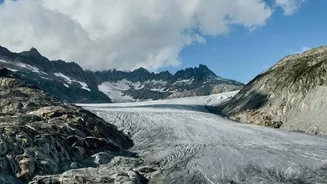
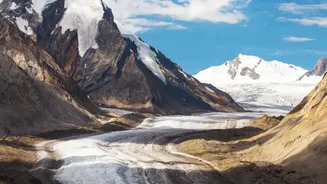
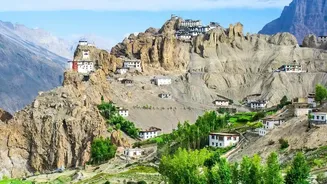
For generations, farming communities in Ladakh, a cold desert where annual rainfall can be less than 100mm, have depended on a predictable natural cycle. Winter snows and high-altitude glaciers would melt in the late spring and summer, feeding streams
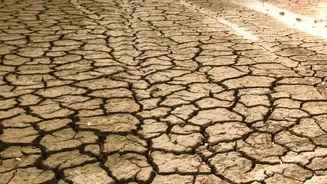
just as farmers needed water for their newly sown crops like barley and potatoes. However, climate change is disrupting this ancient rhythm. Glaciers are retreating at an alarming pace, and winter snowfall is becoming less reliable. The melt is now often happening too early in the season, meaning precious water flows away before the crucial planting period begins, leaving fields dry and threatening the livelihoods of a population that is roughly 80% agricultural. This creates a paradoxical crisis: a torrent of unusable water in early spring followed by a period of intense scarcity.
A Glacial Solution, Reimagined
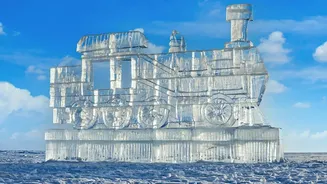
Enter the ice stupa, a concept pioneered by Ladakhi engineer and innovator Sonam Wangchuk around 2013. The idea is brilliantly simple yet scientifically sound. During the harsh winter, when stream water would otherwise be lost, a pipeline channels it from a higher elevation down to a village. Using the principle that water finds its own level, the pressure from the height difference forces the water up through a vertical pipe, from which it is sprayed into the freezing air. As the water droplets fall, they freeze, gradually forming a massive, cone-shaped artificial glacier that resembles a traditional Buddhist stupa. Because of its vertical shape, the cone exposes less surface area to direct sunlight compared to a flat sheet of ice, causing it to melt much more slowly. These structures can store millions of litres of water, providing a steady supply as they melt during the critical, dry planting months of April and May.
The Breakthrough: Automation and Efficiency
The latest breakthrough addresses the core challenge of building and managing ice stupas: efficiency and control. The original manual process was groundbreaking but had limitations. Pipes could freeze and get blocked in extreme cold, and a significant amount of sprayed water would simply run off without freezing, sometimes as much as 70%. The new development involves automating the system. An automated ice reservoir, recently piloted in villages like Igoo, is fitted with sensors, mechanised valves, and a control panel linked to a local weather station. This 'smart' stupa analyses real-time data on temperature, humidity, and wind speed to decide precisely when to spray water, for how long, and at what flow rate. This optimisation prevents pipes from freezing and drastically improves the water-to-ice conversion rate, with some projects claiming up to 80% efficiency. It allows for the creation of larger, more stable ice stupas with minimal human intervention, effectively turning them into remotely managed, timed-release water towers.
A Blueprint for Mountain Communities
This automated approach is more than just a technical upgrade; it represents a significant step towards scalable and resilient water security. By making the process more efficient and less labour-intensive, it becomes easier for more communities to adopt the technology. A single automated stupa can store millions of litres of water, enough to irrigate dozens of acres and support entire villages through the dry season. The success in Ladakh is now being seen as a potential model for other high-altitude regions facing similar climate-induced water crises, from elsewhere in the Himalayas to the Andes in South America. These projects demonstrate a powerful form of climate adaptation, combining traditional knowledge with modern technology. They empower local communities to take control of their most vital resource in the face of environmental uncertainty.