




The Game-Changer: Ahmedabad to Dholera
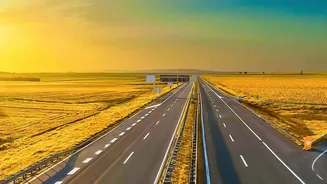
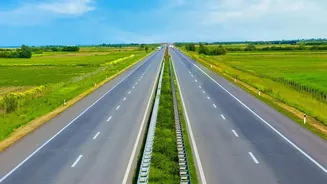
The centerpiece of Gujarat's infrastructure push is the multi-modal connectivity to Dholera Special Investment Region (SIR), India's first greenfield smart city. For travellers, this means two major upgrades. First is the Ahmedabad-Dholera Expressway,
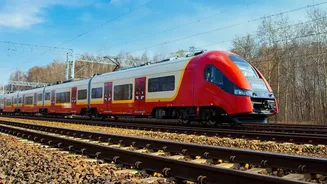
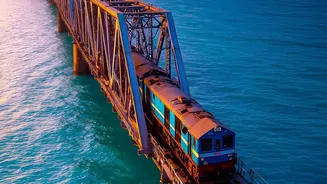
a four-lane corridor that is nearing completion and will slash road travel time. Second is the Ahmedabad-Dholera Semi High-Speed Rail project, which was approved by the Union Cabinet in May 2026. This 134-km double-line track is designed for speeds up to 200 kmph, aiming to cut the journey to a mere 34 minutes. Though construction has not yet started, a major tender for the entire corridor was floated in August 2026. The line will not only connect Ahmedabad to Dholera SIR but also have crucial spurs linking to the upcoming Dholera International Airport and the Lothal National Maritime Heritage Complex, creating a seamless tourism and business circuit.
The Expressway Network Expands
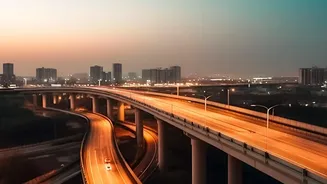
Beyond Dholera, the Delhi-Mumbai Expressway is another transformative project significantly impacting Gujarat. Large sections of this 1,386-km corridor are already operational, including the Vadodara-Bharuch stretch, which has eased traffic on a notoriously congested industrial route. The expressway passes 426 km through Gujarat, connecting major cities like Vadodara, Bharuch, and Surat to both Delhi and Mumbai. While some packages in the state have seen delays, the majority of the Delhi-Vadodara section is expected to be complete by mid-to-late 2026, promising to cut the drive from Gurugram to Gujarat to around 10 hours. On September 8, 2026, additional projects were also announced to improve safety and capacity on National Highways 48 and 53 in the state.
Upgrades on the Rails
Gujarat's existing railway network is also receiving a major overhaul. On September 8, 2026, several key sections of the Western Dedicated Freight Corridor (WDFC) were inaugurated. While built for goods transport, the WDFC is a huge boon for passengers. By shifting freight trains to their own dedicated tracks, it frees up capacity on existing lines, allowing for more frequent and faster passenger services. Additionally, foundation stones have been laid for new third and fourth lines between Vadodara and Ratlam, and for the doubling of the Vishwamitri-Dabhoi line, all aimed at reducing congestion and boosting connectivity with neighbouring states. In the Kutch region, the doubling of the Adipur-Bhuj line was approved in June 2026 to handle growing traffic and is expected to allow for more daily passenger train services.
Taking to the Skies
Air travel is another key focus of Gujarat's infrastructure development. The new Dholera International Airport is under construction, with planners working to integrate it seamlessly with the new rail and expressway links. Beyond Dholera, existing airports are also being upgraded. Major expansion projects are underway at Surat and Vadodara airports to handle growing commercial demand. Smaller airports like Keshod, Porbandar, and Bhavnagar are also seeing enhancements to their runways and terminal facilities. Furthermore, new greenfield airports are planned for Dwarka and Dahod to boost pilgrimage tourism and serve tribal regions, respectively. This multi-pronged approach aims to make every corner of the state more accessible by air.
Connecting Every Corner
The collective impact of these projects is the creation of a tightly integrated, multimodal transport network. A journey that once took hours by road may soon be a quick trip by semi-high-speed rail. Reaching pilgrimage sites like Dwarka or industrial hubs like Ankleshwar will become easier with new and upgraded airstrips. Even remote tribal areas are being connected, such as the new Jobat-Tanda Road rail line, which brings parts of Alirajpur district onto the national rail map for the first time. For travellers, this means less time spent on the road, more reliable journey schedules, and easier access to both famous tourist spots and emerging economic zones. Gujarat is not just building roads and railways; it is building a more connected and accessible future for residents and visitors alike.