
What is a Coronal Mass Ejection?
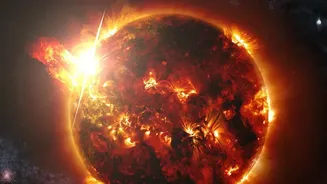
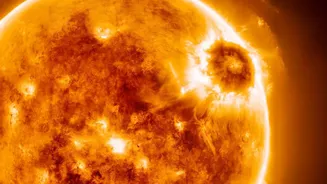
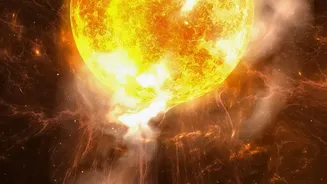
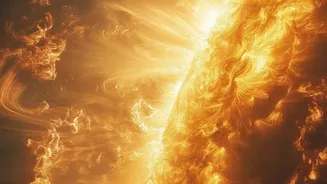
A Coronal Mass Ejection, or CME, is a massive expulsion of plasma and magnetic field from the Sun's outer atmosphere, called the corona. These are not just small flares; they are titanic events that can send billions of tons of solar material hurtling
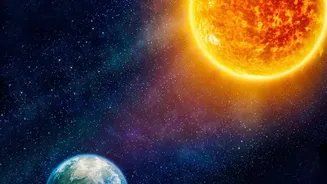
through space at speeds ranging from under 250 to nearly 3,000 kilometers per second. When one of these clouds is aimed at Earth, it’s what scientists call a significant space weather event. The fastest CMEs can complete the 93-million-mile journey to our planet in as little as 15 to 18 hours.
Earth's Magnetic Shield Under Pressure
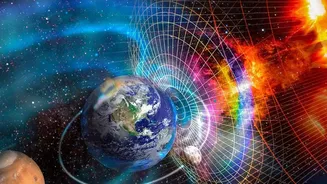
Our planet is protected by a magnetic field, the magnetosphere, which deflects most of the constant stream of particles from the Sun. However, a direct hit from a powerful CME can overwhelm this shield. The CME's own magnetic field interacts with Earth's, causing a major disturbance known as a geomagnetic storm. The orientation of the CME's magnetic field is crucial; if it's directed southward, it more effectively couples with our magnetosphere, leading to more intense storms. A recent CME that erupted on August 8 is expected to begin disturbing Earth's magnetic field on August 12, potentially causing minor to moderate geomagnetic storming.
The Real-World Risks of Solar Storms
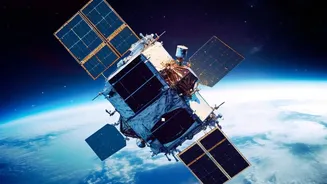
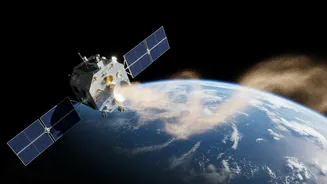
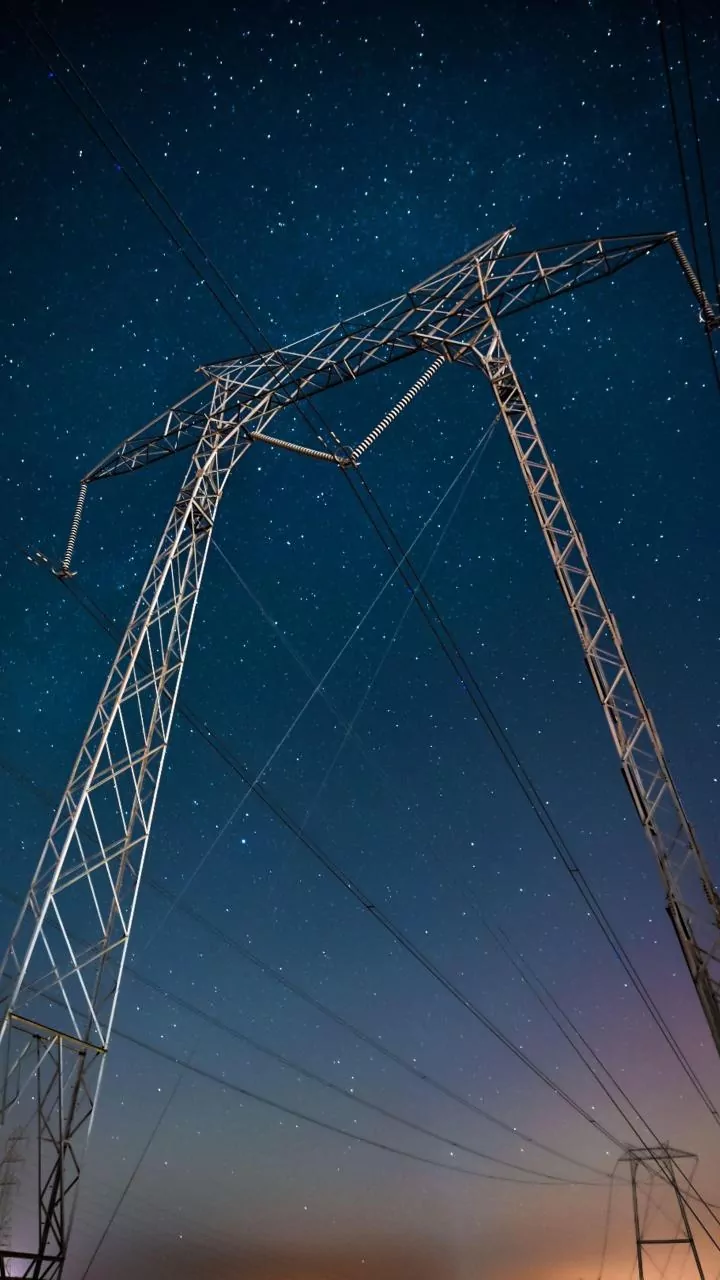
Geomagnetic storms aren't just a light show for aurora watchers at high latitudes. They can have serious consequences for our technology-dependent society. The fluctuating magnetic fields can induce powerful electrical currents in long conductors on the ground, such as power lines and pipelines. This can lead to widespread blackouts; a famous example is the 1989 storm that knocked out power for six million people in Quebec for nine hours. Beyond the power grid, these storms can damage satellites essential for communications, GPS navigation, and weather forecasting. They can also disrupt high-frequency radio communications used by aviation and emergency services.
A Leap Forward in Forecasting
Until recently, forecasting the arrival of a CME was an imprecise science. Scientists could see a CME leave the Sun but could only track about a fifth of its journey, resulting in a large window of uncertainty—often five hours or more—for its arrival time. This has changed thanks to new modeling techniques and missions like NASA's PUNCH (Polarimeter to Unify the Corona and Heliosphere), launched in 2025. The PUNCH mission uses four spacecraft to create continuous 3D observations of CMEs as they travel from the Sun to Earth. By feeding this constant stream of images into advanced computer models, scientists can now track a storm's entire journey, analyzing its speed and shape over time.
From a 5-Hour Guess to Pinpoint Accuracy
The impact of this new modeling is dramatic. In retroactive tests using data from a 2025 CME, the new methods were able to predict the storm's arrival time with an accuracy of within 30 minutes. This is a tenfold improvement over older methods. This enhanced accuracy gives power grid operators, satellite companies, and airlines crucial lead time to take protective measures. For example, advance warning allows grid managers to brace for electrical surges and satellite operators to put their spacecraft into a safe mode to protect sensitive electronics. This is not just a theoretical improvement; it's being applied to current events, like the CME expected to arrive today, August 12, allowing for a much more confident forecast of its potential effects.