




The High-Stakes Quest for Water
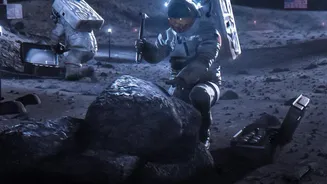
For future lunar inhabitants, water is more valuable than gold. It's not just for drinking; its core components, hydrogen and oxygen, are the primary ingredients in rocket propellant. Establishing a sustainable human presence on the Moon under the Artemis
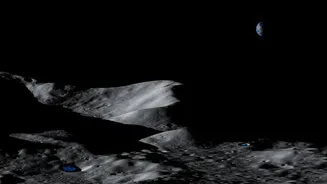
program hinges on using local resources, a practice known as in-situ resource utilization. Being able to 'mine' water ice and process it into breathable air and fuel could slash the astronomical cost and complexity of missions by reducing the amount of material that must be launched from Earth. The lunar south pole is a key area of interest because its permanently shadowed craters are so cold that they are believed to have trapped water ice for billions of years.
Why We Need a Better Map
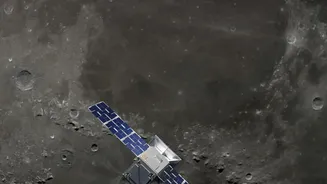
Previous missions have provided strong, but indirect, evidence of lunar ice. Orbiters like India's Chandrayaan-1, carrying NASA's Moon Mineralogy Mapper, detected the chemical signature of water from above. Impact experiments have also confirmed its presence. However, this data provides a big-picture view, not the detailed 'prospector's map' needed for a ground mission. Scientists know the water is there, but key questions remain: Is it mixed in with the soil like fine frost, or are there larger, purer deposits? How deep is it, and how much is there really? Answering these questions is essential for selecting a location for a permanent base and designing the equipment needed to extract it.
A New Toolkit for Lunar Prospecting
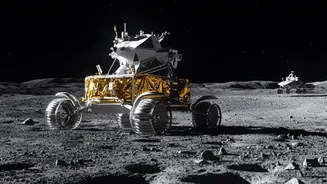
To get these crucial answers, NASA has selected a new suite of scientific investigations through its Payloads and Research Investigations on the Surface of the Moon (PRISM) program. One of the key instruments is the Depth Imager with Spectral and Color Optics (DISCO). This payload is specifically designed to make the first-ever direct measurements of ice hidden inside small, permanently shaded 'micro-cold traps'. Led by NASA's Ames Research Center, DISCO will help determine the location, quantity, and distribution of ice, assessing its potential as a practical resource for future missions. These instruments will be delivered to the lunar surface by commercial partners under the Commercial Lunar Payload Services (CLPS) initiative.
Scouting for Shelter and Safety
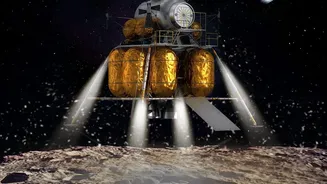
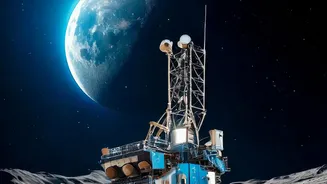
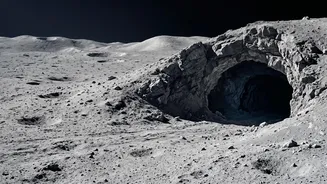
Beyond just finding water, NASA's new missions will also assess the overall safety and viability of potential base camp locations. The DISCO payload will also investigate the physical properties of the lunar soil and how it's disturbed by rocket exhaust from landing vehicles. In parallel, another selected mission called Geophysical Instruments for Marius Lunar pit Investigation (GIMLI) will explore a pit to see if it leads to a subterranean lava tube. Such a cave could offer future astronauts natural protection from the harsh lunar environment, including radiation, micrometeorite impacts, and extreme temperature swings. A third instrument, the Lunar Environment Monitoring Station (LEMS), will act as a weather and seismic station, monitoring hazards for a future outpost. Together, these investigations provide a comprehensive strategy for de-risking a long-term human presence.