


The Data Decoders: GIS and Remote Sensing
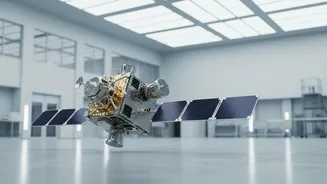
Not all space exploration happens in orbit; much of it involves understanding the data sent back to Earth. Geographic Information System (GIS) and Remote Sensing specialists are crucial for this. They analyze satellite imagery to provide insights for agriculture,
urban planning, disaster management, and climate change monitoring. A degree in fields like geoinformatics, environmental science, or data science can be a launchpad for this career. Professionals in this area are in demand at government bodies like ISRO's National Remote Sensing Centre and in private companies that build applications using satellite data.
The Digital Architects: Software and AI
Modern space missions run on millions of lines of code. Software and Information Technology professionals are the architects of this digital infrastructure. They develop the software for mission control, satellite operations, ground station networking, and flight simulations. With the vast amount of data generated from space, there is a growing need for AI and Machine Learning experts to automate processes and analyze satellite imagery. A B.Tech in Computer Science or IT, especially with a focus on embedded systems or AI, can lead to a career at both ISRO and private space-tech startups.
The Rule Makers: Space Law and Policy
As space becomes more crowded with satellites and commercial activity, the need for rules and regulations is critical. Space lawyers and policy advisors tackle complex questions about satellite launch regulations, space debris liability, and international treaties. With the government opening up the sector, private companies need legal experts to navigate compliance. A law degree followed by a specialization or keen interest in international and technology law can open doors at government agencies like IN-SPACe, law firms, and startups like Skyroot Aerospace or Dhruva Space.
The Celestial Medics: Space Medicine
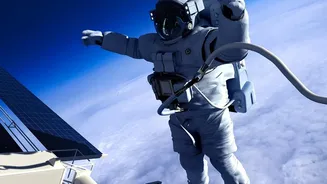
With India's ambitions for human spaceflight through the Gaganyaan programme, the health of astronauts is paramount. Aerospace Medicine is a specialized field for doctors that focuses on the physiological and psychological challenges of space travel. These professionals are involved in astronaut selection, training, and in-flight health monitoring. In India, the primary route is an MBBS degree, followed by an MD in Aerospace Medicine, offered only at the Institute of Aerospace Medicine (IAM) in Bengaluru. This career path often intersects with service in the Indian Armed Forces.
The Storytellers: Science Communication
Grand missions need great storytellers to capture the public's imagination and explain complex science. Science communicators, journalists, and content creators play a vital role in bridging the gap between space agencies and the public. They write articles, create videos, and manage social media to make space exploration accessible and exciting. A background in journalism, mass communication, or even a science degree paired with strong communication skills can lead to roles in media houses, ISRO's public relations wing, and the outreach teams of private space companies.
The Business Builders: Management and Finance
The privatization of the space sector has created a new ecosystem of startups that need sharp business minds to thrive. Professionals with MBA degrees are sought for roles in project management, business development, finance, and human resources. They help companies secure funding, manage large-scale projects, and build sustainable business models. These roles are available in commercial arms of the government like NSIL and IN-SPACe, as well as in the hundreds of new private space startups emerging across the country.