




The Ultimate Delayed Message
The secret to this cosmic time travel lies in a simple, universal speed limit: the speed of light. Light, while incredibly fast, does not travel instantaneously. It moves at a staggering 300,000 kilometres per second, but the universe is so vast that
it still takes a significant amount of time for light to cross it. The distance light travels in one year is called a light-year. When we look at a star that is 100 light-years away, we are seeing the light that left that star 100 years ago. In essence, the night sky is not a live broadcast; it's a collection of historical records, all arriving at different times. The further we look, the further back in time we see.
What Are These Cosmic Flares?
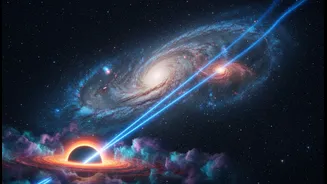
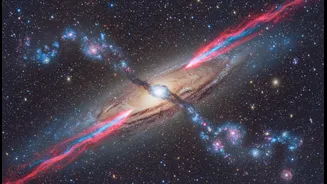
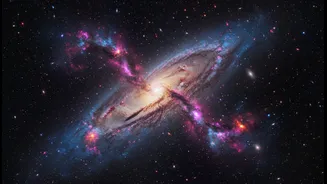
The 'flares' mentioned in the headline often refer to one of the most dramatic events in the universe: a supernova. This is the cataclysmic explosion of a star at the end of its life. For a brief period, a single supernova can outshine its entire galaxy, releasing an unimaginable amount of energy and light. These events are the cosmic forges that create heavy elements like gold and iron, scattering them across space to form new stars and planets. But because the stars that go supernova are often many hundreds or thousands of light-years away, we don't witness the explosion when it happens. Instead, we see the light show centuries or millennia after the actual event has concluded.
Echoes of History in the Sky
History is filled with examples of this phenomenon. One of the most famous is the event that created the Crab Nebula. In 1054 CE, astronomers in China, Japan, and the Middle East recorded the appearance of a brilliant 'guest star' in the sky, so bright it was visible during the day for weeks. What they were seeing was a supernova. Today, we can point a telescope at that same spot and see the Crab Nebula, an expanding cloud of gas and dust from that very explosion. The star that exploded was 6,500 light-years away, meaning the explosion actually occurred around 5400 BCE. The light travelled for 6,500 years before finally reaching Earth and putting on a show for ancient observers.
More Than Just Supernovae
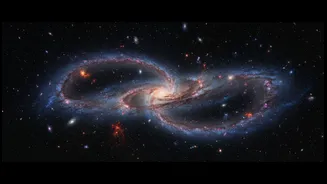
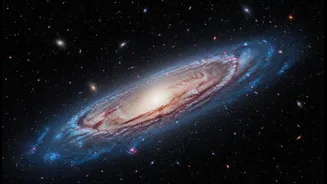
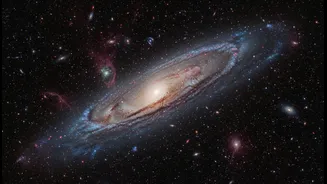
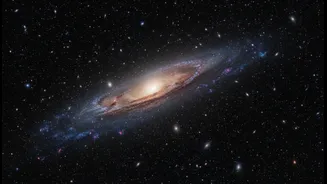
This time-delay effect applies to everything we see in space. Our own Sun is about 8.3 light-minutes away, so if it were to vanish, we wouldn't know for over eight minutes. The closest star system, Alpha Centauri, is over four light-years away, meaning we see it as it was four years ago. The Andromeda Galaxy, the nearest major galaxy to our Milky Way and a faint smudge visible to the naked eye, is 2.5 million light-years away. The light you see from it tonight left when early human ancestors were first walking the Earth. Every point of light is a postcard from the past, making the simple act of stargazing a journey through deep time.
Telescopes as Time Machines
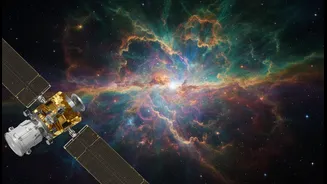
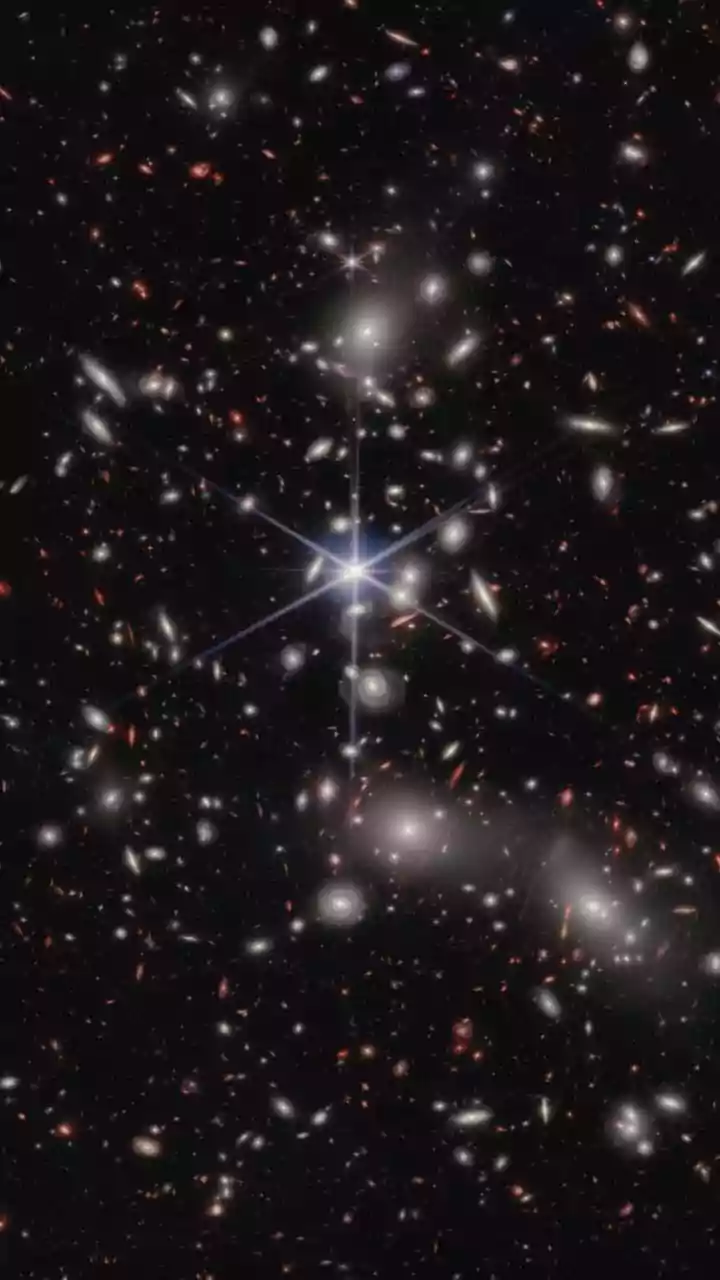
This principle is the cornerstone of modern astronomy. Scientists are not just trying to see objects that are far away; they are trying to see further back into the history of the universe. Powerful observatories like the Hubble Space Telescope and the James Webb Space Telescope are essentially time machines. By capturing the faint light from the most distant galaxies, they are seeing the universe as it was billions of years ago, shortly after the Big Bang. Each 'flare' or distant galaxy they capture is a snapshot of a bygone cosmic era, allowing us to piece together the entire history of the universe, from its infancy to the star-filled sky we marvel at today.