








The Fantasy on the Front of the Pack
The front of a package is prime marketing real estate. It’s designed to make you feel good about your purchase, often using unregulated buzzwords. Terms like "natural," "farm-fresh," or "real" have no legal definition in India and can be used on heavily
processed items. A product can contain artificial flavours and still be called "natural." Similarly, brands might claim a product is "healthy," but this is often a vague slogan rather than a factual statement. In June 2026, India's food regulator, FSSAI, issued notices to several popular brands for using such misleading claims on everything from biscuits to juices. The takeaway is simple: the front of the pack tells a story, but the back tells the facts.
Decoding the Ingredients List
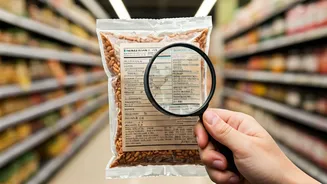
This is where the real truth lies. Ingredients are always listed in descending order by weight. This means the first three to five ingredients make up the bulk of the product. If sugar, salt, or maida (refined wheat flour) are at the top of the list, you know the product is not as wholesome as the front might suggest. Watch out for hidden sugars, which can be listed under many different names like corn syrup, dextrose, fructose, or sugarcane juice. A product claiming "no added sugar" might still be packed with fruit concentrate, which is essentially a form of sugar. The FSSAI recently flagged several brands for exactly this kind of misleading practice.
The Serving Size Scam
Marketers often use unrealistically small serving sizes to make the nutritional information look more appealing. A packet of chips might proudly display that it contains only 150 calories, but a closer look reveals this is for a serving of just 30g, while the packet itself contains 100g. Most people would consume the entire pack in one sitting, thereby consuming over three times the advertised calories, fat, and sodium. Always check the serving size and the number of servings per container, then do the maths to understand what you are actually consuming. This simple check can reveal a seemingly healthy snack to be a calorie bomb in disguise.
The 'Green' and 'Clean' Illusion
With growing environmental awareness, a tactic called "greenwashing" has become common. This is when brands use imagery like leaves, green packaging, and vague terms like "eco-friendly" or "botanical" to imply a product is environmentally friendly without any proof. These claims are often irrelevant or lack third-party certification. In India, a product can only be legally called "organic" if it carries the mandatory Jaivik Bharat logo, along with either an NPOP or PGS-India mark. Without these specific seals, a claim of being "organic" is just marketing. The FSSAI has recently taken action against companies making unverified organic claims.
Look for Genuine Certifications
Beyond organic labels, it's important to distinguish between official certifications and meaningless logos created by the brand itself. On food products, look for the FSSAI license number, which is mandatory and shows the product complies with Indian food safety regulations. Vegetarian and non-vegetarian products are also clearly marked with a green dot or a brown dot inside a square, respectively. For other products, claims like "dermatologically tested" or "clinically proven" should ideally be backed by accessible data. A healthy dose of scepticism is your best defence. If a claim seems too good to be true and isn't backed by a recognisable, independent authority, it's probably best to ignore it.