




A Symbol of Sun and Surrender
Marigolds, or 'genda phool', are more than just pretty decorations; they are deeply woven into India's cultural and spiritual fabric. Their bright, sun-like colours are associated with auspiciousness, prosperity, and positive energy, which is why they are hung
at entrances during Diwali to welcome wealth and are offered to deities like Lord Ganesha and Goddess Lakshmi. The flower's sturdy nature, which allows it to stay fresh for days, symbolises unwavering faith and surrender to the divine. By creating a marigold backdrop, you are not just decorating a wall; you are participating in a tradition that represents purity, devotion, and the vibrant warmth of Indian festivities.
Planning Your Floral Canvas
Before you buy your first string of flowers, take a moment to plan. Decide which wall will serve as your backdrop. A plain, light-coloured wall works best as it makes the orange and yellow hues pop. Consider the scale: do you want a full wall covered in flowers, a simple arch over a doorway, or a decorative panel behind the sofa or puja unit? Measure the area to estimate how many garlands you will need. A standard garland is often around five feet long. Think about colour combinations. While all-orange or all-yellow is classic, alternating colours can create a beautiful pattern. For a richer look, consider weaving in other elements like mango leaves, jasmine strings, or even tiny bells.
The Classic Marigold Cascade
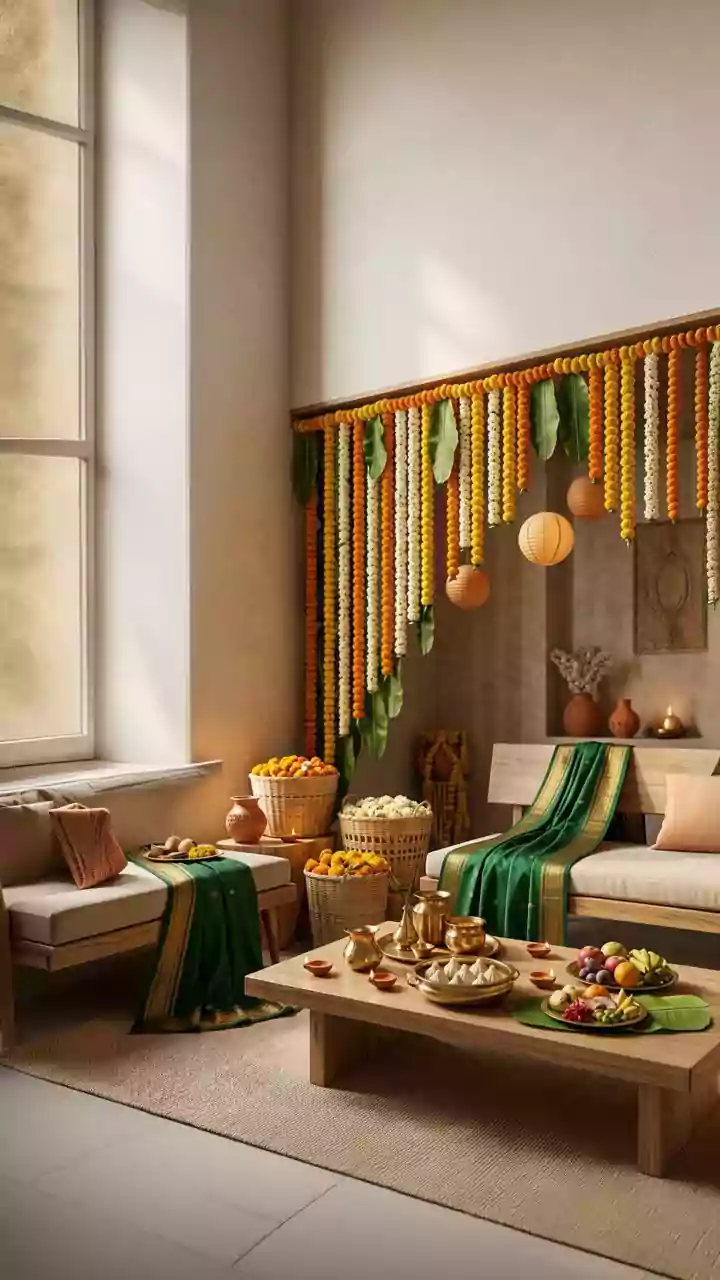
The most popular and straightforward design is the vertical cascade. This involves hanging strings of marigold garlands side-by-side to create a dense curtain of flowers. To achieve this look, install a row of small, temporary hooks or even a sturdy string across the top of the wall you wish to decorate. Then, simply hang the garlands from the hooks, ensuring they are evenly spaced. You can keep the lengths uniform for a neat look or vary them for a more dynamic, staggered effect. This style is incredibly versatile and works perfectly as a photo booth background, a screen to section off a part of the room, or as a vibrant accent wall.
Creative Twists on Tradition
Don’t be afraid to think beyond simple vertical lines. You can create beautiful geometric patterns by crisscrossing garlands to form a diamond-shaped lattice. Another stunning idea is to create a floral chandelier by hanging garlands from a large embroidery hoop or a circular frame suspended from the ceiling. For a more organic feel, create a 'flowerfall' effect by piling garlands in earthen pots and letting them spill out onto the floor. You can also make marigold balls by wrapping the garlands around foam spheres and hanging them at different heights. Mixing textures by adding strings of white tuberoses (rajnigandha) or green mango leaves can break the monotony and add another layer of traditional elegance.
Making the Freshness Last
To keep your beautiful backdrop looking vibrant for as long as possible, a little care goes a long way. When you first bring the garlands home, don't leave them in the plastic bag, as this traps moisture and can cause them to spoil. Hang them in a cool spot to let them breathe. Heat is the enemy of fresh flowers, so try to position your backdrop away from direct sunlight, diyas, or other heat sources. To keep them hydrated, lightly mist the garlands with water every day. A gentle spritz is enough; drenching them can lead to soggy, discoloured petals. With proper care, your fresh marigold decorations can bring joy for several days.
The Artificial Advantage
If you're looking for a solution that lasts the entire festive season or can be reused year after year, high-quality artificial marigold garlands are an excellent option. Modern versions are designed to look fluffy and realistic, closely mimicking the appearance of real flowers. They are lightweight, easy to hang, and require no maintenance beyond an occasional dusting. This is a practical choice for those with busy schedules or for creating elaborate decorations that need to stay perfect for an extended period, such as for a series of wedding events or throughout the nine nights of Navratri.