








What is Starlink and Why Is It Vital?
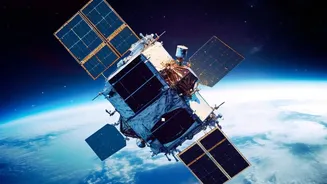
Starlink, a satellite internet constellation operated by Elon Musk's SpaceX, provides high-speed internet access via thousands of small satellites in low Earth orbit. Since Russia's full-scale invasion in 2022, which saw Ukraine's terrestrial communication
networks targeted and destroyed, Starlink has become the backbone of Ukrainian military communications. It is essential for everything from basic communication between units on the front line to coordinating drone operations and gathering intelligence. For its military-grade needs, Ukraine uses a more secure version called Starshield, developed by SpaceX specifically for government clients and funded under a contract with the US Department of Defense.
What Happened to Ukraine's Service?
In mid-October 2026, Ukrainian military officials reported an abrupt and unexpected restriction on their Starshield service. A speed cap was implemented, causing terminals to lose connectivity on devices moving faster than approximately 160 kilometres per hour (100 mph). This immediately disrupted several critical missions, particularly those involving Ukraine's faster drones used for both mid-range strikes and for intercepting incoming Russian attack drones. President Volodymyr Zelensky stated that the inability to intercept some jet-powered Russian drones due to the speed cap had direct consequences for civilian safety. Service was reportedly restored or stabilised within a couple of days, but the incident left Kyiv and its allies deeply unsettled.
Who Is Responsible for the Restrictions?
The question of who ordered the restrictions has led to conflicting accounts. Elon Musk quickly distanced himself and SpaceX from the decision, stating on his social media platform X that Starshield systems are 'owned and controlled by the US government'. He asserted that any limits on speed or usage are decided by the US military and ultimately the President, while the commercial Starlink service is not for 'offensive military action'. However, reports soon emerged, citing sources familiar with discussions, that Musk himself had proposed the idea of speed caps to US President Donald Trump, who agreed. Other reporting suggested the directive to the Pentagon to impose the limits came from within the White House, which has been pressuring Ukraine to halt strikes on Russian oil refineries. This has prompted a bipartisan call in the US for an investigation into who authorised the slowdown.
The Unprecedented Geopolitical Dilemma
The incident has exposed a modern geopolitical vulnerability: a nation's war effort being heavily dependent on a service controlled by a private company and its mercurial CEO. While the Pentagon has a contract for the service, the power to alter or deny it creates a new and unpredictable pressure point in international conflict. This situation is unprecedented, blurring the lines between a commercial service provider and a strategic military asset. Analysts point out that this dependency gives a private actor significant, albeit indirect, influence over battlefield outcomes and a nation's defensive capabilities. The reliance on a single commercial platform, however advanced, creates a critical point of failure that both allies and adversaries can exploit.
What Are the Broader Implications?
The Starlink episode in Ukraine serves as a crucial lesson for militaries worldwide, which are increasingly integrating commercial technology into their operations. The risk lies in creating dependencies on capabilities that are not owned or ultimately controlled by the state. For Ukraine, the immediate priority is to find alternatives and build redundancy into its communications systems, though officials admit that no current alternative matches Starlink's capabilities. For Western governments, it raises urgent questions about how to regulate and manage partnerships with powerful tech companies that have become indispensable to national security. The incident has accelerated conversations in Europe and elsewhere about developing sovereign satellite communication systems to avoid being in a similar position of dependency in the future.